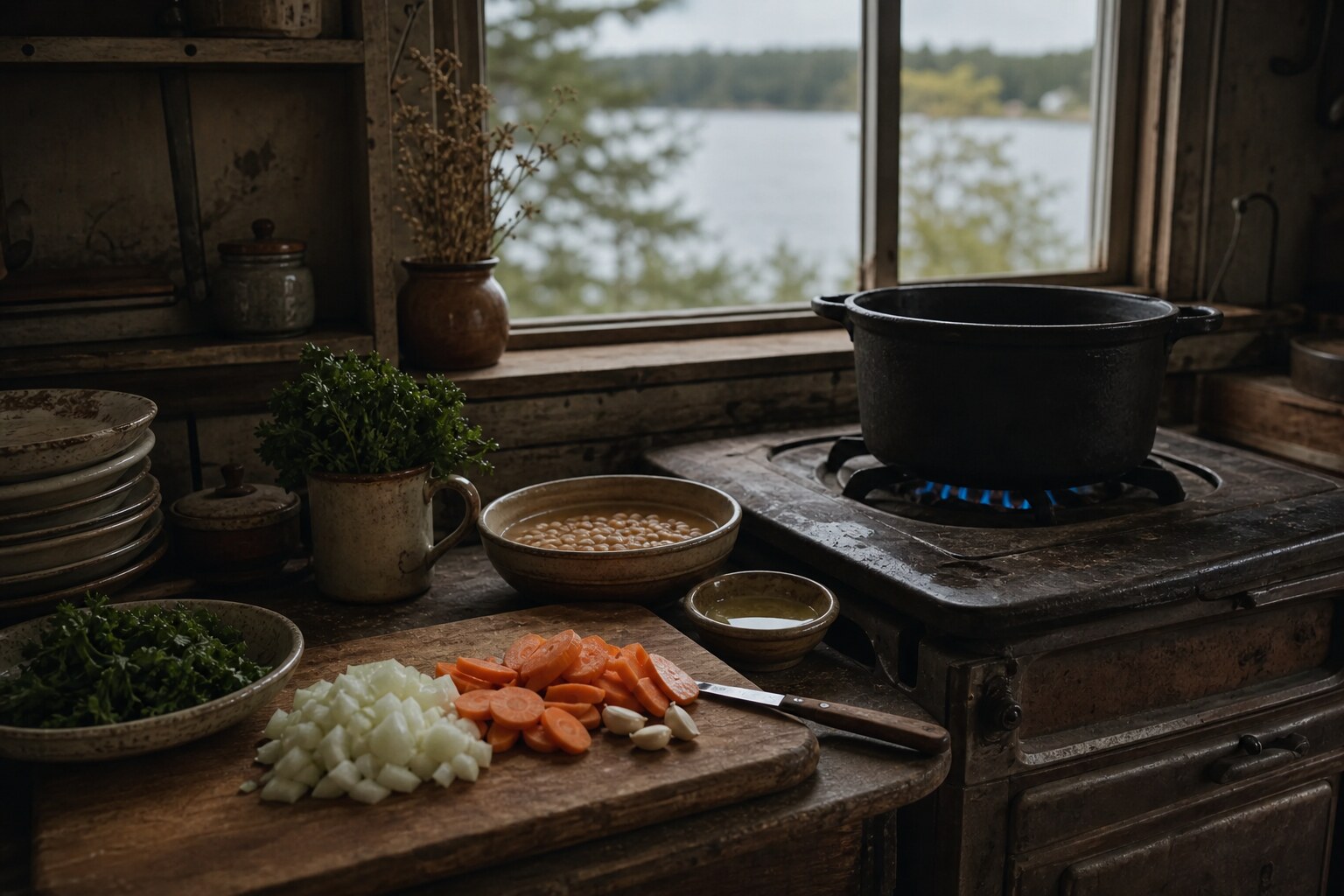
A cottage kitchen is often one working burner and a heavy pot, and that turns out to be plenty — because the people who cook in the tightest kitchens on earth, on boats and out of a pack on a trail, have already worked out how to make a whole dinner on a single flame. The constraints are the same: one heat source, little fuel, no room, and no appetite for a pile of dishes. What they know transfers straight to a cabin.
Everything gets cut before the flame is lit
This is the rule the galley cooks are firmest about, and it’s the one home cooks skip. On a boat you prep everything — chop, measure, open, arrange — before you light anything, because once the pot’s going in a moving kitchen you can’t be hunting for the garlic. At a cottage the kitchen isn’t moving, but you’re often tired, or it’s getting dark, or you’re cooking for a room full of people. Same fix. Get every ingredient cut and lined up in the order it’ll go in. Then light the burner. The cooking becomes calm, almost automatic, because all the fussing already happened.
Add things in the order of how long they take
One pot means everything shares one heat and finishes together, so you build it in stages by cook time.
Fat and aromatics first — the onion, the garlic, the spice bloomed in oil. Then the dense things that need the most time and want some browning: the meat, the roots, the grains. Then the liquid, and whatever cooks in it. And last, right at the end, the quick and the delicate — the greens, a knob of butter, the herbs, the squeeze of lemon — so they don’t turn to mush waiting for everything else. Layered this way, a single pot produces something that tastes composed rather than boiled-together.
Let residual heat do the last of the work
Fuel is precious in the places this technique comes from, so they lean hard on heat that’s already in the pot. You can too. A heavy, flat-bottomed pot holds and spreads heat far more evenly over a small burner than a thin one, and it keeps cooking after you cut the flame. So you finish gently: kill the heat a little early, put the lid on, and let the pot coast to done on its own warmth. Rice especially wants this — off the heat, lid on, left alone. Beans and grains can be soaked ahead, even cold-soaked in their own water for hours, so they need far less time on the burner when it counts.
What this gets you
A one-burner supper isn’t a compromise you apologize for. It’s a discipline that makes you a tidier cook: prep first, build in order, finish off the heat, wash one pot. It’s the same logic whether you’re at anchor, on a ridge, or at a cabin where the second burner’s never worked and you’ve stopped minding.
It pairs, naturally, with the kind of dish that likes a long quiet simmer — a pot of beans and sausage is a one-burner meal to its bones. And it’s worth knowing before you open the cottage in spring and rediscover, again, that only the one burner lights.