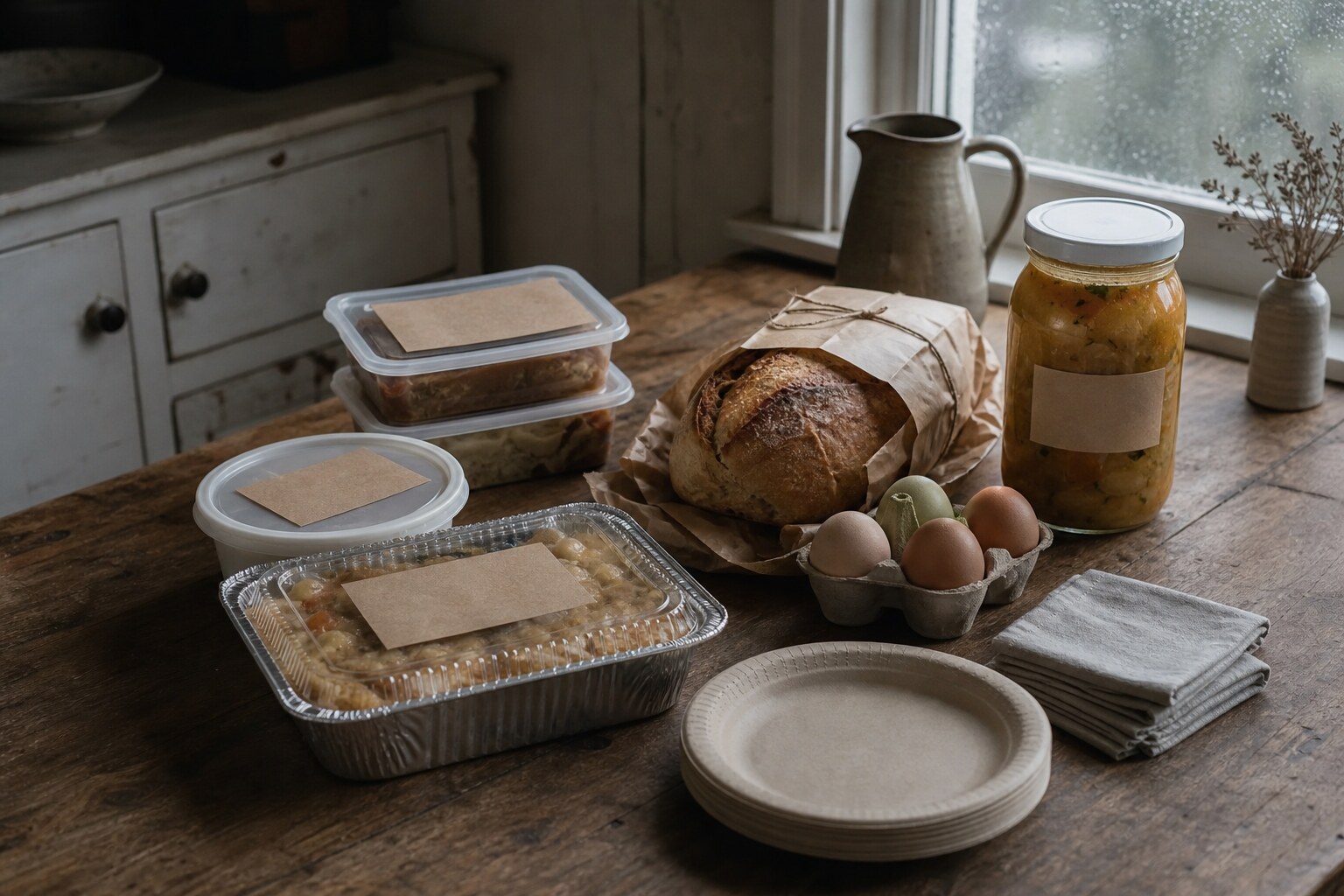
When something bad happens to a household, food shows up. It’s one of the oldest and best human reflexes, and it’s why cultures built rituals around it — the Jewish tradition of the seudat havra’ah, the meal of consolation that neighbours bring so the grieving don’t have to think about cooking; the endless baked dishes that arrive across so many other traditions for the same wordless reason. Feeding people is how we say the thing there aren’t words for.
But after the second or third day, a grieving kitchen has a particular problem: a counter full of casserole dishes, none of them labelled, all of them belonging to someone who’ll want the dish back, and no room left in the oven or the fridge. The food arrived. The help got complicated.
So the skill isn’t the cooking. It’s bringing food that asks nothing back.
Bring it in something you never want to see again
Foil pans. Deli containers. A jar headed for the recycling anyway. The single kindest thing you can do is make sure there is no dish to wash, track, and return — nothing that turns your gift into a small future obligation on the worst week of someone’s life. If you find yourself thinking “that’s my good casserole dish,” use a different one.
Label everything like they’ve never met you
They are exhausted and not thinking clearly, and there may be someone in the house with an allergy or a diet nobody’s tracking right now. So write it on the lid: what it is, the date you made it, how to reheat it, and anything anyone might need to avoid. “Beef stew, made today, 20 min in a low oven or gentle on the stove, has wheat in the gravy.” It takes ten seconds and removes ten small decisions from people who have none to spare.
Make it freezable, and single
The counter is already full. So the useful gift isn’t the dish for tonight — it’s the one they can put in the freezer and pull out in three weeks when every other casserole is long gone and the food, and the visitors, have stopped coming. Freezable, in portions for one or two, so they can heat exactly as much as they can face. That’s why the humble things — a baked pasta, a pot of stew, the maligned funeral potatoes — endure: they feed a crowd, they freeze, and they reheat without complaint.
Sometimes the best thing isn’t a dish at all
If the counter’s already groaning with casseroles, don’t add to the pile competing for oven space. Bring provisions instead — good bread, a dozen eggs, a bag of fruit, real coffee, butter, the makings of the small ordinary meals that fall apart first when a house is in shock. And bring the paper plates and cups and napkins and forks, so nobody in that house is standing at the sink washing up after a stream of visitors. A roll of paper towel is not a romantic gift. It’s a deeply practical mercy.
The part almost everyone gets wrong
The food comes in a wave, right at the start, when the house is full of people and help. Then the wave goes out. Everyone returns to their lives, and about two weeks later the grieving household is alone with it for the first time — and that is exactly when the casseroles have run out and the check-ins have stopped.
So if you can do only one thing, do it late. Bring a simple supper two weeks after, when the crowd is gone and the grief hasn’t budged. People remember that meal for years. It’s the one that said: I didn’t forget when everyone else moved on.
None of this is about being a good cook. A pot of something that reheats well is plenty. It’s about handing over food the way you’d want it handed to you on your worst week — warm, labelled, freezable, and free of any string leading back to you.