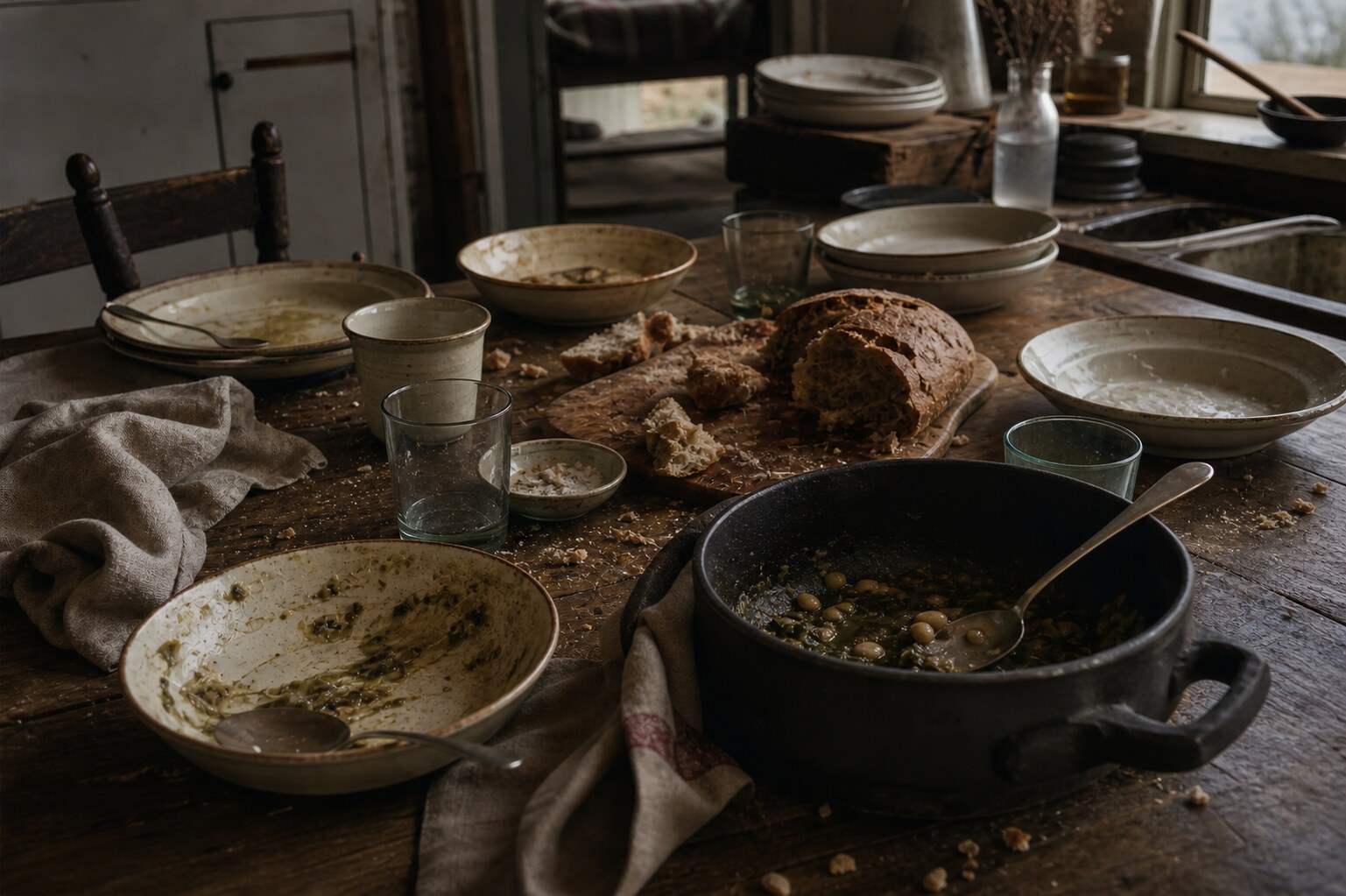
Somewhere along the way, dinner started performing.
Not at my table, but everywhere around it — a whole genre of cooking that exists to be seen. The food is arranged, lit, shot, and only then, if there’s time and it hasn’t gone cold, eaten. The eating is almost an afterthought. The dish was really made for a lens and an audience that isn’t in the room.
I want to say the plain thing out loud, because it’s gone strangely out of fashion: the meal is for the people at the table. That’s all. That’s the whole job.
If a supper feeds the people in front of you and gives them an hour of being warm and fed and slightly argued with, it succeeded, completely, whether or not it would photograph. And most of the best ones wouldn’t. The best ones are a little ugly. The sauce broke a bit. The components sit next to each other instead of composed. Someone reached across someone. There are elbows in it.
Food made for evidence and food made for people are not the same food, and you can taste the difference. The first is anxious. It’s holding its stomach in. The second relaxes into the table and lets you relax too.
This changes what you cook, if you let it. You stop reaching for the dish that impresses and start reaching for the one that feeds — the pot that can stretch to the extra person, the thing that’s better for having waited, the meal nobody photographs because everyone’s too busy eating it. You cook for the mouths, not the feed.
It also lets you off a particular hook. You don’t have to get it right. A table forgives what a camera won’t. Too much anchovy and too much cream cancel each other out somewhere around the third bite, and nobody at the table is filing a report. The tongue sorts it quietly. The people are having dinner, not conducting an inspection.
And here’s the part the performance leaves out entirely, because it isn’t beautiful: the meal isn’t over when the plates are empty. It’s over when the kitchen is clean. The pot scrubbed, the counter wiped, the wooden spoon dried and back in the drawer with its one dark spot. That last unglamorous half hour is part of the meal — the cost of having fed people, paid quietly after they’ve gone home warm.
Cook the food. Feed the people. Wash the pot. Somewhere in there is the entire thing, and none of it needs an audience.
If you want the practical version of all this, start with what I make when everyone arrives cold. It’s a stew. It isn’t much to look at. That’s rather the point.