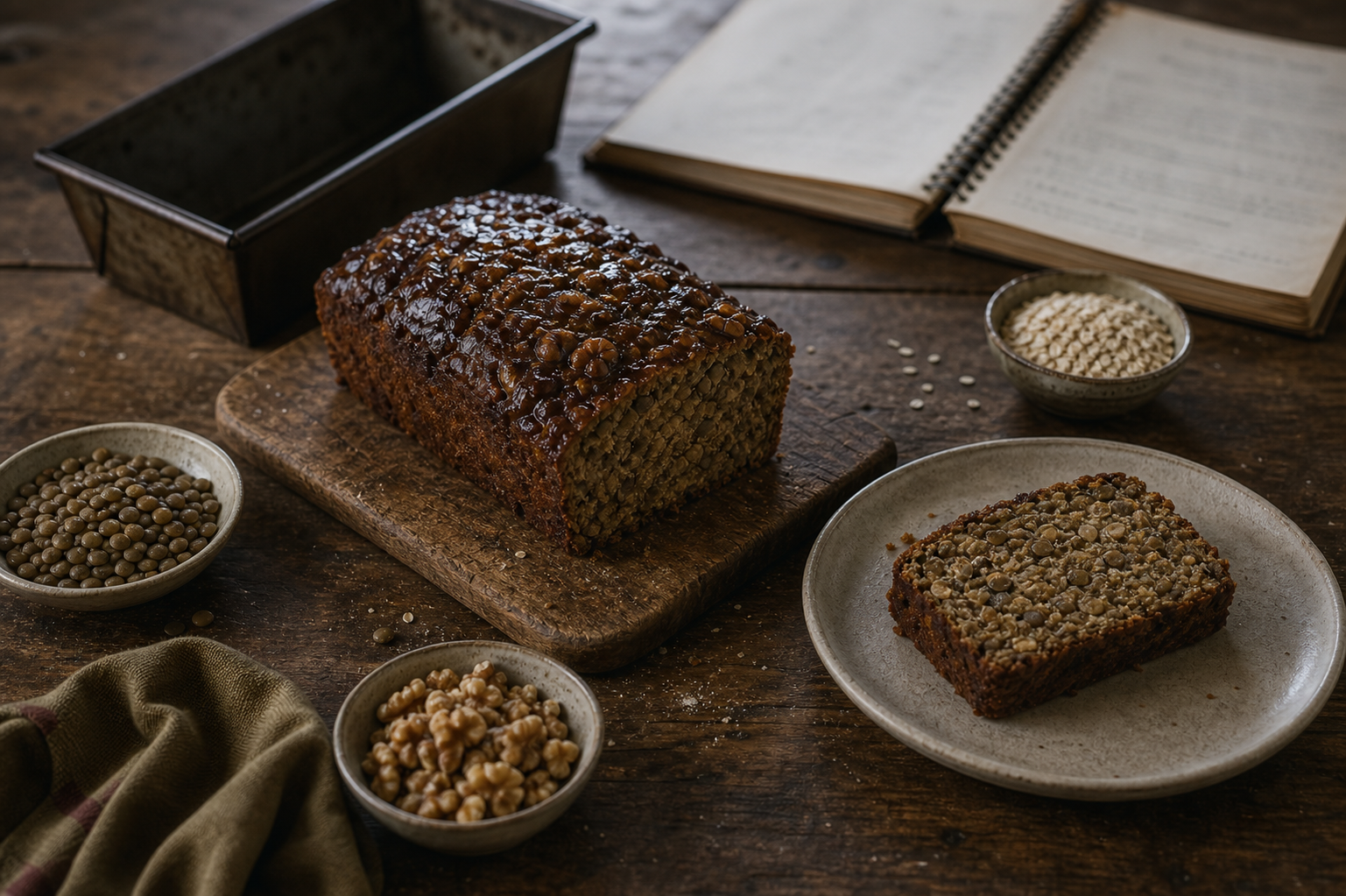
I tipped the pan into my palm. The aluminum was warm, safe for bare fingertips. The loaf came free one corner at a time. A damp pull. An uneven thud against the steel. One corner stayed attached. The pan was old. Scratches mapped the floor. A line of baked grease had gathered in the seams. It had seen a hundred batches. It remembered the shape.
I turned the loaf onto the wire rack. The bottom faced up. It was pale and held the exact corners of the tin. A faint grease shine sat on the flat surface. The edges were hard and squared. I left it to cool.
I had greased it with a saved butter wrapper. The paper held a thin layer of salt. My thumb missed a spot near the back. The bread found it. A few grains of flour had turned to paste in that dry corner.
I slid a dull butter knife down the stuck side. The metal squeaked. The compressed crumb tore. It left a thumb-sized patch behind. Steam escaped the exposed interior. It looked raw, though it had baked for forty minutes. The pan kept a piece from the heel.
The domed top had air and room. The underside carried pressure and kept the pan’s exact shape. This was the side that proved where the loaf had been.
I turned the bread upright. The brown crust looked intact. The wire rack began pressing a faint grid into the damp underside. I set the pan in the sink. I ran the tap. Water hit the aluminum. It made a flat sound. I did not scrape the corner. The patch of crust remained there, turning gray as it soaked.