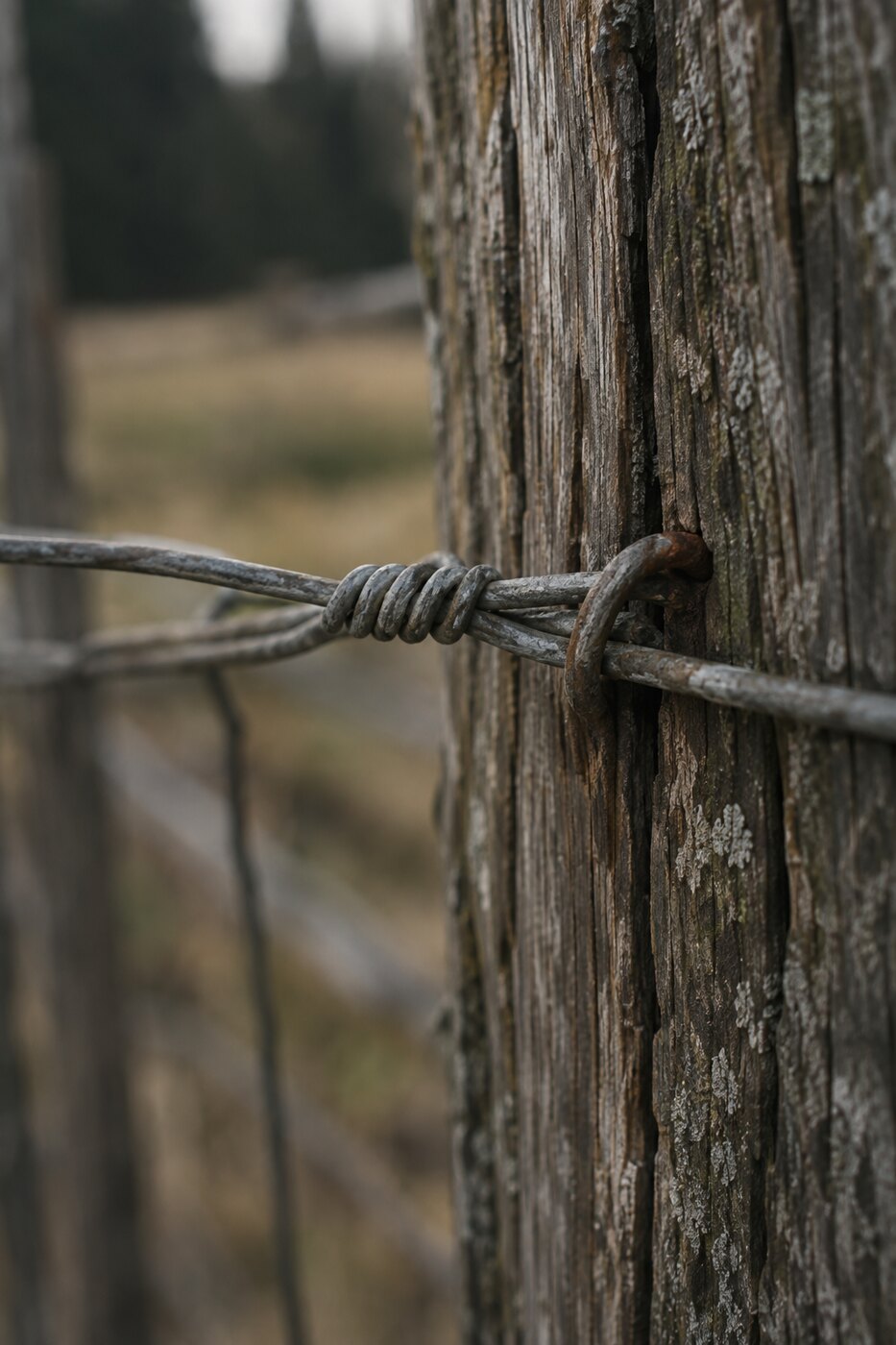
The lower wire had gone slack between two posts. It moved when the wind reached the field. A dull gray line, stiff with cold. I followed it to the cedar. The wood was splitting near the ground, damp at the root. Behind the post, the broken ends came up three inches short.
I pulled them together with fencing pliers. They still did not meet. The pliers had a stiff hinge and old grease around the pin. I worked the handles open and closed once, just to feel the resistance. The jaws left shallow crescents in the rusted steel. I fed a short piece of new galvanized wire between them. The new wire showed every place I touched it. It was too bright for the rest of the line.
The first turn held the pieces near each other. I worked the handles down. The knot formed behind the wood, where the staples still held a memory of tension. The metal creaked and bit into itself. It took six full rotations before the tension pulled the old strands straight. The pliers slipped once on the smooth coating. I reset my grip and leaned back to seat the twist.
The join sat thick against the bark. It had a toothed edge where the jaws had crossed. The straight line toward the road stayed flat. The repair was invisible unless you walked the working side, where the wire crossed itself three times. I trimmed the excess with the cutters. A four-inch curl dropped into the dirt. It kept its shape when I stepped on it.
The post leaned a fraction more toward the ditch. The bright wire caught the low sun. The dirt held the imprint of my boot. The wire would oxidize in a week. I left the pliers on the stump. The grease would harden by morning. The knot would keep turning inward until the wood finally gave.