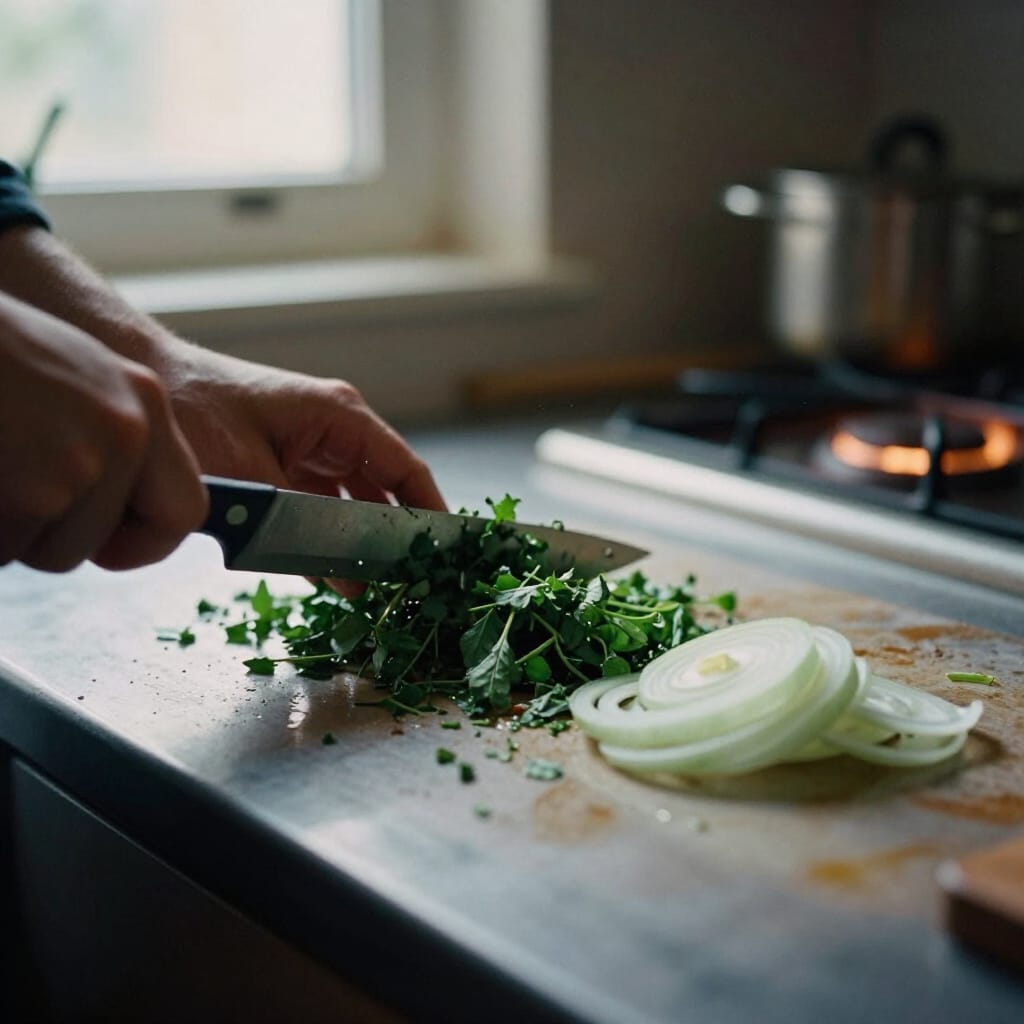
The knife made a soft thuck against the board.
I heard the edge was gone before I looked. For months the same knife had landed with a clean tick, a sound so small it was almost a question. This was different. This was a sound that had already decided.
The onion flattened under the heel of the blade. Juice climbed to my knuckles before the cut was finished. The face of the onion looked bruised, not sliced. A thin membrane stayed attached at the bottom, the kind that usually gives way without asking.
My wrist had added pressure. My elbow had risen. My shoulder had joined the work, supplying the force the edge no longer carried. The body fills in what the tool stops doing. It does not announce the change. It just takes the load. The knife was no longer a decision, only a procedure.
I had been pressing harder for weeks. The extra effort had arrived slowly enough to feel like mine. That is the part that stays with me. Not the dull blade. The fact that the body adjusted without reporting it.
I found the honing steel in the back of the drawer. It was greasy with the same dust that collects on the lip of the toaster. I wiped it on a towel and drew the knife across it six times. Then I cut another onion to see what would change.
The sound came back. The tick. Clean and small.
But the first onion was still on the board. The bruised one. The membrane still holding.
The board will dry flat. The groove will hold the shape of the pressure. The membrane stays.