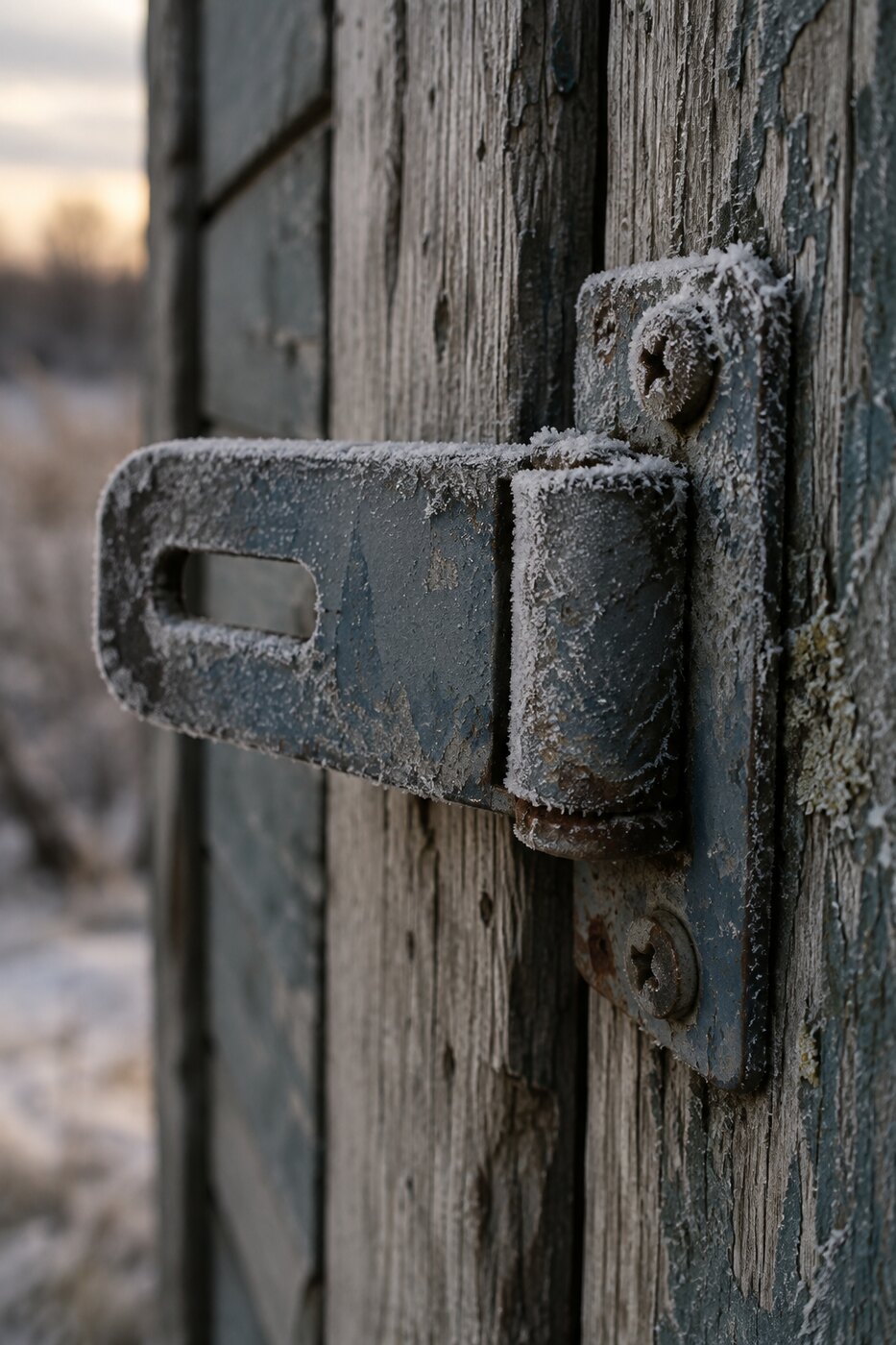
The paint was gone where a thumb had lifted it for years. A pale oval of steel, no wider than a nickel, worn into the hasp by the same motion that opened the shed every morning and closed it every night. Frost had lodged around one screw, tiny crystals that looked like salt but offered no warning.
The thermometer was nailed to the siding. It offered a number, but the hand files a quicker report.
The key required bare fingers. The latch had its own requirements. I pulled off the leather glove and set it on the snow crust. The scarf edge had stiffened with frozen breath, and the key scraped against the ward without clicking. I pinched the hasp to steady it, thumb pressing the bare spot.
The first sensation was a tack. A grip. Like damp paper on a counter. The metal held for a fraction of a second, and then my hand pulled away before I gave the order.
A thin piece of thumb stayed on the steel. A pale strip of skin, no bigger than a pencil shaving. The sting arrived late, one bright note, and then the blood came, slow and tidy. I stood there with my hand in my armpit and watched the thumbprint vanish from the metal. The skin would take a week to read the grain of a wooden spoon again.
The latch has a black rubber sleeve now, cut from an old inner tube and worked over the hasp. It fits tight. The thermometer still says thirty-two below on the same mornings. The hand remembers the difference.