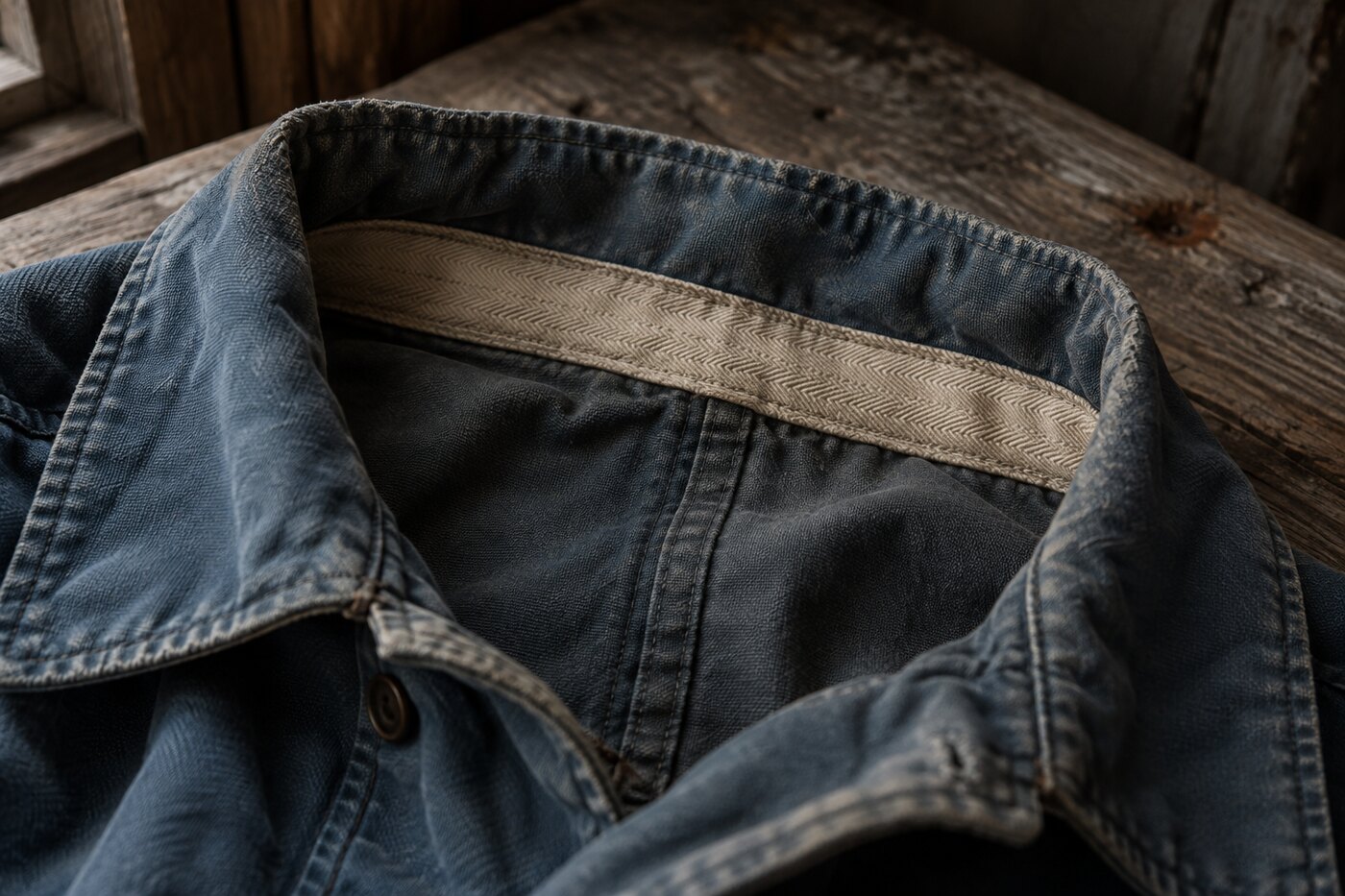
The jacket had weight to it on the rack, which is why I pulled it — canvas, not the stiff new kind but the kind that has given up and gone soft, broken at the elbows into pale fans of wear. I checked the lining and the cuffs and then, folding the collar back to see the seam, found the name.
Laundry marker on the twill tape, block capitals, black gone slightly rust with washing. Somebody had printed it steady and square, the way you write when the writing has to survive. Laundry marker is made to survive. It’s the ink you use when a thing is going somewhere it might get mixed up with everyone else’s — camp, a barracks, a care home. You don’t label a coat you’re keeping close. You label a coat that’s going into a common wash, a shared closet, a place where everything looks the same and comes back sorted by the name inside it.
The tape was worn nearly smooth where the collar had rubbed a neck for years. The letters had bled a hair at the edges, each wash pushing the ink a little further into the weave, so the name was softer now than the day it went on, but it hadn’t gone. That’s the thing about laundry marker. It outlasts the wearing.
The coat had left whatever place labeled it. The name stayed. It didn’t belong to the coat anymore than the price tag did, and it would go home with me now whether I wanted it or not, a stranger’s name against the back of my own neck.
I bought it. The collar wanted to fold that way now, along the crease, showing the name whenever it turned down.