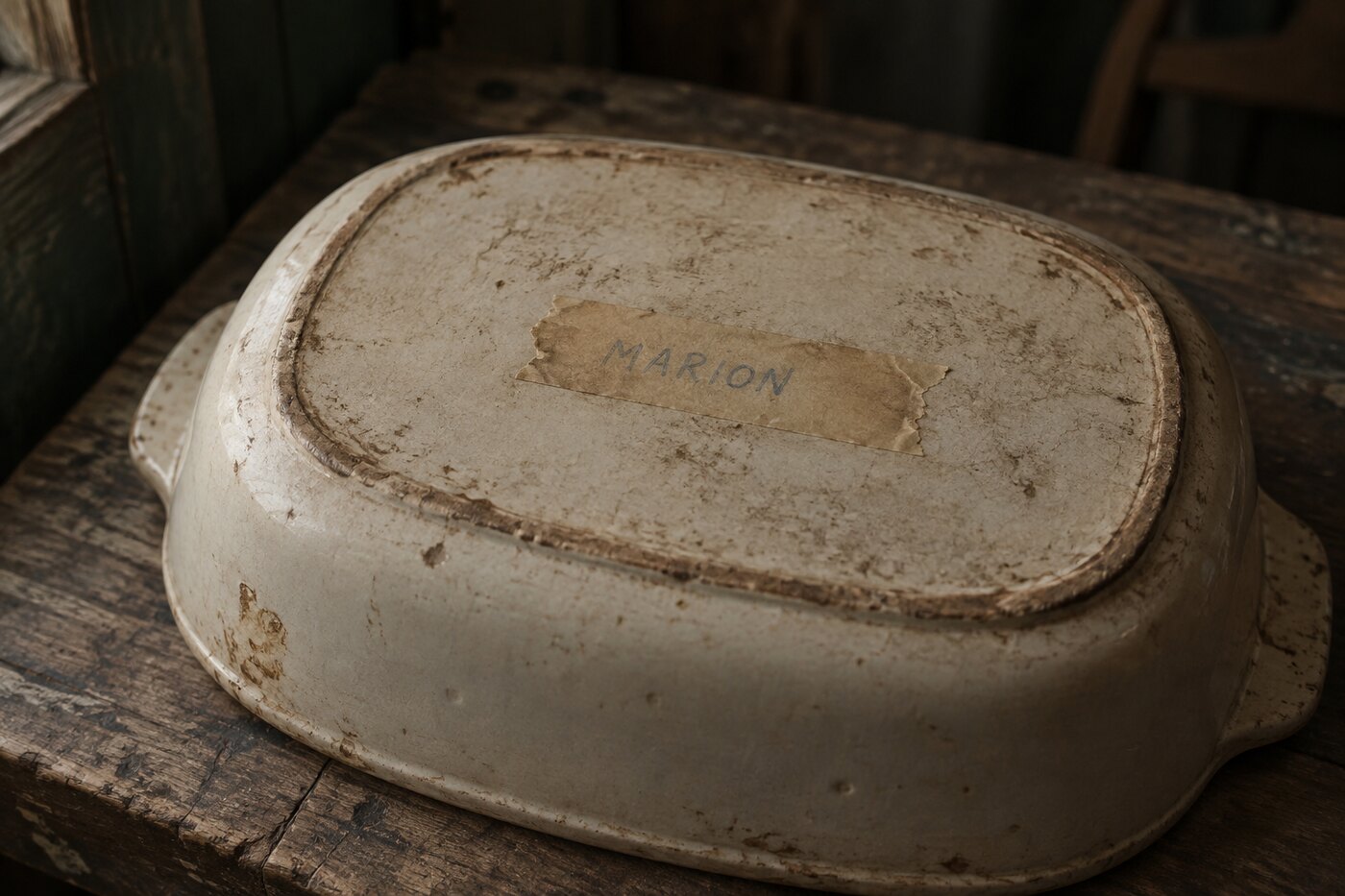
I turned it over to check for cracks, the way you do, and found the tape instead.
A strip of masking tape across the unglazed foot, gone the color of weak tea, curling at both ends where the glue had quit. MARION, in ballpoint, pressed hard enough that the pen had skipped once and she’d gone back over the R to make it take. The blue had faded but the grooves were still there. You could read it with a thumb in the dark.
The dish was heavy, stoneware, glazed a speckled brown inside with a scorched ring near the rim where the same casserole had bubbled up to the same line more than once. The bottom was scoured pale. This dish had been to ovens. It had come out hot, wrapped in a towel, and ridden on somebody’s lap to a hall or a basement with a coffee urn, which is what the tape was for. You label the bottom so it comes home. A church supper, a funeral lunch, a potluck where forty dishes sit in a row and every one of them is brown. The tape is how Marion finds her dish again at the end.
Except it didn’t find its way back to Marion. It found its way here, to a shelf of orphaned bakeware, two dollars, the tape still doing its one job to no one. Somewhere a supper ended and this dish went home in the wrong car, or no car, and the label that was supposed to prevent exactly that outlived the whole arrangement.
I bought it. The tape lifted a little more when I set it in the box, one corner standing up now, still holding, still saying whose it was.