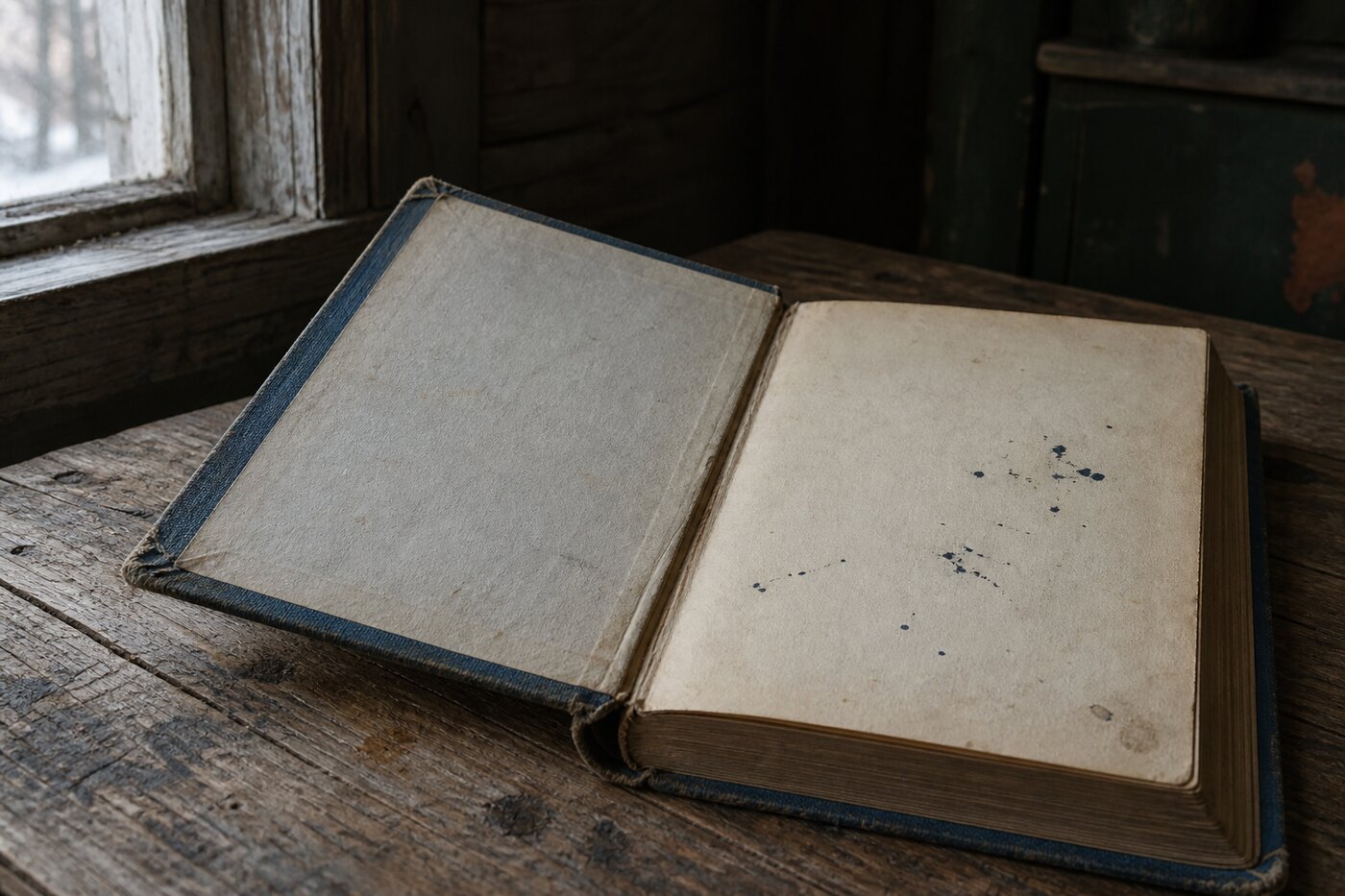
The cover was cloth, worn to the board at two corners, and the book fell open the way old books do, not to a page anyone loved but to the flyleaf, which is the emptiest page and therefore the one the spine gives up first.
There was writing on it. Fountain pen, blue-black, the ink faded unevenly so the downstrokes still held color and the fine lines had gone to almost nothing. To Ellen, may this find you well. Then a date. 1978. No name after it. The giver had signed with the gift and not with themselves.
I ran a finger over it, out of habit, though ink that old leaves nothing to feel. The pen had dug a little at the start of each word, where the nib caught before the ink flowed, so the E in Ellen sat in a faint trough you could see by tilting the page to the light. Someone had pressed. Someone had meant it.
The wish had a strange tense to it now. May this find you well. It was written to a moment in 1978 and it was still saying it, to no one, in a stranger’s hands, having found instead a used-book bin and a fifty-cent sticker over the price it first cost. Ellen was a name and nothing else. Whether the book had found her well, whether it had found her at all, whether she’d read past the flyleaf — none of it was in the book to know.
The sticker was on the back, and peeling. Under it, where the adhesive had lifted, the cloth was a darker green, the color the whole cover must have been the year the ink went down.