There is a kind of shopping that is about mood, and there is a kind that is about whether the shelf will hold. I do the second kind. The places I go are sorted in my head not by what they sell but by what happens if I choose wrong.
The grocery is the low-stakes end, mostly. A bad onion is a small betrayal, discovered later, at the cutting board, when the papery outside gives way to a soft brown core that was hiding the whole time. But even there the hand has to work — the produce section is the one part of the grocery that still asks something of you. You weigh, you press, you smell the stem end of a melon and pretend you know what you’re smelling for. Everything else in the store is behind a label doing your thinking. The produce makes you do your own.
The bakery counter is honest in a way the bread aisle isn’t. You can see the crust, the actual crack of it, and the person who will hand it to you had flour on their forearm an hour ago. The transaction is short. The bread goes stale on a clock you can watch.
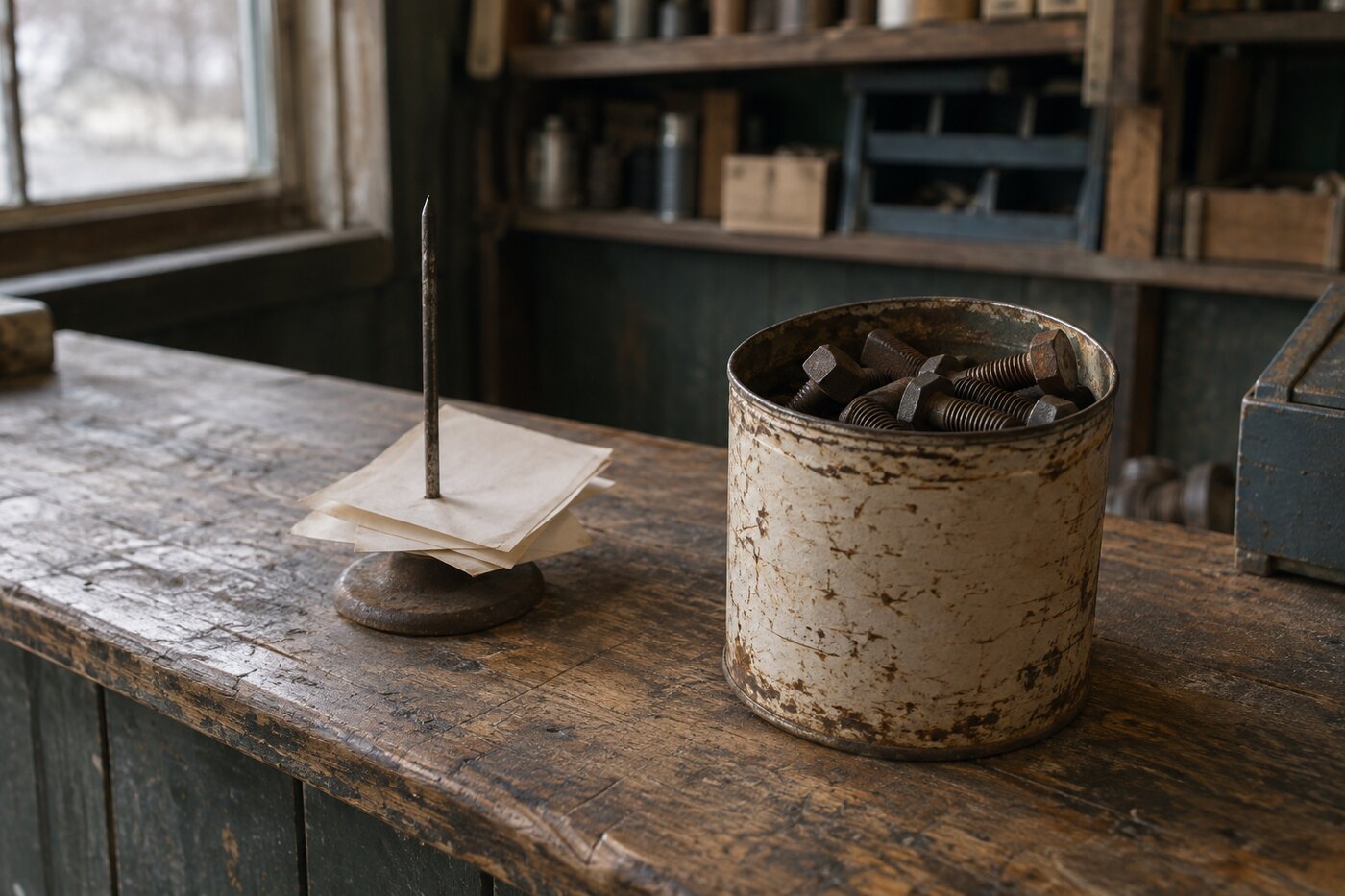
Then there are the places where the stakes get real, and those are the ones I trust most. The hardware store is the church of the second kind of shopping. You go in because something is broken or slack or about to be, and you stand at the bin of bolts turning one in your fingers, checking the thread against the one you brought in your pocket, wrapped in a tissue so you wouldn’t lose it. The wrong bolt is not a disappointment. It is a second trip. There is a coffee can of loose ones by the register, priced by the handful, and I have found what I needed in there more than once, fishing with my fingers among the strangers.
The feed store is the hardware store’s rural cousin, and it smells of grain and rubber and cold. Everything in it implies a responsibility waiting at home — a bag of chick starter means chicks, twine means a bale coming apart, fence staples mean a line down somewhere the wind got into. Nothing in a feed store is bought for pleasure. The bags are too heavy to be aspirational. You buy the weight because an animal is expecting it.
The flea market and the garage sale are the wild end of the map, where objects have come loose from their reasons. A table will hold a socket wrench, a commemorative spoon, and a single baby shoe, and the table is not embarrassed. You go through it with your hands because the eye lies about things like this. I bought a hand drill once at a driveway sale for less than a coffee, and the reason I bought it was the chuck — it turned smooth and true, no grit in it, someone had kept it oiled for forty years and then died or moved or simply let it go. The object outlasted its keeping.
The surplus store is where things end up that were made for a purpose that ended. Cots, canvas, tins of hardware in quantities no household needs. You buy there when you want a thing built heavier than the current world bothers to build it. The fruit stand and the farmers market are the short routes — the tomato that was on a plant this week, the eggs still cool from a barn, sold by the person who gathered them, who will look at you a certain way if you squeeze too hard.
What ties the map together is that every stop is a small bet on the near future. The bolt has to fit the hole that already exists. The feed has to match the mouth waiting for it. The tomato has to still be a tomato by the time it reaches the counter at home. You are not decorating a life. You are provisioning one, against a specific coming week, and the week does not accept substitutions gracefully.
I left the hardware store with the right bolt, the one that matched the tissue-wrapped sample, and dropped the sample back in my pocket out of habit. It rode home there, the old bolt, retired now, kept for no reason except that it had done its job of being a shape to match. It is still in the coat. I find it sometimes with my keys, a small cold weight that fits a hole I have already filled.