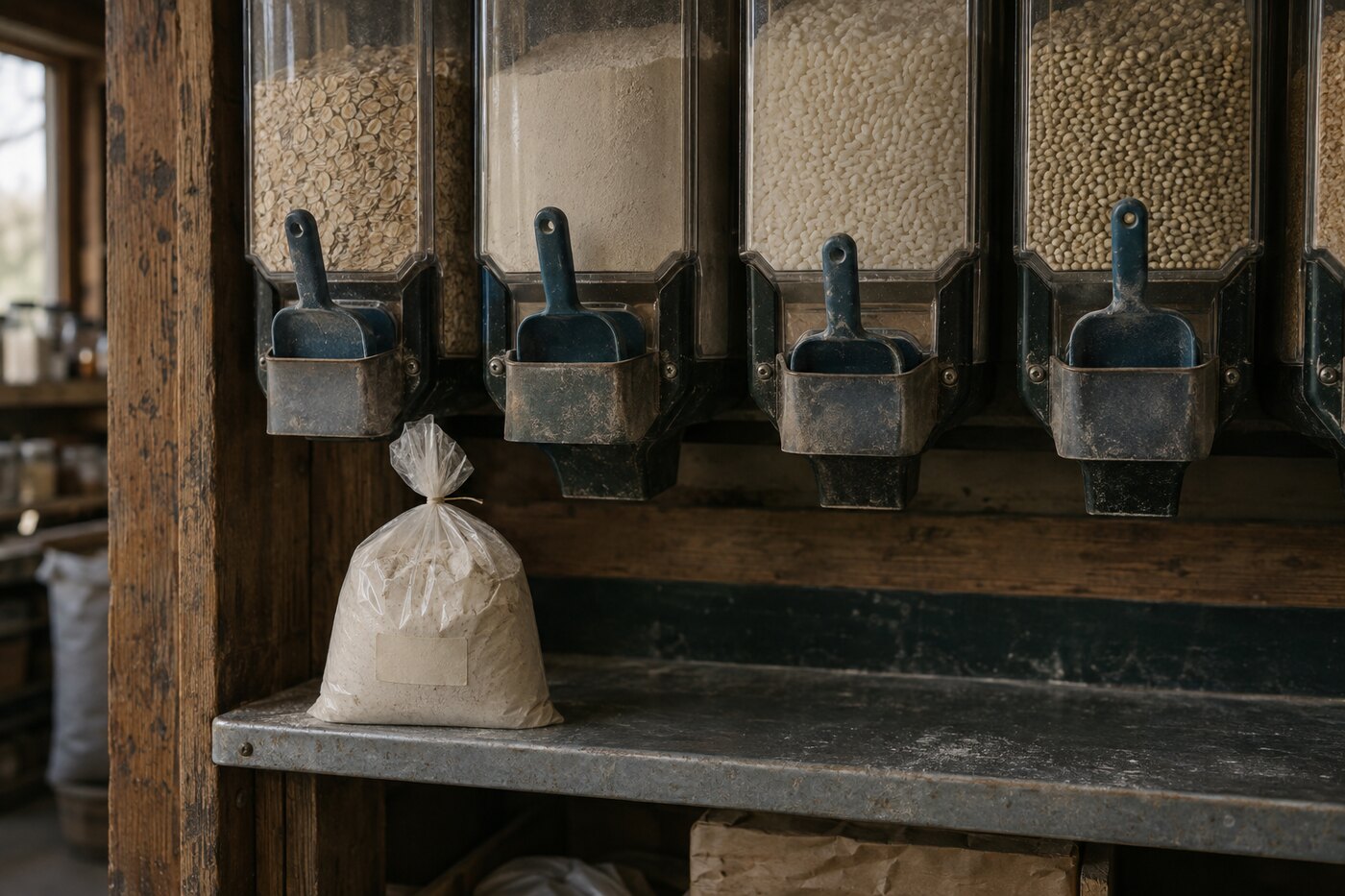
A small bag of lentils is dinner. A twenty-five-pound sack is a theory of the future, and I stood in the aisle holding both, deciding which kind of person I planned to be by Thursday.
The bins ran along the wall in a gray row, each with a scoop and a lid that never quite closed. I ran my thumb down the numbers on the bin edges. Red lentils, green, a split pea the color of old paint. The scoop in the oats had gone in handle-first and stayed there, buried past the grip, left by someone who had taken what they came for and not bothered to right the tool. I pulled it out. Oats slid off the metal and ticked back into the bin, and the smell came up dry and faintly sweet, like the inside of a paper sack.
You learn the weight before you learn anything else. A twenty-five-pound bag of flour is not carried, it is negotiated. You get a shoulder under it or a hip against it, and you walk differently the rest of the store, listing to one side, apologizing to the cart. The bag has opinions about where it wants to go. I have set one down on a car seat and felt the whole car settle.
The beans I scooped myself. There is a sound to it that nothing else makes — dry beans pouring into a plastic bag, a hard bright rattle that softens as the bag fills and the beans land on beans instead of on film. Navy beans, a pound and a half by the hanging scale, the needle swinging past and drifting back. I twisted the tie and wrote the bin number on the tag in pencil, because the store trusted you to remember, and because the number was the only thing standing between the beans and becoming anonymous forever in a cupboard.
That is the whole trouble with bulk. It arrives full of intention and then it has to be labeled or it turns into a mystery. I have a jar at home marked FLOUR in marker that has held three different flours and one long stretch of nothing. The label outlived its own truth. Marker and optimism, both of them fading at their own speed.
But the jars are why anyone does it. A shelf of them, filled and lined up, makes a household look temporarily competent. Rice to a certain line, sugar to another, the beans I had just scooped waiting to go behind glass. For about a week the pantry looks like a place run by someone with a plan. Then the rice drops below the line and does not come back up, and the competence turns out to have been a photograph, not a condition.
I brought my own container for the honey, a wide-mouth jar that used to hold pickles and still, faintly, said so. You tare it on the scale, zero out the glass, and let the honey climb the walls slow as it wants to climb. It came out of the spigot in a rope that thinned and swung and finally broke, and a last bead hung at the nozzle and would not fall. The jar smelled of honey and, underneath, of dill. It would smell of both for months. I had bought pickles once and they were still in the room, in the glass, arguing.
Down the aisle a man was filling a bag with something I couldn’t see, and he had the look people get in bulk — the arithmetic look, price-per-pound against how-much-will-we-actually-eat, the fear of the sack that goes to weevils before it goes to bread. It is the fear of committing to an appetite you don’t have yet. A pound of anything is a decision. Twenty-five pounds is a marriage.
I put the small lentils back and took the medium bag, which is what you do when you can’t tell the truth about the future but don’t want to lie about it either. The scoop went back into the oats, and I set it flat this time, across the top, though I knew the next person would drive it under again. Some tools are only ever found buried.
At the register the flour rode the belt like a sleeping animal and the checker did not try to lift it, just turned it to find the code. The honey jar sweated a little in the warm store. On the belt, where the pickle jar had sat, it left a faint ring of damp, and the ring held the round shape of the glass after the glass moved on.