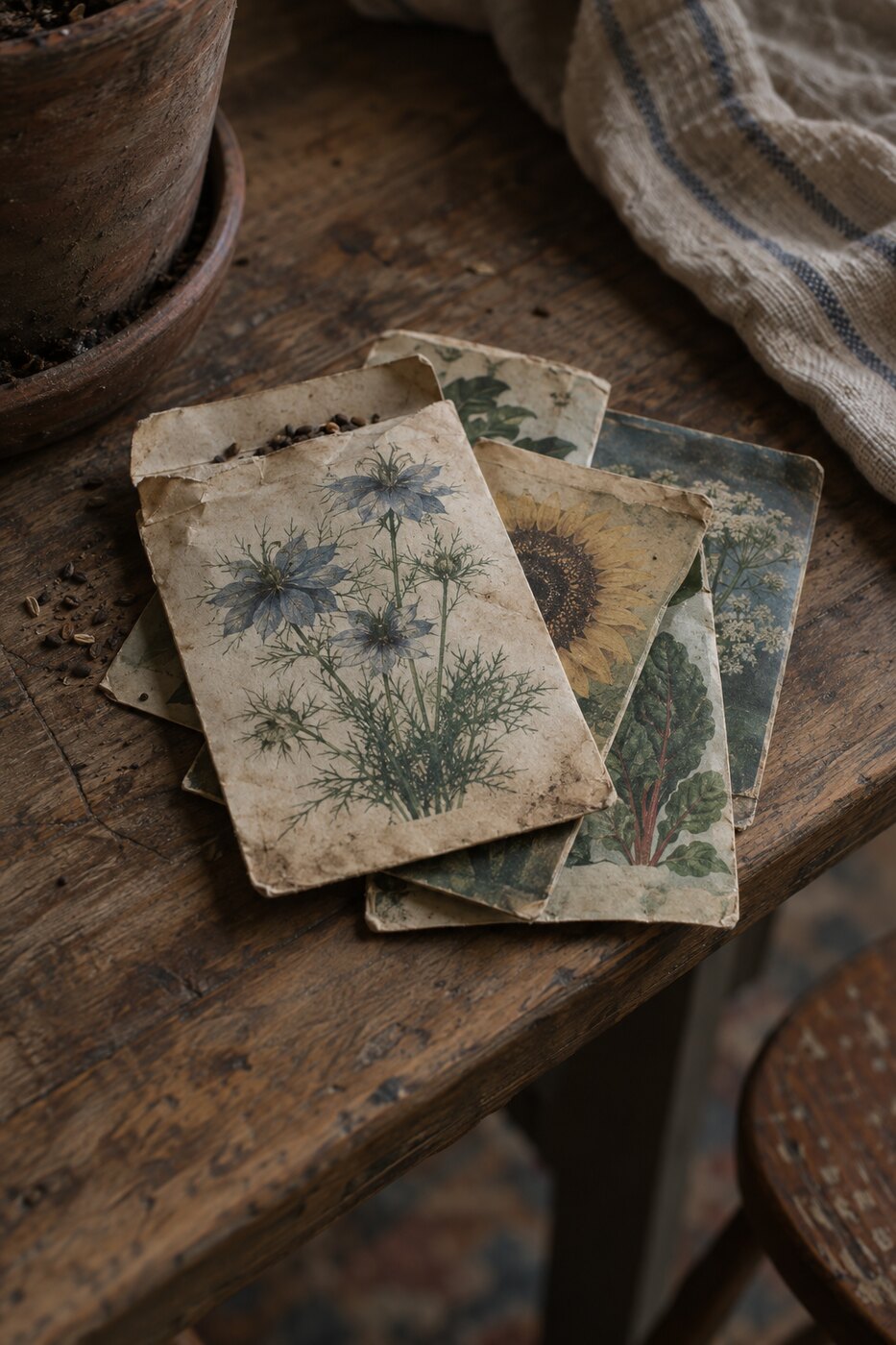
They were in the drawer with the string and the fuses, a rubber band around them that had gone to glue on one side and snapped when I picked them up. Five packets, maybe six. The paper had changed since I bought them. It had gone soft the way paper goes soft when it has spent a couple of years in a drawer that is sometimes damp — not wet, just furred, the surface lifting into a faint nap you can feel more than see. The corners were rounded off from handling and from nothing at all. The ink had given up its blacks for browns.
The illustration on the front of the top one was a tomato. It was a magnificent tomato. It was rounder and redder and more certain of itself than any tomato I have ever grown or ever will, sitting there on the paper in a light that does not fall on my garden, casting a shadow that promises weight. Underneath it the variety name in a hopeful typeface, and down in the corner, small, the part that actually matters: PACKED FOR, and a year. The year was two seasons gone.
I shook the packet next to my ear, which is a thing you do without deciding to.
The sound is the whole truth of the packet, or as much of it as you get for free. A dry shift, a small slide of the seeds against the paper and against each other. Tomato seeds are light and flat and they whisper. Some packets rattle — the squash, the beet, seeds with some body to them — and you learn to listen past the loud ones for the ones that sound wrong. Too light. A shift that is more paper than seed. That is a packet where some of what is inside has gone hollow, dried past the point of coming back, seeds that will go in the ground and do nothing but soften and disappear.
Because that is the thing about the packet, and I stood at the drawer turning it over in my hand thinking about it. The packet is loud with instructions. The back is a small confident paragraph of them: sow one-quarter inch deep, thin to eighteen inches, full sun, sixty to eighty days to maturity, water evenly. It tells you exactly what to do in the firm voice of something that knows. And it does not know the one thing that matters most, which is whether the seeds it is giving instructions about are alive. It cannot tell. It prints the same sixty-to-eighty-days on the back of a packet full of the quick and a packet full of the dead. The illustration promises the tomato. The date whispers that some of the promise expired a year ago. The instructions carry on as if none of that were in question.
It is hope with the fine print printed right there beside it. Optimism you paid for, dated like a receipt, filed in a drawer between the string and the fuses, and then half-forgotten past the point where the hope was still good. The confident tomato has no idea how many of its own seeds are already gone. Neither do I, standing there. Only the ground is going to know, and the ground is not going to say until spring.
So I decided the way you decide these things, which is to not throw them out.
You sow them anyway. That is the answer to an old packet. You sow them thicker than the back tells you to — the back is talking to fresh seed, and this is not fresh seed, so you double it, triple the pinch, put down four where the confident paragraph says one, and let the dead ones make room by simply not coming up. You overplant against the odds you can’t read. Some of these will sprout. Some are already past it. The only way to find out which is to put all of them in the dirt and wait, and the waiting is the part the packet cannot help you with.
I set the tomato back on the pile and squared the corners up, though the corners would not square, being soft. Put them on the sill by the door where I will see them when the ground thaws, so I won’t forget them a third year into the drawer.
Through the furred paper of the top packet, where the seam had loosened, one flat seed had worked its way to the very corner and lodged there. I could see it against the light, a small dark oval, giving nothing away — not whether it would rise in May, not whether it was already finished, just sitting in the corner of the paper it came in, waiting for the dirt to tell it which.