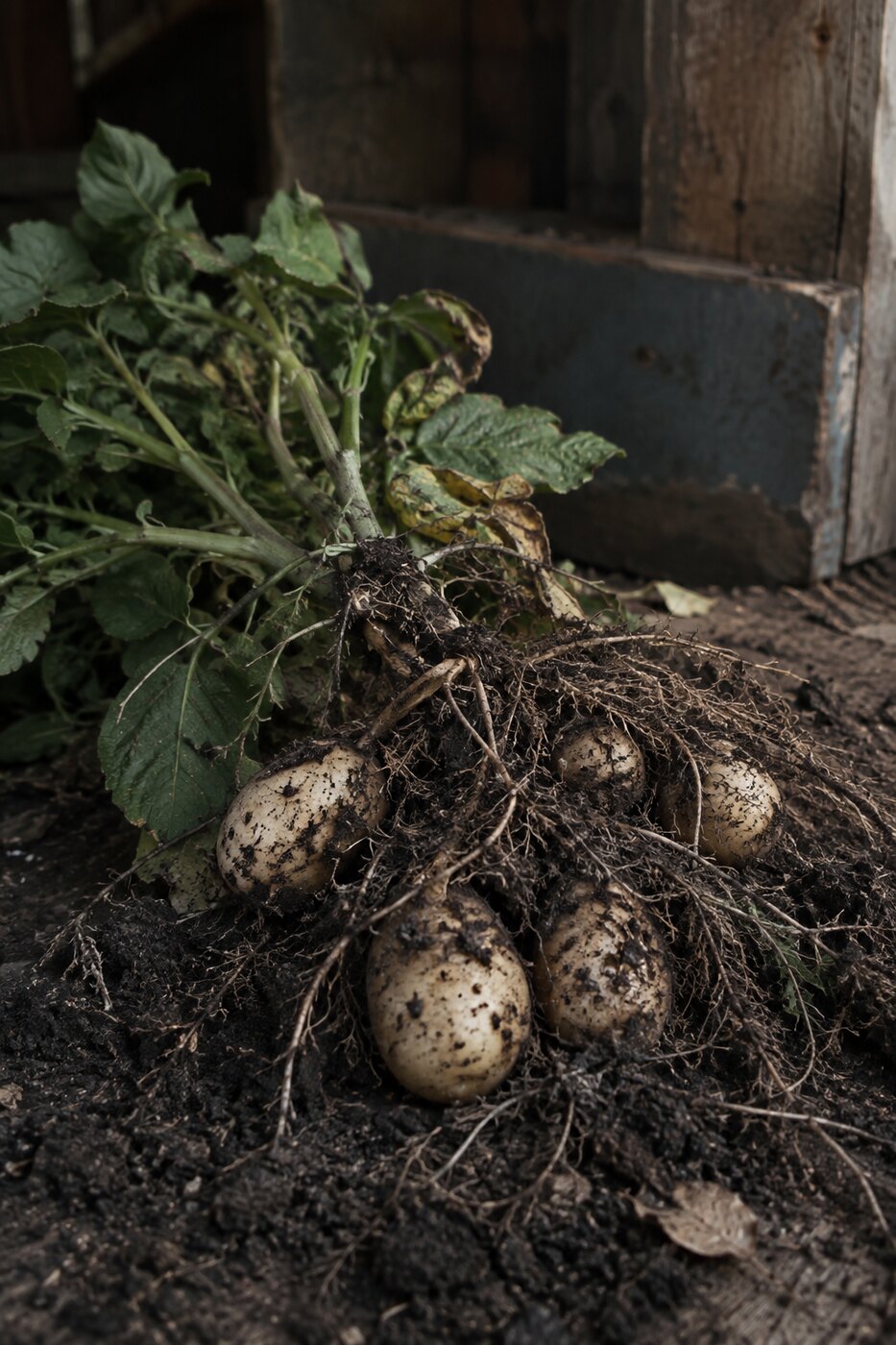
The plant was still green. That is the hard part. It had not gone yellow and slack the way the books want before you dig. But the flowers had come and gone, and I wanted new potatoes, small ones, waxy, and for those you kill the plant early and take what it has made so far.
I took the stem low, in a fist, where it went woody near the ground. The leaves were rough and cool and smelled sharp, that green tomato-cousin smell that stays on the fingers.
Then the yank.
You lean back and pull straight up, and for a second the whole hill resists, the roots holding the whole plant to the world at once. Then the soil breaks. It gives with a sound more felt than heard, a low tearing, and the plant comes up trailing a fistful of dirt and roots and, hanging in the roots like held breath, the potatoes.
Four of them. Pale, thin-skinned, the size of eggs and smaller. The dirt clung in the eyes. One had come loose in the ground and I had to go back on my knees and feel for it, blind, in the cool crumbling hole where the plant had been.
The plant lay on the row, uprooted, already wilting though it did not know it yet. Green leaves, and the small crop stripped off the roots into my other hand.
I filled the hole back in with the loose dirt, out of habit, though nothing would grow there now this year.
The pulled plant stayed on the row. By the time I reached the house the cut roots had gone limp, and the torn ground where it had stood was already drying pale at the edges.