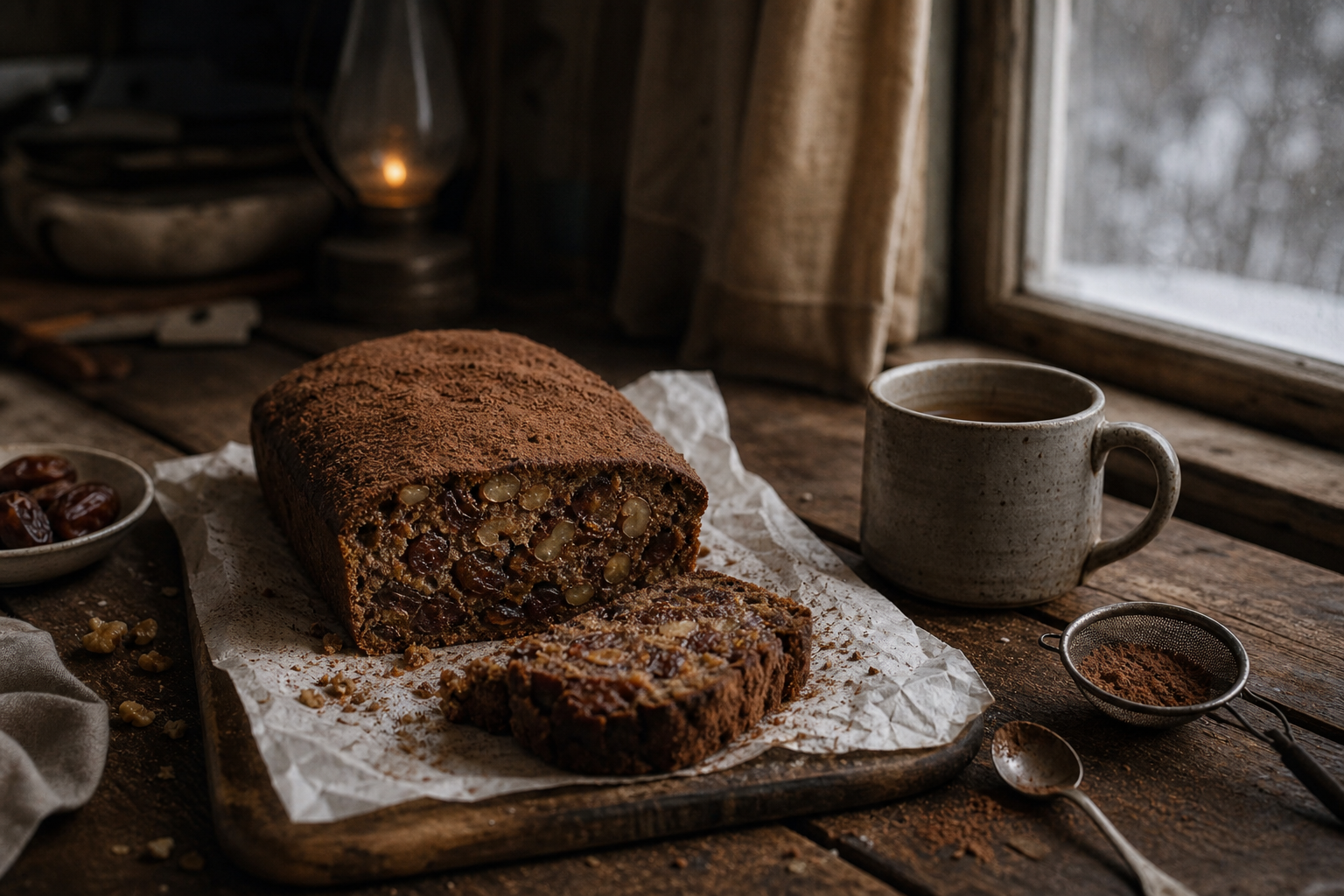
The loaf came out squat. It had risen an inch and quit, and baked into a brick with a pale seam where the crust had given up trying to brown. I knew it going in. You bake it anyway. You always finish the loaf.
It weighed too much in the hand. Bread should feel like it is mostly air kept in by habit. This felt like a stone someone had wrapped in a towel.
I set it on the board and tried a slice, for form. The knife dragged. The crumb inside was tight and damp and gray, the holes too small and too even, a wall instead of a web. Not enough lift. The yeast, or the flour, or my patience with the second rise. You never learn which.
So you take it apart.
You break it against itself. A dense loaf will not pull like a good one, in long soft ropes. It comes off in lumps, and each lump has to be crushed between the thumbs to make it smaller. I worked it down over a bowl. The heel first, then the middle, wringing the tight crumb until it fell as coarse grit.
Half to the crumb jar for coating fish. Half to the pan by the door for the birds, who do not audit the rise.
The bowl filled with a rubble of gray-brown that no longer pretended to be a loaf. Better as this than as bread. It would go further as crumbs than it ever would as slices.
A crust corner had missed the bowl and landed on the board. I pressed my thumb on it. It held the print, and stayed pressed, the way clay does before it dries.