A candle never burns all the way. There is always a last half inch it cannot reach — the flame drowns in its own melt, or the wick lies down in the pool and gives up, and you are left with a stub too short to light, a coin of wax with a black nub in the middle of it.
And the drips. Wherever a candle stood there is a rind of wax below it, run down and hardened on the saucer, gray-white and lumped, holding the shape of the run.
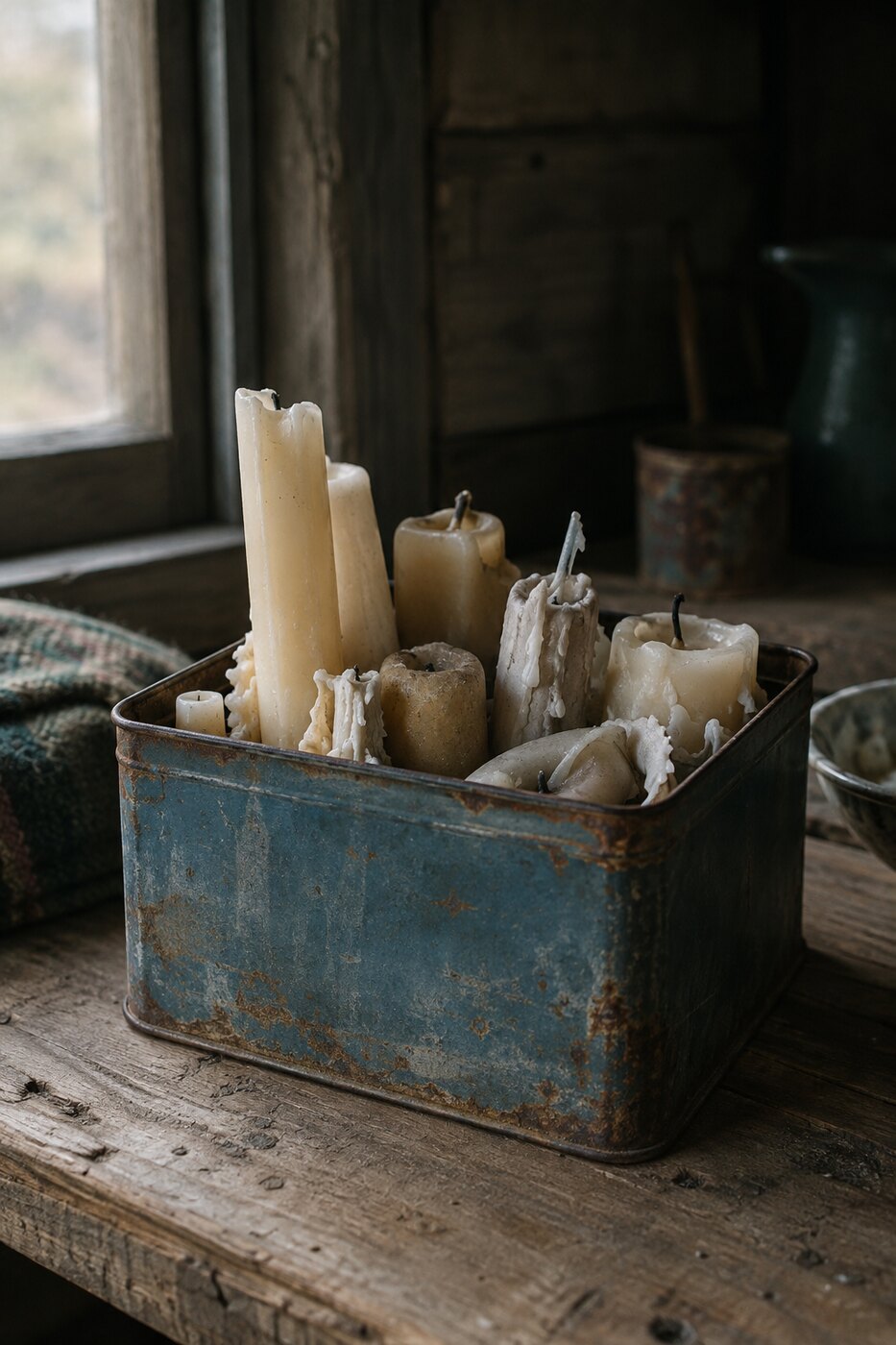
I pry them up with a knife and they go in the tin. An old cocoa tin, the lid stiff. It is half full now, a jumble of stubs and rinds and one whole taper that broke, all of them different waxes, different ages, a few still holding a color from whatever they were once — a pink, a green gone pale.
They are saved for two things. The power goes out here, in the deep cold, and then any wax with any wick will do; you light the stubs in a jar and they give what they have left. Or, someday, I melt them all together and pour a new candle, one wick down the middle, a mongrel thing striped with every color that went into it.
Either way, the flame that could not finish them will get another chance at the same wax.
The tin sat on the shelf by the matches. The stubs had welded a little to each other where a warm day had softened them and a cold one set them again, one mass now, the black wick ends sticking up out of it like reeds out of ice.