The lace let go at the ankle eyelet, where it always does, where the bend and the pull and the wet meet. It did not fray slow. It parted, and I was left holding a boot half-laced and a length of lace too short to make the top eyelets meet.
You cannot shorten a boot to fit a lace. So it came out of the boot and lived in the junk drawer a while, coiled, browned, the aglet gone off one end so it ended in a soft fray.
In June I took it out to the garden. The tomatoes had come up faster than the twine I meant to buy, leaning off their stakes, heavy at the top and reaching. A plant will fall over and rot against the ground given the chance.
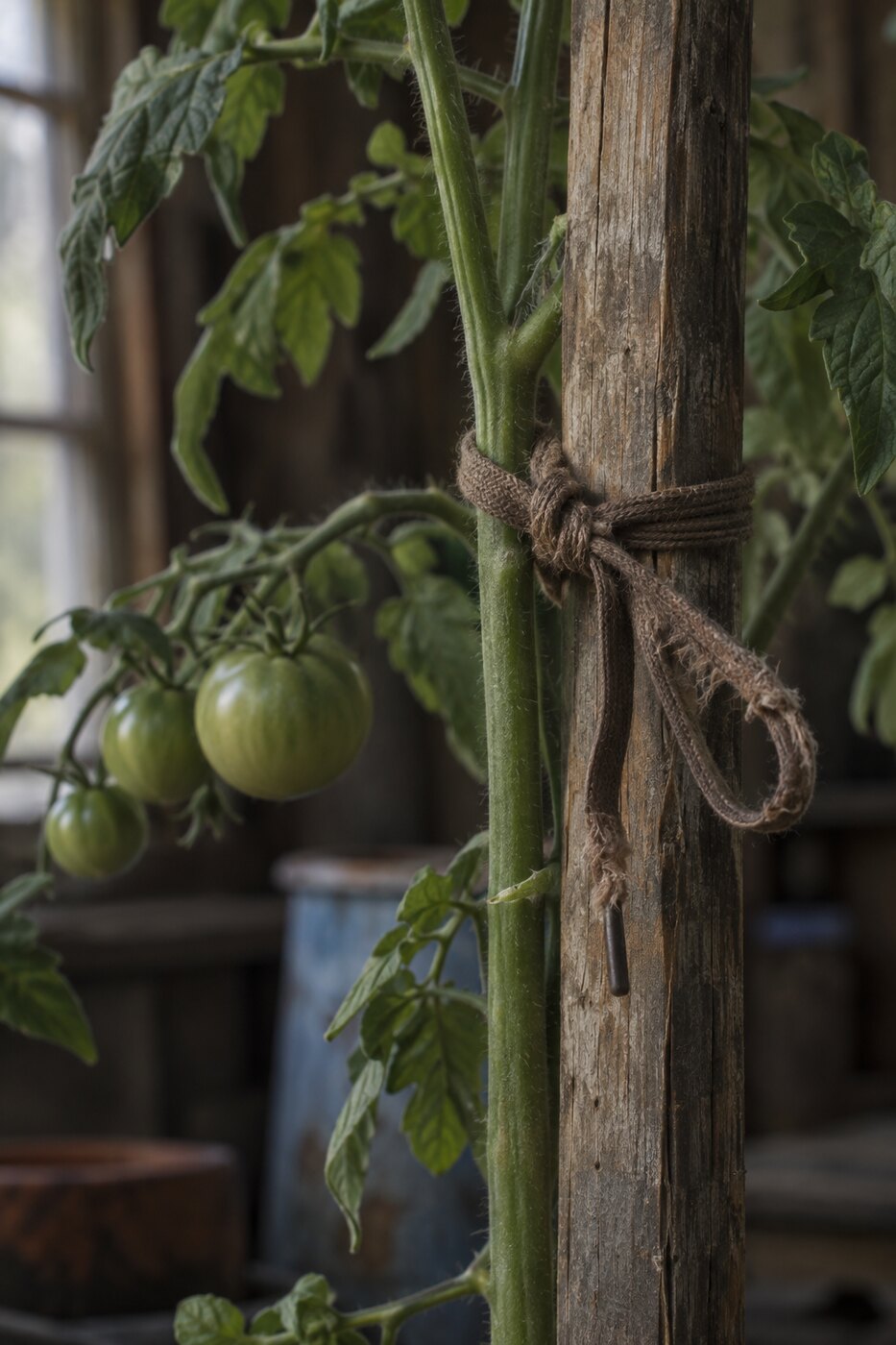
The lace was right for it. Long enough now, in a way it was too short before — the job had changed, and what failed the boot fit the stake. I looped it around the stem and the wood and tied it off.
But loose. You tie a tomato loose. A stem thickens through the summer, and a tight knot will strangle it, cut a dark ring into the green as the plant swells against it. So the knot was different from a boot knot — a slack figure eight, room left in it, meaning to be undone and moved up as the plant climbed.
By August the lace had faded to the gray of everything left outside. The stem had grown to fill the loop and touch it, not yet biting, the green just resting against the old brown cord.