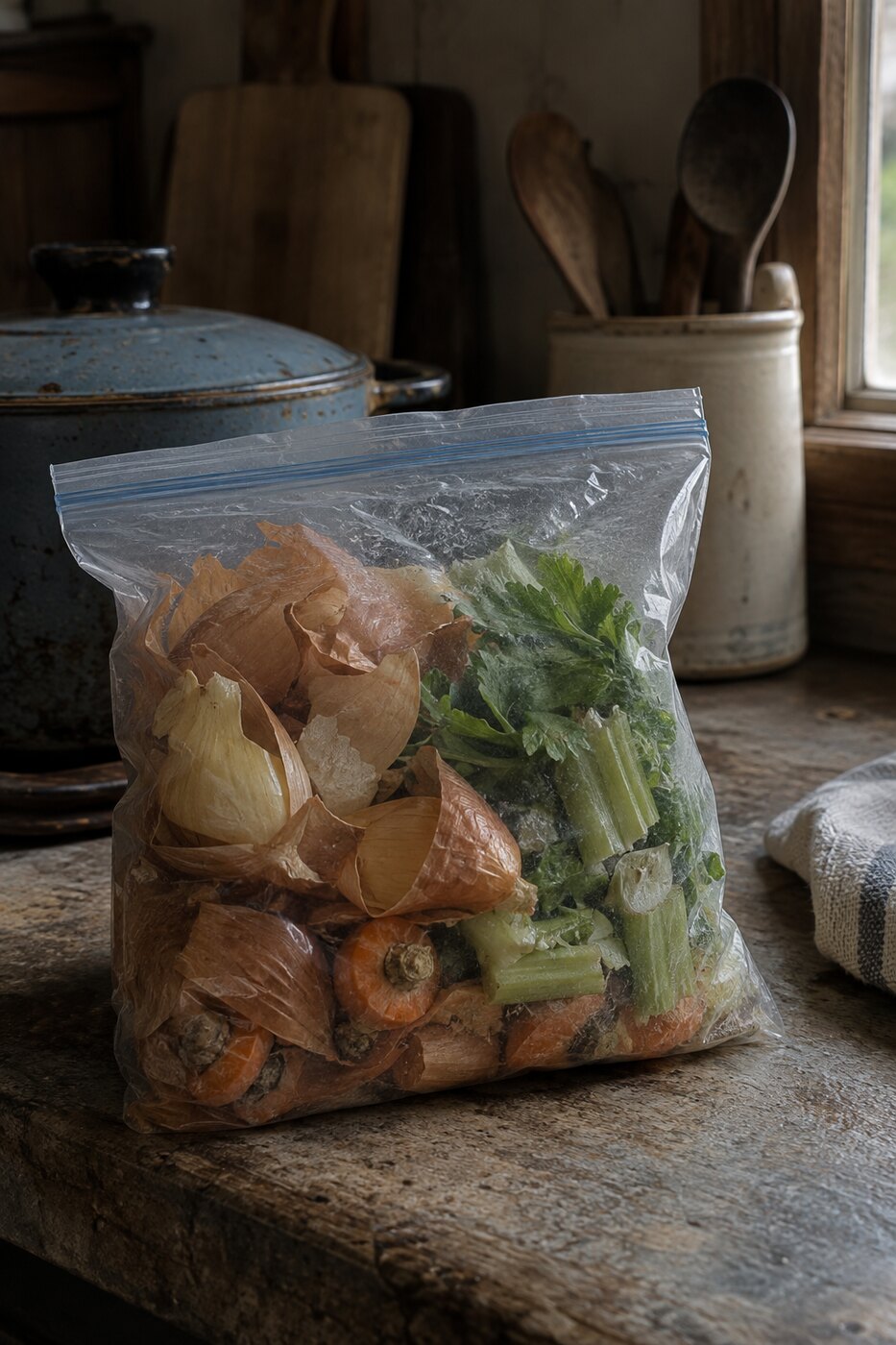
The skins come off in three layers before you reach the onion. The dry gold paper that crackles, then a tougher amber one, then the first pale slick layer that is nearly the onion but not quite, too thin to want in a dish. The knife takes the root end and the dry crown, and there is a small pile of it on the board, gold and papery, the part you would sweep into the bin without thinking.
I do not sweep it into the bin. It goes into a bag in the freezer.
Carrot ends go there too, the woody top and the tail. The base of the celery, the part with the pale ribs. Garlic paper. Leek tops too dark to eat. The bag fills over a week or two, a compost that is not compost, held at a stop.
At the cutting board it is refuse. In the pot it is the opposite. You tip the frozen bag into water and let it go slow for an afternoon, and the skins that were garbage give the broth a color you cannot get any other way — a deep brown-gold that the onion flesh itself will not surrender. The paper holds the color. The dye is in the part you throw away.
The bag stood open on the counter while I added the day’s ends, breathing out cold. The gold skins had frosted where they touched the plastic, each papery layer stiff and separate, waiting for the water that would finally take them apart.