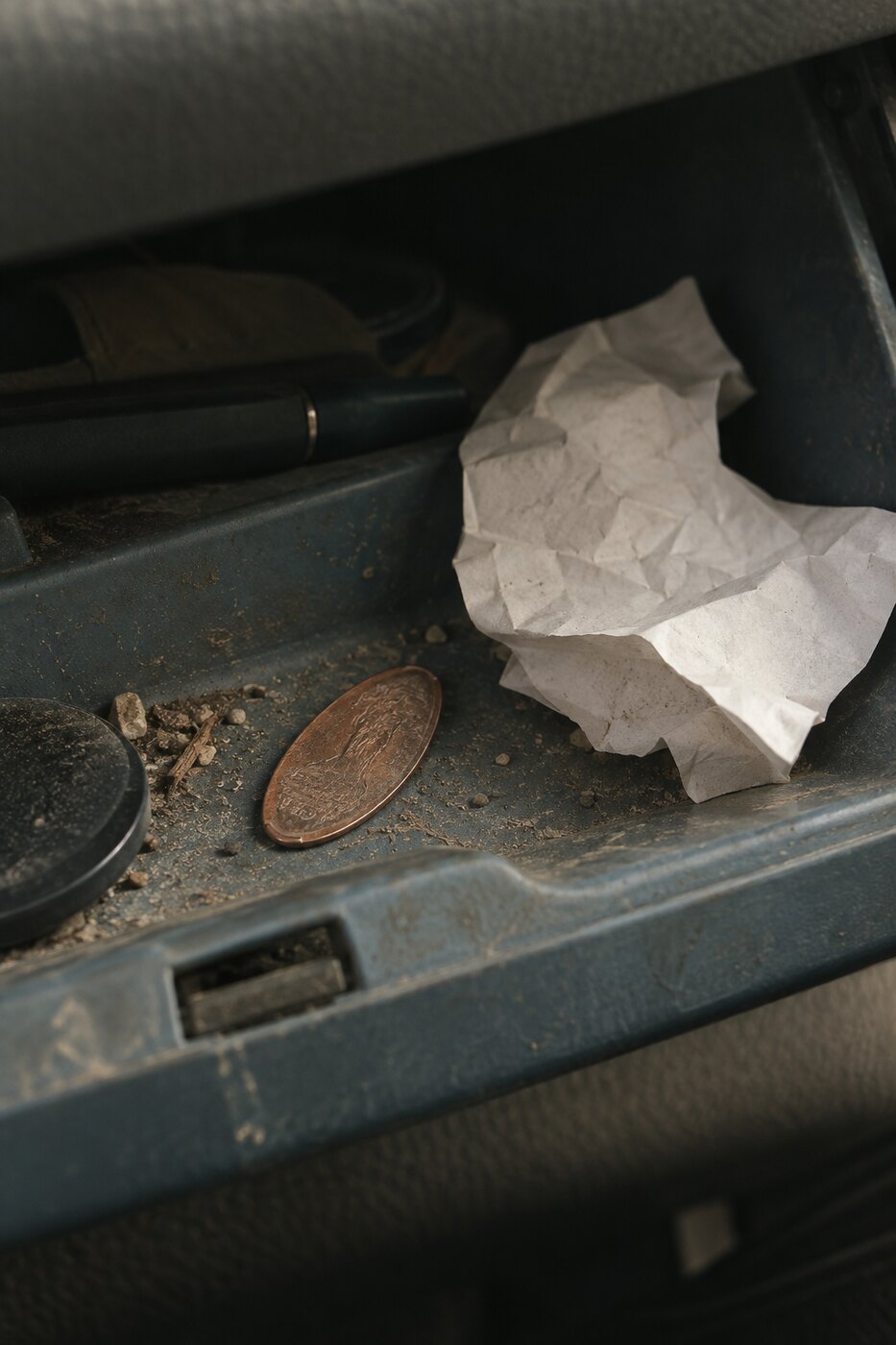
The penny sat in the glove box dish. It was longer than it should be.
It lay among parking-lot grit and a gas receipt that had gone smooth. Lincoln was still in there somewhere, pulled thin under the arc of a bridge that isn’t his. The copper had skinned open at one edge, showing a pale zinc streak like a tendon. The stamp said the name of a landmark in all caps, which gave it a confidence I don’t remember feeling.
The machine was by the restrooms. Red enamel chipped around the crank. A faded arrow said TURN SLOWLY, and the handle fought back halfway through, then gave. The penny dropped into the tray warm, hot enough to leave a copper smell on my thumb. It cost fifty cents to ruin one cent. The transaction left me with less money and more evidence.
I don’t recall the view. I recall the pavement, the map rack swollen with damp, the quarter slot that rejected the first quarter because it was Canadian. The landmark was available but I was using the bathroom. The car was still running, someone waiting with coffee. I turned the crank because the machine was there, and because turning a crank is a decision that completes itself.
The penny came out oval, no longer spendable, no longer able to roll straight. It had done more sightseeing than I had. I kept it because it proved the car stopped. It proved I found two quarters, turned the handle, and held something hot and useless and mine. The stamp says where I was. The shape says the pressure was uneven.
The penny stayed flat. The zinc kept showing through.