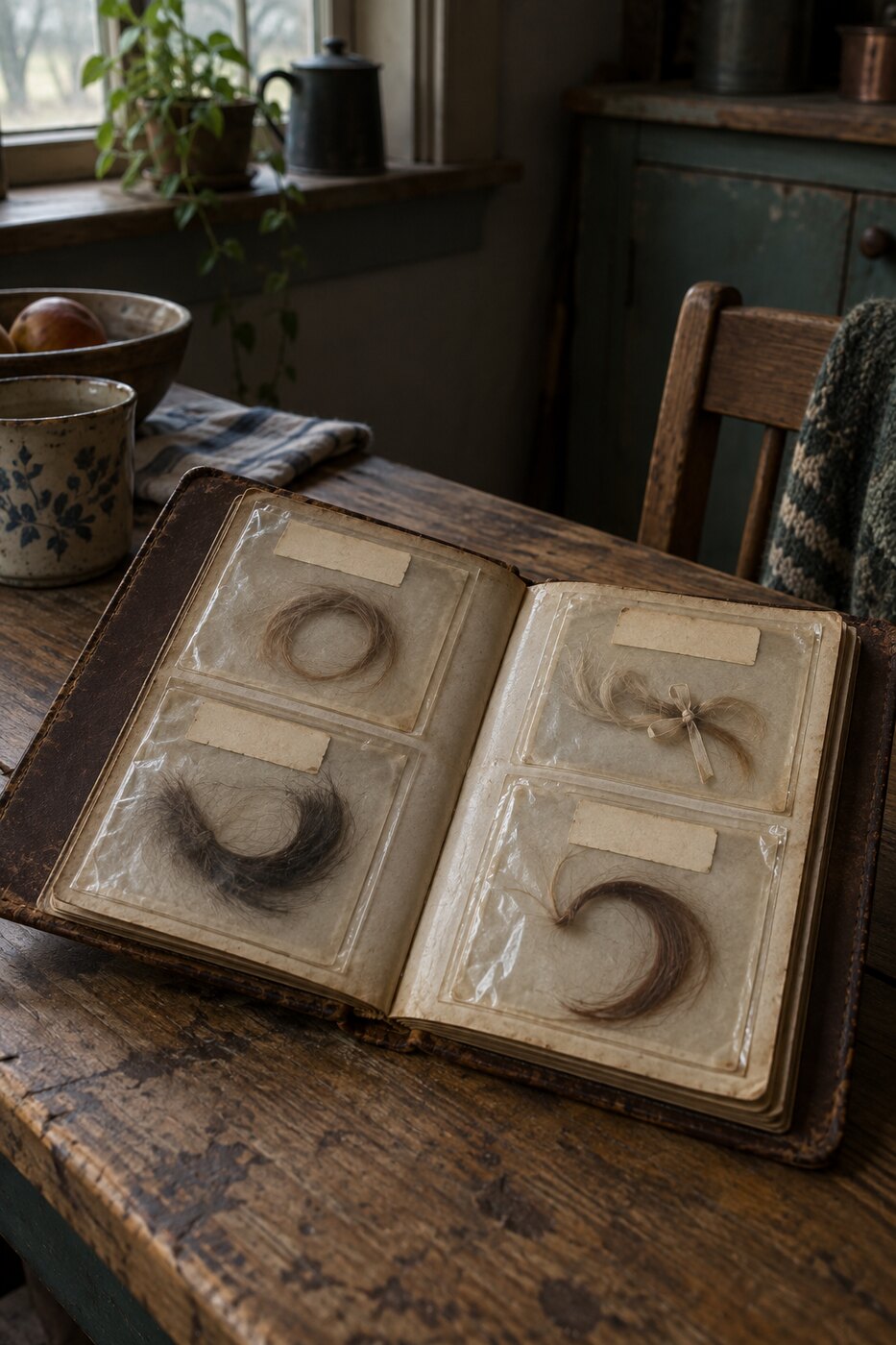
The album was brown vinyl and smelled like shut plastic. I kept it in the bottom drawer with the sewing patterns and the placemats and a manual for a bread machine I no longer owned. The spine had cracked along the top inch. The crack did not interfere with the album’s function, which was to stay closed until I opened it.
The pages were made for photographs. I put hair in them.
After every haircut, I saved a pinch. Not a dramatic handful. Just what the scissors left on the cape, gathered between thumb and forefinger before the barber or the stylist or, later, my sister could brush it onto the floor. I folded it into a slip of paper, sometimes notebook, sometimes receipt, and carried it home in my pocket. At the kitchen table, I transferred it to a plastic sleeve. The date went underneath in ballpoint. The tape started clear. It turned amber on its own schedule.
The first entry was from a walk-in place near the bus station. I was twenty-three. The stylist had a cold and kept turning her head to cough. The lock is dark brown, almost black under the plastic, and the paper behind it is a corner torn from a phone bill. The ballpoint dent is deep enough to feel from the other side. The date says March. No year. I must have believed the year was obvious, or that I would remember, or that years were not the point.
The album rings snap open with a sound like a small bone giving way. I add a new sleeve when the old one fills. The pages are the kind meant for three-by-five prints, the ones people used to get back from the drugstore in white-bordered stacks. My pages hold no photographs. They hold hair flattened under plastic, each lock labeled, each label taped on two sides, sometimes three if the tape had opinions.
The hair changes over time. The early locks are dark and thick and curl slightly at the ends, even pressed flat. The middle years show gray arriving in strands, not in patches. One strand per haircut at first, then two, then enough that the lock reads as salt-and-pepper from any distance. The gray hairs are coarser. They resist the tape. They leave a faint scratch on the plastic when I press the sleeve shut.
I did not start the album for a reason I could name. I started it because the first lock was still on the table the next morning and throwing it away felt like erasing a receipt I might need later. The album was already in the drawer, empty, a gift from someone who thought I took photographs. I slid the lock into the first sleeve and wrote the date and closed the cover. The act did not feel significant. It felt like filing.
The album was not for display. I did not keep it on the coffee table or mention it to guests. No one asked to see it twice. My sister said “huh” the one time I showed her, and then asked if I had any of those butter cookies with the scalloped edges. The album lived with other records that had outlasted their usefulness: the bread machine manual, the placemats from a kitchen with different counters, the sewing patterns for dresses I no longer fit. It belonged among things that had already done their work but had not been thrown away yet.
There was never enough hair to make anything. Not a brush, not a braid, not a mourning brooch. The total, if I emptied every sleeve onto the kitchen scale, might weigh as much as a spool of thread. It would not have held a knot. It was useless and I kept it anyway. I was not building toward a finished object. I was keeping a log.
A body grows evidence quietly. Nails, hair, skin, the faint dust on the bathroom floor that is mostly you. Most of it gets swept or washed or vacuumed away without a second thought. The album was a small refusal. I let the scissors take what they took, and then I took a little back. The root belonged to the body. The cut end belonged to the day.
Some locks have slipped. The tape gave way in the summer humidity, or the static let go, or I closed the album too fast and a strand drifted down between the pages. I find them sometimes when I add a new entry. A single hair resting in the gutter of the spine, years out of order. I cannot return it to its proper sleeve because I cannot remember which sleeve it left. I tuck it into the nearest empty pocket and close the album. The record is approximate now. Most records are.
The hair from the year I was sick is thinner. You can see it if you know what to look for. The lock is sparser, the strands finer, the curl gone out of them. I wrote the date in pencil that year, not ballpoint. I do not remember making that decision. The pencil is fading. The hair is not.
The album no longer closes flat. The middle has thickened with tape and paper and the slight bulk of hair that refuses to lie completely smooth. The cover sits up at an angle, like a book someone stopped reading halfway through. The vinyl has worn shiny at the corners. The crack in the spine has not grown. It has stayed exactly the same length for eleven years.
The last entry is from last month. My sister cut my hair at her kitchen table with a pair of scissors she usually uses for cutting chicken. She wiped them on a towel first. The lock is mostly gray now, with a few dark strands that have not gotten the message. The paper behind it is a receipt for milk and onions. The date is in ballpoint. The tape is clear, for now.
I closed the album and put it back in the drawer beside the placemats. The drawer stuck a little on the left side, the way it always does. I did not think about what the album meant. I thought about whether the placemats still matched anything in the kitchen. They did not. I left them where they were.