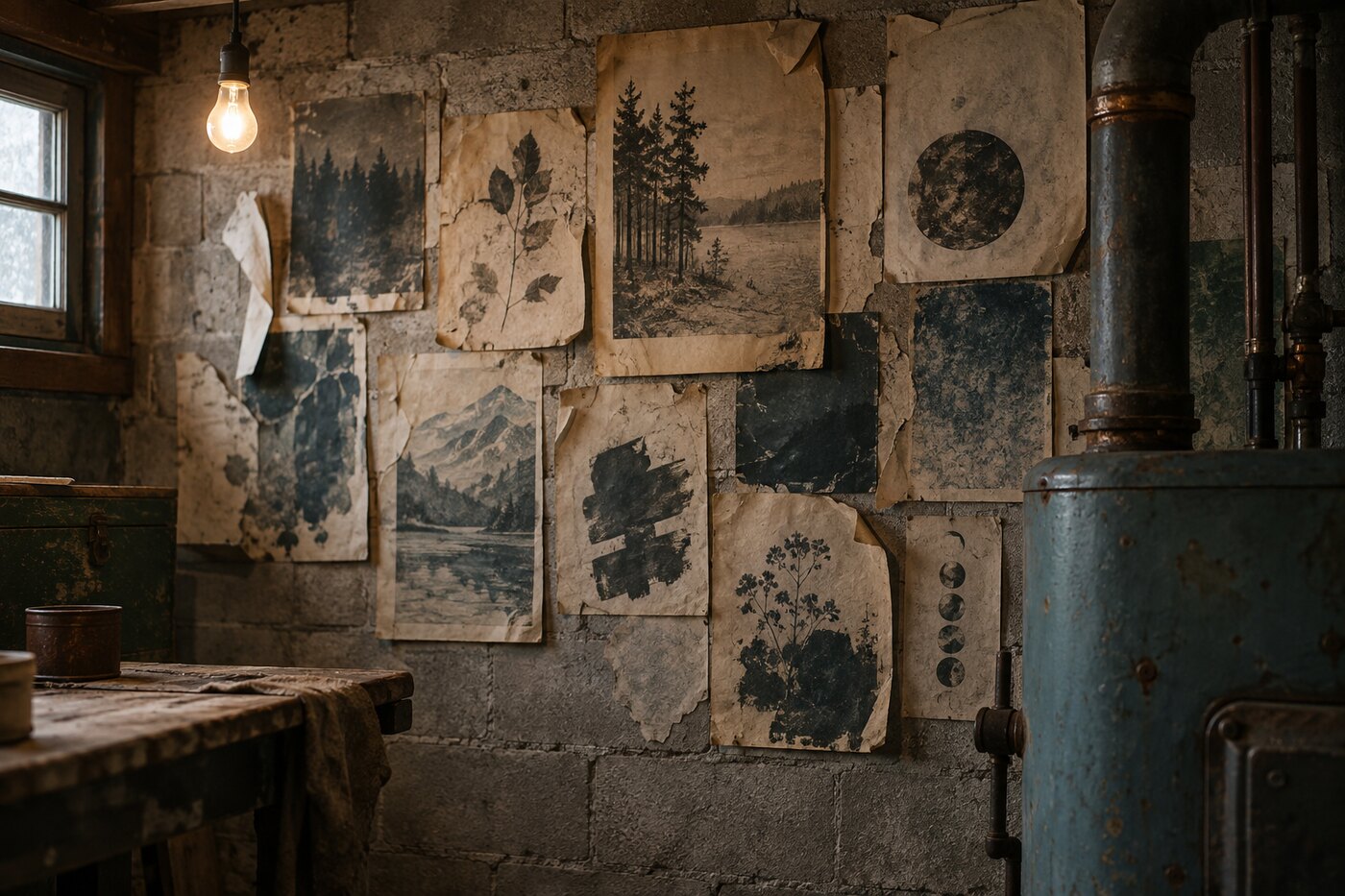
The lie came out warm. It was a fake account warning, printed on the blank side of an old grocery list. The toner smelled faintly burnt, and the paper held the heat for half a minute. The printer pulled the sheet slightly to the left, leaving a thin white margin that caught the overhead light. I carried it down the wooden stairs. The basement held its usual quiet. The boiler hummed against the far wall. A bare pull-chain bulb threw a flat, unflattering light across the cinderblock.
I kept pushpins in a chipped saucer near the workbench. The saucer rattled when I dipped into it, a small ceramic sound. I put a clear pin through the word urgent. The wall resisted in one spot, near a seam in the block, so I angled the pin toward the copper pipe. The paper held. I did not arrange it by subject. I placed it where there was room.
Another message arrived the next day. I printed it on the back of a school notice and pinned it below the first. The paper overlapped. The thumb pressure left a white dent in the corner. Gravity handled the filing. The first page still had a great deal of wall around it. When the boiler started, the lower corner lifted. It settled back down when the heat cycled off.
The wall filled in slow increments. I did not keep a ledger. I printed whatever the inbox offered and carried it downstairs. The paper was always recycled. You could see the ghost of the original text bleeding through. Columns of math problems. A faded coupon for motor oil. The faint grid of a ruled notebook. The new ink sat on top of the old and never quite dried into a solid black. It stayed slightly raised. It caught the light at an angle. I used what I had. Clear pins, rusted tacks, a few bent nails when the supply ran out. The pushpins left tiny rust marks on a few pages, a faint orange bloom around each puncture. The rust became part of the filing system.
The arrangement followed the plumbing. Sheets curved around the elbow of a vent pipe. They bridged a gap in the foundation where a draft came through in November. I did not step back to look at the whole. I stepped forward to make room for the next one. The cinderblock disappeared under the overlap. The room felt smaller, or just more occupied.
The messages were loud on the screen. They demanded immediate action. They promised money, health, companionship, or legal ruin. On paper, they lost their urgency. The font sizes varied. The margins ran uneven. The paper absorbed the damp basement air and grew soft at the edges. A sheet promising a miracle cure sat beside an invoice for a shipping container that never existed. A stranger’s confession overlapped a warning about a compromised password. None of it required a reply. The printer had already done the talking. I read the words once, then watched them fade into the background. The paper took over. It developed creases from being handled. It caught dust. It held the faint smell of ozone from the cartridge.
The bank remained concerned for several winters. The deadline passed. The paper stayed.
Winter arrived with a hard wind. The basement usually dropped to forty-two degrees by January. I noticed the change before I named it. I was sorting firewood near the cinderblock and realized my hands were not going numb. The wall felt different. It no longer gave off the sharp cold of the earth outside. The paper had thickened. Three sheets deep in some places, five in others. The fibers trapped air, and the air stayed still. I ran my palm across the surface. It was cool, but dry. The boiler ran shorter cycles. The metal pipes knocked less often.
I printed the messages to clear the inbox. The paper absorbed the damp. The wall kept the cold out. I had not meant to build insulation. I had only meant to move the noise onto something that could hold it, and the wall did the rest. It accepted the weight. It distributed the pressure. A fake inheritance from a distant cousin now sat between a draft and my shoulder. It did its job without knowing it.
The upper sheets yellowed first. They sat closer to the ceiling, where the heat pooled and the light from the high window hit them in the afternoon. The toner flaked in thin gray dust when I brushed against them. I left it. The lower sheets stayed pale and stiff. They caught the damp from the floor. The corners curled upward, then flattened again when the furnace kicked on. The sound was a dry shuffle.
I measured the passage of time by the paper, not the calendar. A stack of urgent account warnings from spring had dried to the consistency of parchment. A batch of lonely messages from October had softened into a single mat. I did not peel anything off. The wall kept what it needed and let the rest settle. I walked past it every morning. I checked the boiler pressure. I adjusted a pin that had worked loose. The paper held.
The printer upstairs still runs. It catches on the feed tray sometimes. I tap the paper stack to straighten it. I print the next message on a sheet that once held a recipe for stew. I carry it down. The stairs creak in the same places. The basement air is still and cool. I find a gap near the floor, behind the workbench leg. I push the pin through. The paper resists for a second, then gives. I press it flat. A draft moves under the door. The bottom edge lifts. It does not tear. It waits.