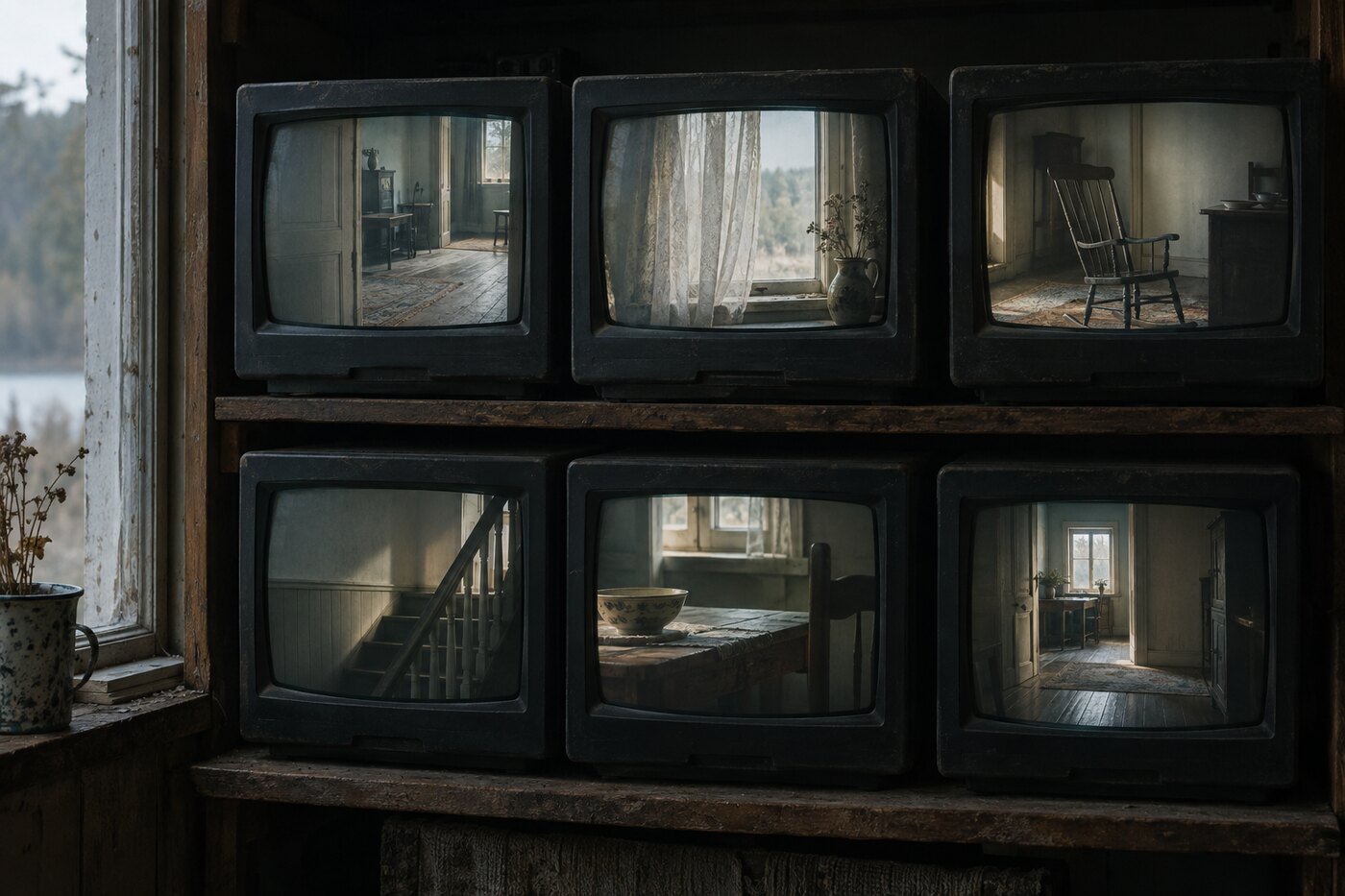
The panels are screwed to a shelf board, propped with books where the board gives out. Eleven of them. I did not line the episodes up and I would not know how. So the wall never shows one thing.
The left screen has the man young. The jaw clean, the grin doing the work. Four over, the same man has gone gray at the temple and heavier in the mouth. He is older there by a decade and does not know it, because on the left screen he has not lived it yet. The years run sideways across the board instead of forward. Nobody up there ages at the same speed.
They talk over each other. Eleven rooms arguing about oil and money, none of them the same argument, all of them the same weight. There is no front to the wall. The eye goes looking for the screen it is supposed to watch, the way you look for the front of a crowd, and there is no front. It slides. It never settles. That is the part people cannot get comfortable in.
I built it that way on purpose, though I would have to think a while to tell you why. The sound I was after was never one clean scene. It was overlap. Years of evenings laid down over each other until they went to texture, a house with more rooms than mine and trouble in all of them.
The panels warm the wall behind them. The paint up there has gone a shade darker than the paint at the baseboard. On the left screen the young man lifts the decanter that is never empty. Two screens over, the older one sets an identical decanter down, and neither of them will ever meet the other, and both of them are still pouring.