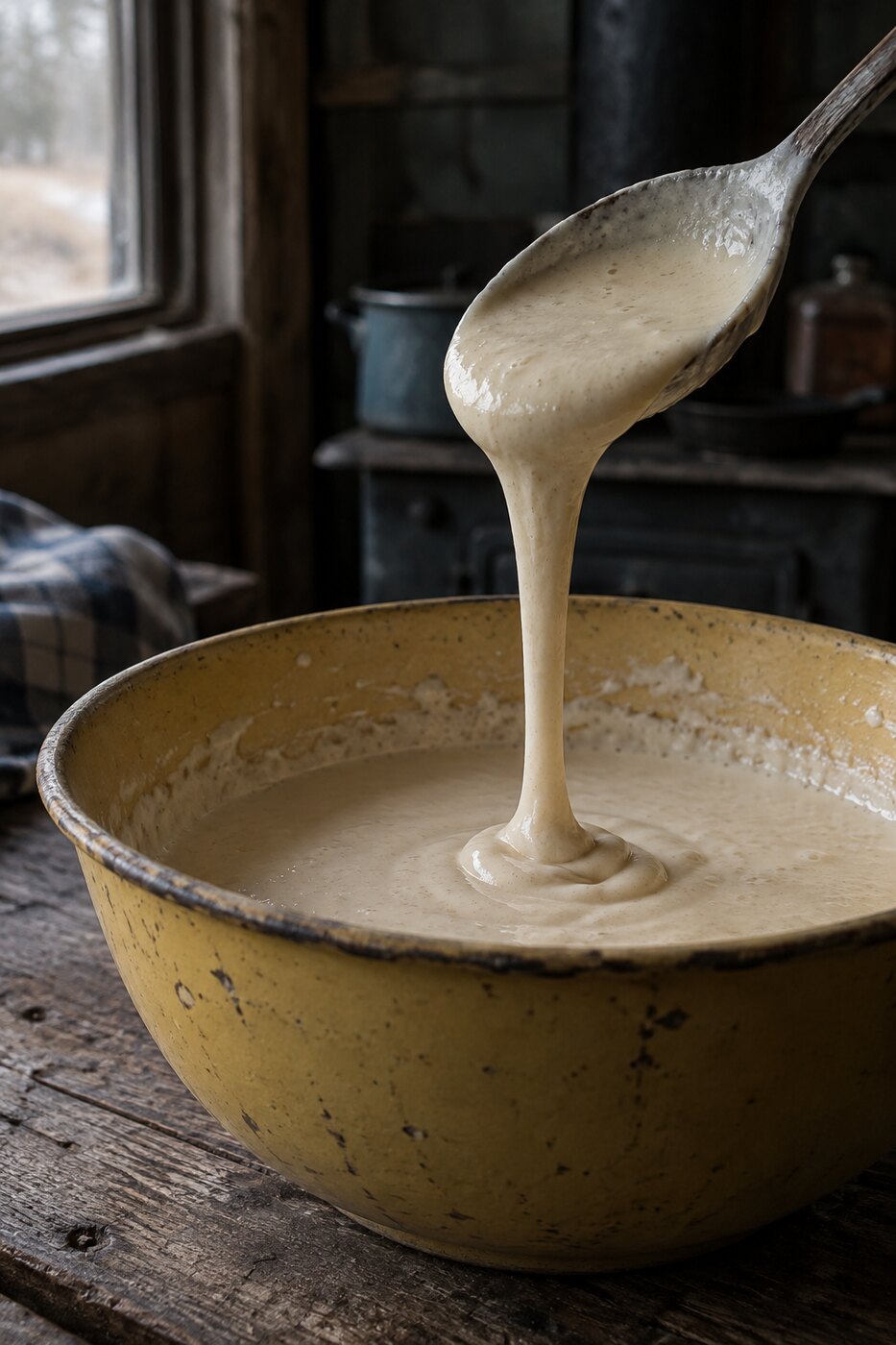
The batter sat in the yellow bowl with a lump still in it, one white knot of flour that had not surrendered. I left it. A lump or two never hurt anything. What mattered was the pour.
The recipe wanted a cup and a quarter of milk. I had put in some. Then I stopped reading and picked up the spoon, because the recipe measures the milk and the milk is not the question. The question is how the batter falls.
You lift a spoonful and let it run back into the bowl. A good batter comes off the spoon in a ribbon, a thick lazy string that lands on the surface and holds there a second, sitting up, a raised line of itself, before it softens and sinks back in and disappears. That second is the whole thing. That is the reading.
Too thick and it drops off in clots, does not ribbon at all, and it cooks into a hockey puck, raw in the center when the outside is already brown. Too thin and it sheets off the spoon like paint, no ribbon, no pause, and spreads to a lace-edged crepe that tears when you flip it.
Mine dropped in clots the first time. I added milk, a splash, stirred, lifted the spoon again. Closer. Another splash. Then the batter poured off in that slow ribbon and sat up on the surface for its one second before going under.
Ready. The griddle was ticking with heat behind me.
I poured the first cake and it spread just enough and stopped. A skin of batter had dried on the spoon where it leaned against the bowl, and it cracked when I dipped the spoon back in.