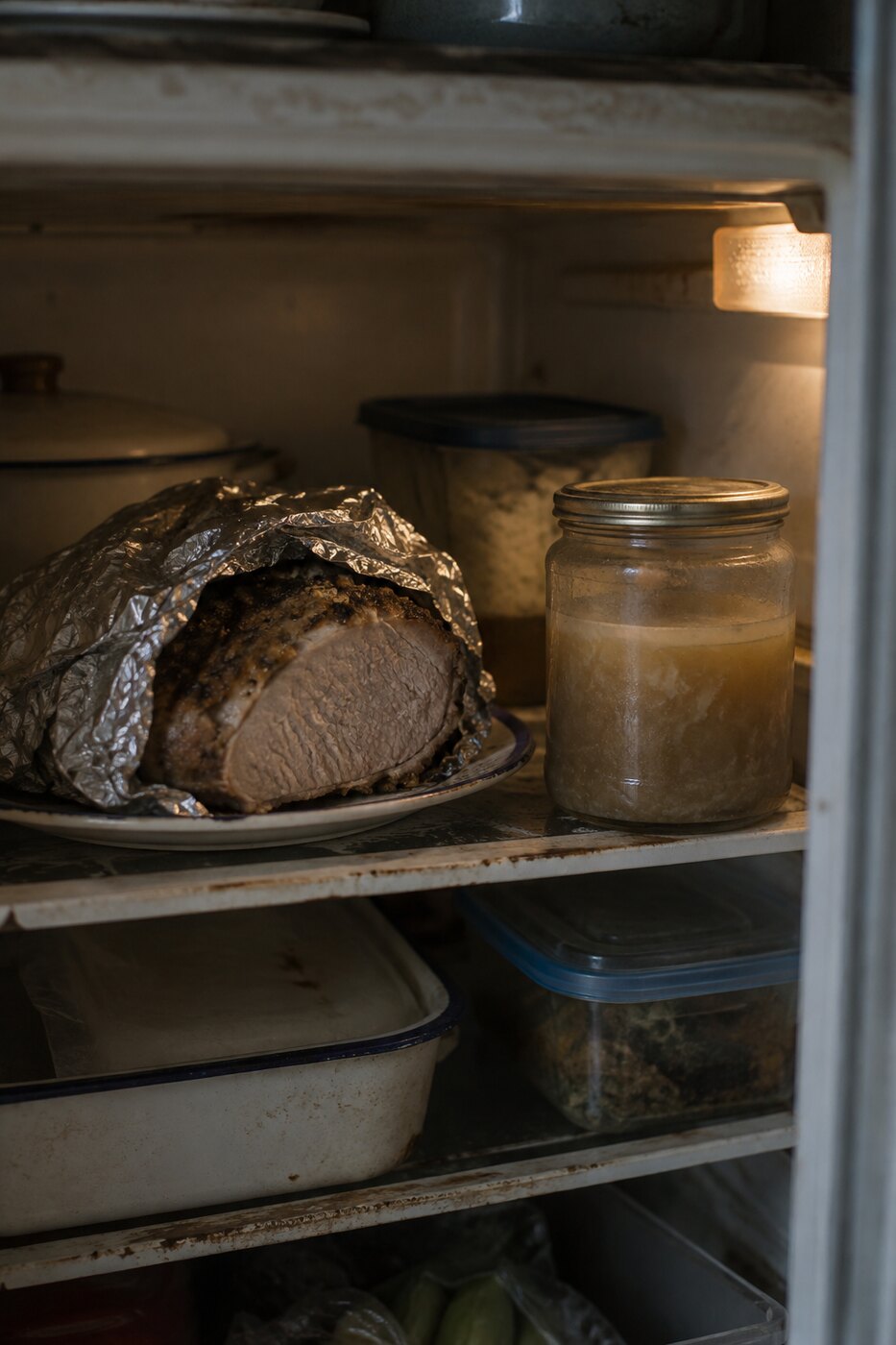
The roast comes out of the fridge the next day changed. Cold has done something to it. The fat that ran clear and loose on the plate has gone opaque and firm, a white seam through the pink, and the meat has tightened and darkened and lost the steam that made it seem like the point of the meal. It does not look like dinner anymore. It looks like a problem to be solved. But a cold roast is not a failed dinner. It is a sandwich that has not been assembled yet, and the coldness that ruined it as a roast is exactly what makes it slice thin without shredding. You could not cut it this fine warm. Chilling was step one of a recipe nobody wrote down.
That is the thing about leftovers. They are not the leavings of food. They are food carrying instructions, and the instructions are attached to what the cold and the time have done to them. The trick is reading what the change is for.
The bones are the clearest case. A picked-over carcass looks like garbage, and it is, right up until it goes into a pot of water with an onion and sits at a low murmur for three hours, and then it is stock, and the water that started clear goes gold and then amber and takes on a body it did not have, a slight stickiness on the lips from what cooked out of the joints. The bones gave up everything they had left. You can feel it when you fish them out, light and chalky and clean, nothing in them anymore, and the goodness that was in them is now in the water where you can use it. Throw the bones out then. They followed their instruction to the end.
Rice is a food that improves by failing first. Fresh rice is too soft to fry, it clumps and steams and turns to paste in a hot pan. But rice left in the fridge overnight dries out, the grains firm up and separate, going a little hard and glassy, and that is the only rice that makes good fried rice, because the pan can crisp a dry grain and only steam a wet one. Day-old rice is not stale rice. It is fried rice waiting for the instruction to be read. The recipe requires the staleness.
Bread goes the same direction and further. It goes hard, and hard bread is no good for eating, but hard bread grated on the coarse side of the box becomes crumbs, and crumbs go on top of things and inside things and hold the moisture that keeps a meatloaf from being a brick. Or the hard bread goes into soup and softens back, drinking the broth, becoming the body of the meal instead of the side of it. Bread’s whole second life is in giving up being bread.
The tired vegetables live in the crisper drawer past their good days, the carrots gone bendy, the celery limp, the half onion drying at the cut face. None of it is worth eating raw. All of it is worth a soup, because soup does not need a vegetable to have snap, it needs it to have flavor, and the flavor is all still there under the wilt. You are not hiding old vegetables in the soup. The soup is what those vegetables were always going to become, and the wilting was the calendar telling you it was time.
Gravy is the strange one, because gravy is a leftover that makes you cook something new. Cold gravy jells. It goes to a solid trembling brown in the jar, thick enough to hold the shape of the jar when you tip it, the fat risen and set pale on the top. It is not good for much on its own. But a jar of jelled gravy is a reason to boil potatoes you would not otherwise have boiled, because now there is a thing to put on them, and the leftover has reached forward and generated a fresh pot on the stove. The instruction on the gravy is not reheat me. It is make me something to be poured over.
And then there is the plainest instruction of all, the cold meat eaten standing at the open fridge with the door propped on your hip, a slice folded and eaten in two bites before you have decided to have it. No plate, no heating, no ceremony. That is a leftover read at its most direct. The instruction says eat me now, and you do, and the door alarm starts its slow beep because you have stood there too long deciding whether to have a second slice.
The gravy jar is back on the shelf with the lid loose. A skin has formed across the top where the air got at it, dull and slightly wrinkled, and I have not decided whether that skin comes off or stirs back in.