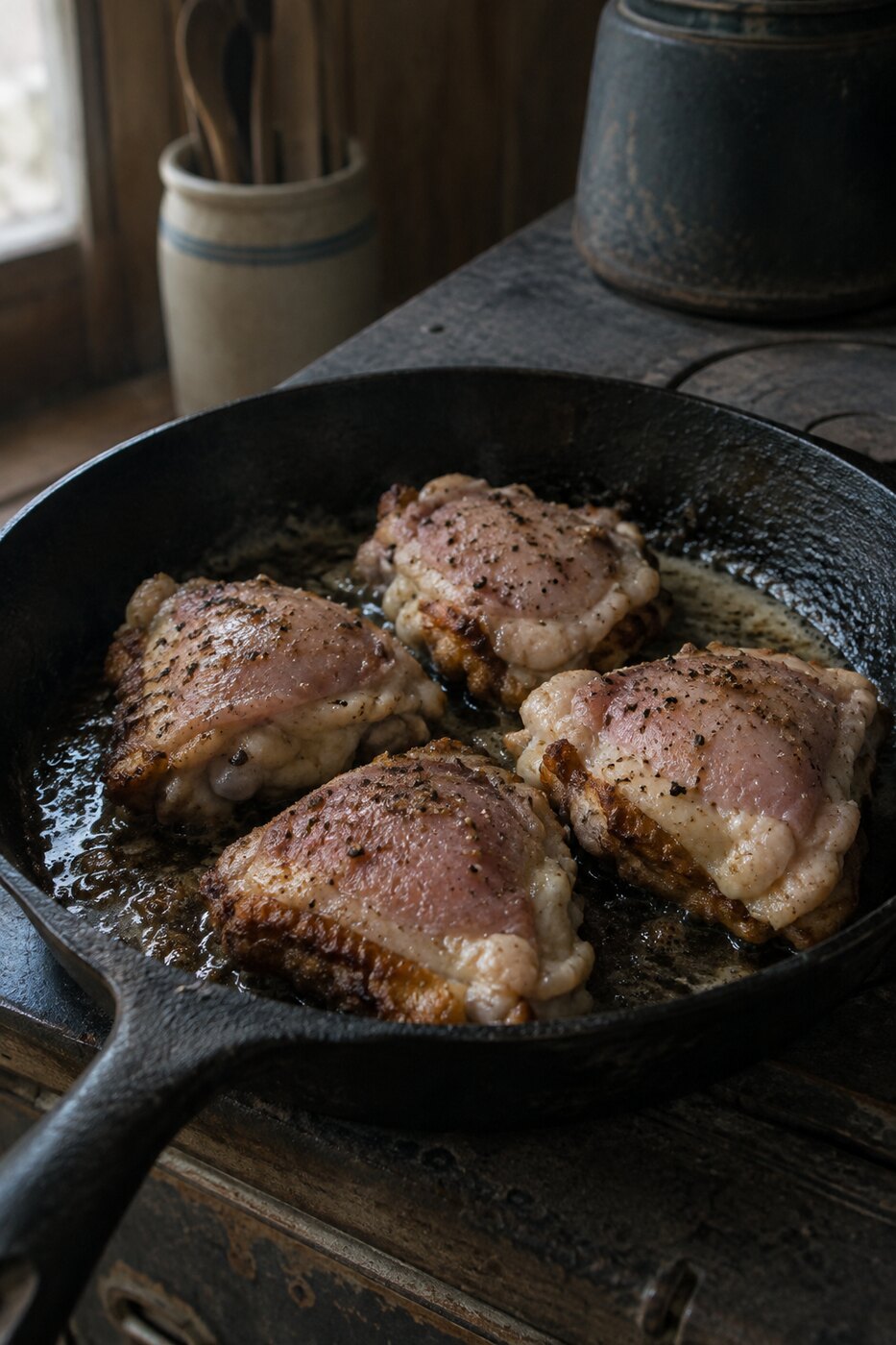
The thighs went into the pan skin-side down and did nothing for a while. That is normal. A cold pan and cold skin, or a hot pan and skin that is still wet, and either way the first few minutes are a lie. The skin sits there and pales and goes rubbery, gray-white, slack, and if you lift a piece to look you will see a limp underside, translucent at the edges, fat that has not yet decided to leave. It looks like something gone wrong. It is only something not yet gone right.
I did not touch them. That is the discipline, and it is a small one, and I fail at it more often than I admit. The skin has to render. That is the word, render, and it means the fat under the skin has to melt and run out and leave the skin behind, thinner and drier, and only then can the skin brown, because browning is what happens to a dry surface and not to a wet one. As long as there is fat under there steaming its way out, the skin is boiling in its own grease, not frying, and boiled skin does not crisp. It just sits and weeps and stays pale. You have to wait for the fat to go.
You can hear it happening. The pan starts quiet, then it builds a steady low frying sound, a sizzle that means water is leaving, and then under that a finer sound, a crackle, small and dry, and that is fat hitting the hot metal. The grease climbed up the low side of the pan where the burner ran hottest and pooled there, gold going amber, and the edges of the skin that sat in it went dark first, dark and stiff, curling up off the meat. I could smell it before I could see it. Not the smell of chicken cooking, which is soft and wet, but a toasted smell, sharper, with an edge of almost-burnt that is exactly where you want to live.
Here is the trouble. The meat cooks faster than the skin gets good. By the time the thigh is safe to eat, cooked through, the juices running clear, the bone letting go, the skin is often still only halfway there. Pale gold. Bendable. Cooked, technically. Done, no. And the people are hungry by then. Someone comes in and looks at the pan and says it looks ready, and it is ready, it is just not done, and the difference between those two words is about five minutes and the whole point of cooking it in a pan instead of boiling it in a pot.
I have served it early. Plenty of times. You get impatient or the guests are seated or the potatoes are cooling and you pull the chicken while the skin is still soft, and it is fine, it is food, nobody complains. But you know. You put the fork through it and the skin does not resist. It folds. It has the texture of wet paper, a little slick, and it slides off the meat in one sad sheet, and the flavor is there but the thing that makes skin worth having, the thing you actually wanted, is missing. It is the sound. Crisp skin makes a sound. Under the fork, under the tooth, a short sharp give, a shatter almost, and pale skin makes no sound at all. It just yields. You cannot fake that with sauce.
So I gave it the five minutes. I turned the heat down a notch first, because by now the pan was hot enough to take the skin past brown into black if I left it, and burnt is its own failure, bitter and thin, worse than pale in some ways because you cannot walk it back. There is a narrow band between rubbery and burnt and the whole job is staying inside it. I pressed the thighs down with the back of a spatula so the skin met the pan flat, all of it, not just the high spots, because a thigh cooked flat still has a curl to it and the curl leaves a ring of pale where the skin lifts away from the heat. I held them down and counted.
The color came. It comes slowly and then all at once, the way toast does. One minute it is gold and the next it is the color of an old penny, deep and even, and the edges have gone almost mahogany, and there is a stiffness to the whole sheet of skin now that you can feel through the spatula. It has set. It has become a shell. I lifted one thigh with tongs and it came away from the pan clean, no sticking, which is the last tell, because skin that is not done grips the metal and skin that is done releases it. It let go.
I turned it over to look. The skin was dark and taut and it had pulled tight against the meat, drum-tight, and when I set the thigh down on the board it did not slump. The grease left in the pan was the color of dark honey with black flecks in it where the fond had caught, and it smelled toasted through and through.
Then the part you cannot see coming. I cut into the first one to check the meat and the knife hit the skin and the skin did the thing. That short dry sound, the shatter, the give. Worth the five minutes and worth the burned thumb I got pressing it down, which had gone white and tight and would blister by evening, and which I did not notice until the eating was done.