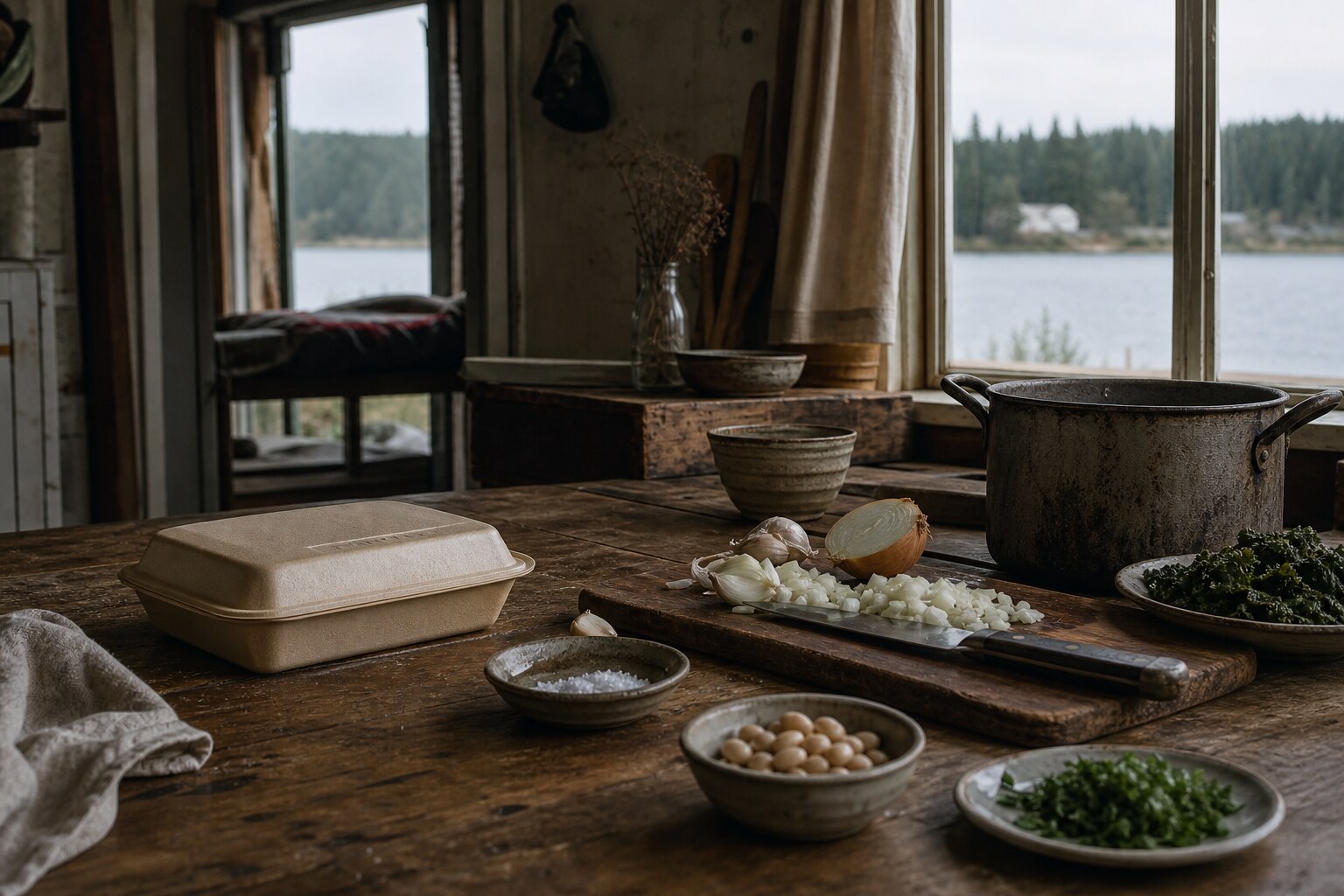
The beans came out of the bag with a sound like gravel. Small navy beans, dull white, each one a hard little stone with a black scar where it had let go of the pod. I poured them into a bowl and they rattled against the enamel and settled into a low heap. Some of them were split. A few were shriveled past use, the skins gone loose and papery, and one was a pebble, an actual pebble, gray and rounder than the rest. I picked it out and set it on the windowsill. The rest I ran a hand through, feeling for more, and found two clods of dried dirt that broke when I pressed them.
You cannot cook them like this. That is the first thing. A dry bean is a closed argument. Drop it in boiling water and hours later it will still have a chalky center, a hard grain that squeaks between the teeth, and by then the skin will have burst and gone to mush while the middle stayed a rock. The bean wants to be met halfway. It wants time, not just heat, and time is the one thing you cannot rush by turning up the flame.
So you put them in water and you wait. I filled the bowl until the water stood two inches over the top of the heap. The beans that were going to float floated. Bad ones, mostly, the hollow and the broken, and I skimmed them off with my fingers and dropped them in the compost. The rest sat on the bottom, packed close, and the water above them was already going cloudy, cloudy the way a pond goes when you stir the bottom. Something was leaving the beans and entering the water. Starch, maybe. Dust. The residue of the field.
I put the bowl next to the sink and turned off the light.
Nothing happens fast. That is the whole condition of it. You go to bed and the beans stay in the dark kitchen doing the slowest work in the house, drinking, one cell at a time, the water crossing the skin and swelling the flesh underneath. There is no sound to it. No steam, no smell, no bubble. If you got up at two in the morning and stood over the bowl you would see nothing move. But the water goes down. That is the only tell. In the morning the line on the enamel is lower than where you left it, and the difference is inside the beans now, held there, making them heavier.
I know because I have forgotten them. Left a bowl of beans overnight and then another night, busy or careless, and come back to find the water gone sour, a faint fizz to it, small bubbles clinging to the sides like the beginning of something I did not want to eat. They had kept going past the point of soaking and started to ferment, and the smell was not rot exactly but a warning about rot, a sour breath off the top of the bowl. I threw those out. You learn the window has a far edge too.
But this time I did it right, or right enough. In the morning the beans had doubled. That is not a figure of speech. A bean that had been a hard oval was now a plump thing with a tight skin, near twice the size, and where it had been dull it was now faintly shining, wet through. I lifted one out and pressed it between thumb and finger. It gave. Not soft, not cooked, but it gave, the skin dimpling and the inside yielding a little, and that was the difference between a stone and a thing that could become supper. The scar where it had left the pod had smoothed out, filled in from underneath.
The water was the color of weak tea and thick to pour. I dumped it. Some people keep it and I do not, because that cloudy water carries the part of the bean that argues with your stomach later, and I would rather feed it to the drain than deal with the argument. I rinsed them twice in cold water and watched the last of the cloud run clear, and then they sat there in the colander, glistening, heavy, twice what they were, ready in a way they had not been the night before.
None of this looked like cooking. There was no fire in it, no knife, no browning, no smell that would make anyone come into the kitchen. It was just materials changing state in a dark room while I slept, water going where water goes, patience doing the thing that heat could not do alone. By the time the pot came out and the onion went in and the whole thing turned into food you could name, the real work was already behind us, done in the dark, unwatched.
I put the pot on. Beans, water, a bay leaf gone brittle, a piece of salt pork with the rind still on. It would be three hours before they were soft enough to eat and I knew from the soaking they would get there, that the middle would come tender this time instead of squeaking.
The pebble was still on the windowsill where I had set it the night before. It had not soaked up anything. It sat there the same size it always was, dry and gray, and I left it, because I had not decided yet whether to throw it out or keep it to remind me to look.