
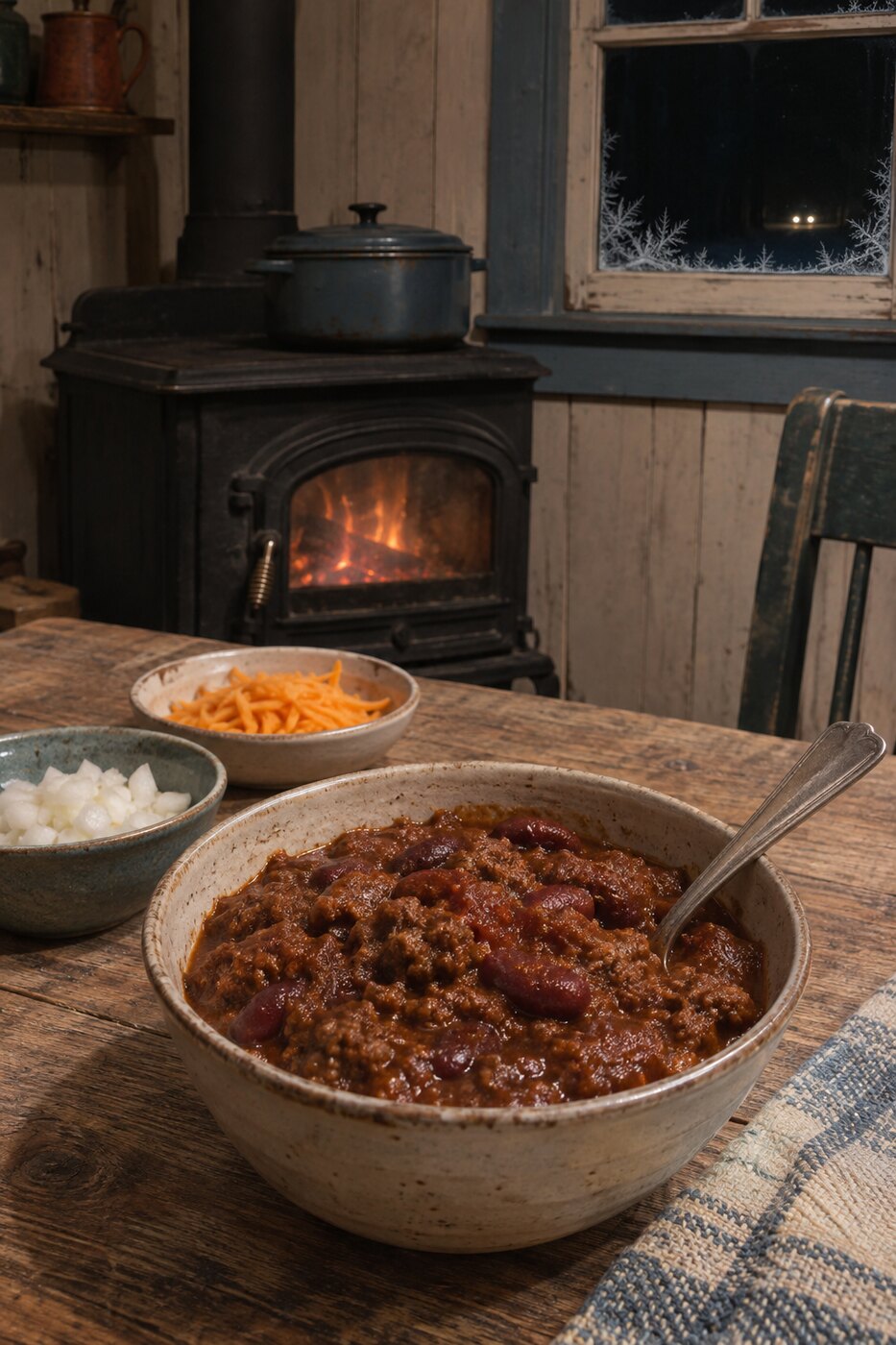
In winter people drive in after dark, because most of the day is dark. Nobody can say when they’ll arrive: the road, the light, an hour at a gas stop. Supper has to wait for them without anyone standing over it.
Chili is the right pot for that. A braised, sauced dish loses nothing by sitting; I think it’s better at nine than at six, the beans soaked through and the heat evened out. Everything in it can come off the shelf and out of the freezer: canned beans, canned tomatoes, ground meat thawed overnight in the fridge.
But better and safe are two different questions. A pot waits safely only if it waits hot, at 60 °C (140 °F) or above, the line Health Canada and the USDA both draw. With the lid on and the burner off, the pot isn’t waiting for anyone. It’s sliding into the range where bacteria grow, and the clock has started.
Ingredients
- 900 g (2 lb) ground beef, thawed in the fridge
- 30 ml (2 tbsp) vegetable oil
- 2 onions, chopped
- 4 cloves garlic, chopped
- 45 ml (3 tbsp) chili powder
- 10 ml (2 tsp) ground cumin
- 5 ml (1 tsp) dried oregano
- 2 cans (796 ml / 28 oz each) diced or crushed tomatoes
- 3 cans (540 ml / 19 oz each) kidney or black beans, drained and rinsed
- 500 ml (2 cups) water, plus more while it holds
- Salt
- For the table, held back until the car is in: chopped raw onion, grated cheddar, sour cream, crackers or tortilla chips, a lime
Method
-
Heat the oil in the pot over high heat. Brown the beef in two batches, breaking it up, until it’s crusted brown in places and there’s no pink left. Crowd it and it greys and stews instead; it should hiss the whole time, about 8 minutes a batch. Scoop it out.
-
Lower the heat. Cook the onions in the fat until soft and golden at the edges, about 10 minutes. Add the garlic, chili powder, cumin and oregano and stir for a minute, until the spices smell toasted and darken a shade. Don’t let them blacken.
-
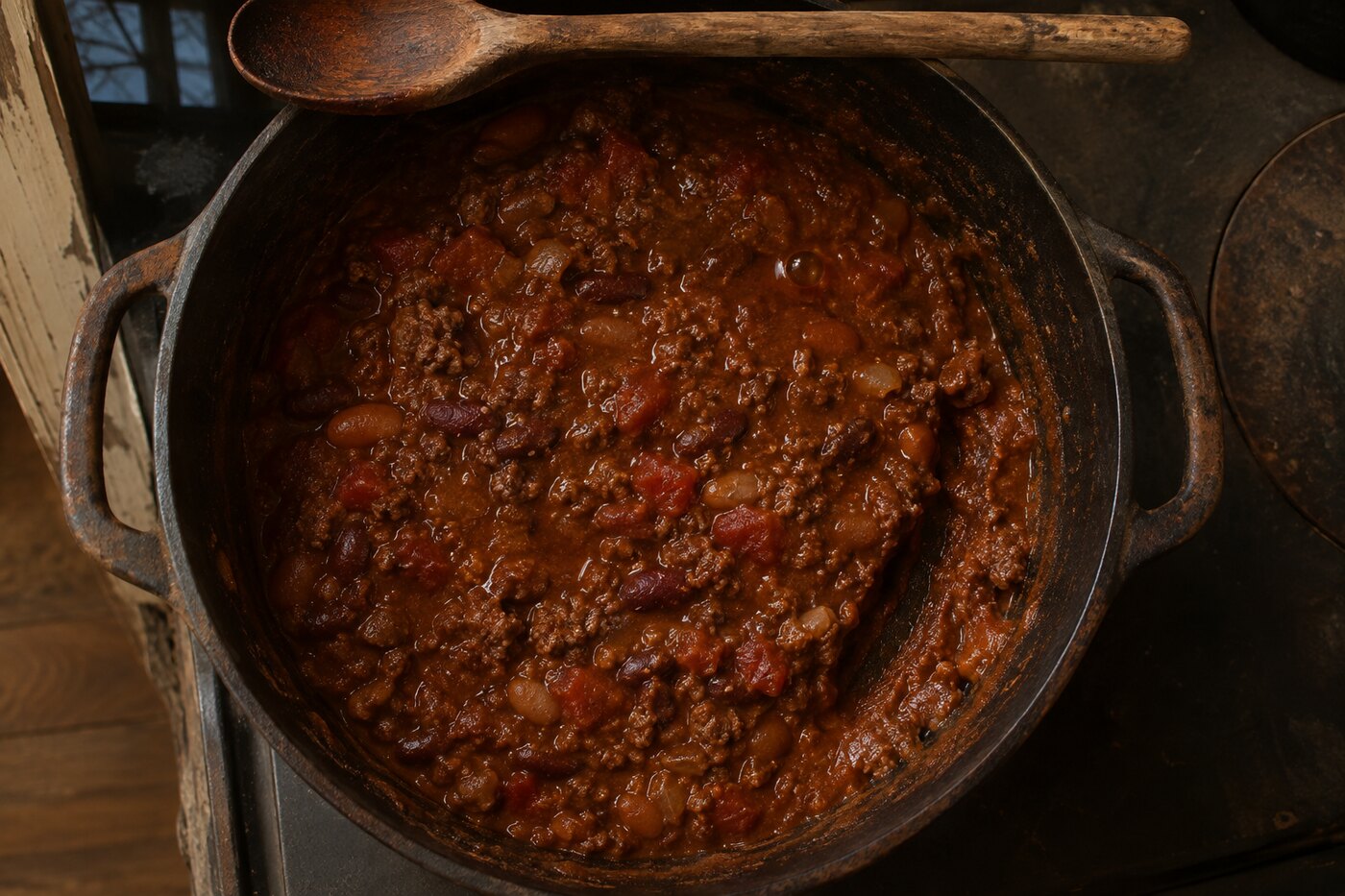
Return the beef with the tomatoes, beans, water and a good pinch of salt. Bring it to a boil, then down to a slow simmer with the lid ajar. Scrape the bottom every 15 or 20 minutes. It’s ready when it’s thick enough that a spoon dragged across the bottom leaves a track that fills in slowly, about 1½ hours. Taste for salt.
-
Hold it hot. Lid on, move it to wherever it keeps a slow, lazy bubble: the back of the wood stove, or the lowest flame on the burner. Push the probe into the middle every half hour. It must read 60 °C (140 °F) or above. Stir from the bottom each time and add a splash of water when it gets stiff.
-
When the car’s in the yard, ladle it out. Put the garnishes on the table then, not earlier, and back in the fridge after supper.
-
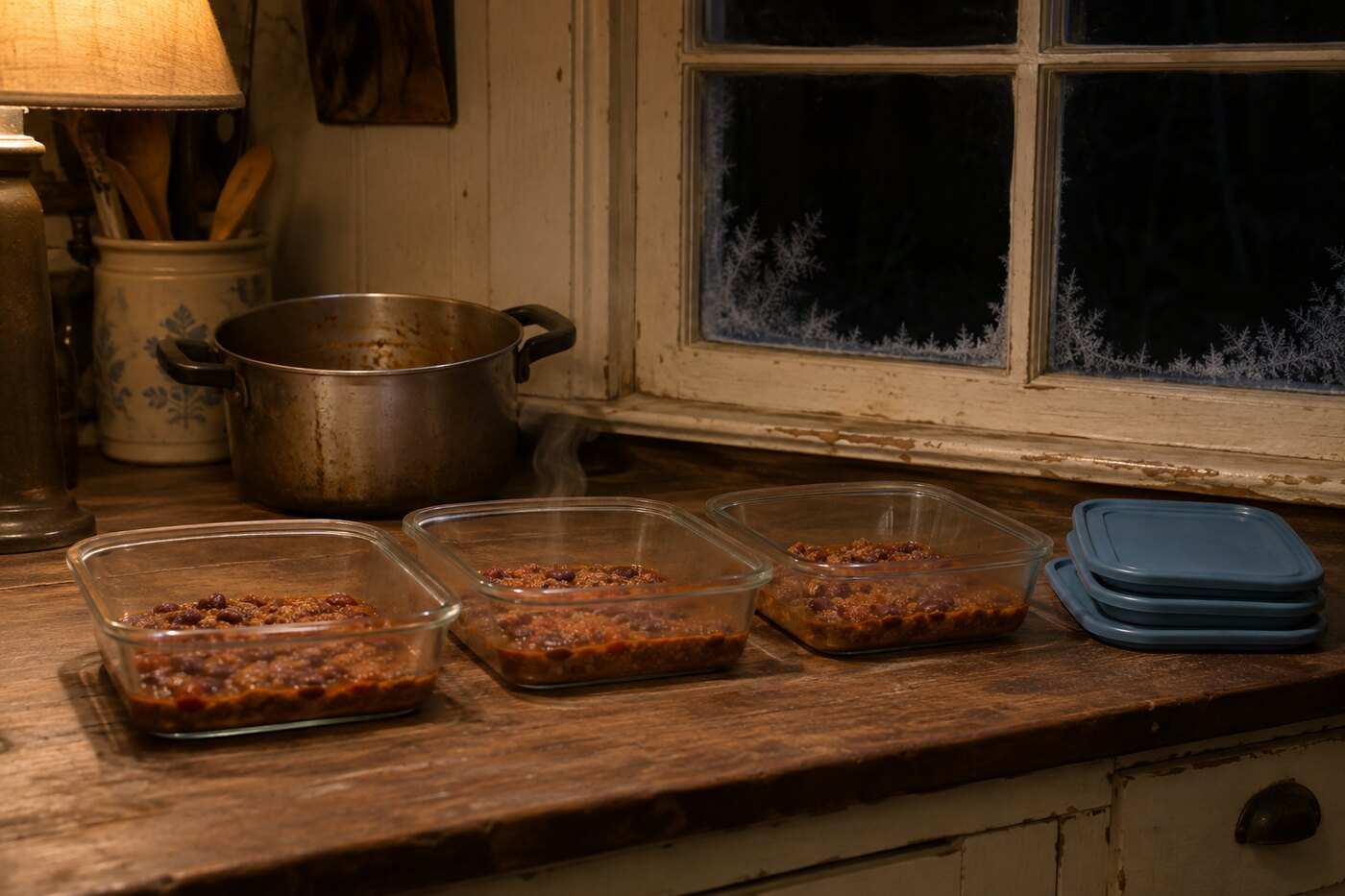
When the last bowl is served, take the pot off the heat and ladle the rest into shallow containers. Leave them uncovered until the steaming stops, then into the fridge, within two hours. Eat it within 2 to 3 days. Reheat only what you’ll eat, until it bubbles and reads 74 °C (165 °F) in the middle.
What goes wrong
The fire burns down. The back of a wood stove that kept a bubble going at six can be lukewarm by ten, and the pot cools with it. A lid that’s warm to the hand tells you nothing about the middle. Only the probe does, which is the argument of The Probe Was Right and I Was Not.
The bottom catches. A thick pot held for hours sticks and scorches. Stir from the bottom each time you check it, and loosen it with water as it tightens. A burnt layer on the bottom stays put; just don’t scrape it up into the rest.
The garnish goes in the pot. Crackers and chips go soft in a held pot, and sour cream and cheese have their own two-hour clock on the table. Add them at the bowl, at the end.
The snowbank. In a Yukon winter it’s tempting to set the pot in the snow to cool. Health Canada says not to put frozen food outside even in winter, because animals get into it and the sun can thaw it on a very cold day. For a hot pot, Penn State Extension says a large pot set out on the porch may not cool properly, the temperature in sun and in shade can differ a lot, and loose snow can be contaminated. And the ravens will find it before it’s cold. Shallow containers and the fridge take more dishes and work every time.
When it’s different
No wood stove, one propane burner. Lowest flame, the pot on the burner’s edge, and check the temperature more often, since a small flame swings more. A slow cooker on warm works if there’s power, but check its temperature too; don’t assume it.
The car isn’t coming tonight. If they’ve stopped for the night down the road, don’t hold the pot until morning. Cool it now, in shallow containers, and reheat it tomorrow.
Dried beans instead of canned. Use about 500 g, soaked overnight (What the Beans Did in the Dark). For kidney beans, the FDA’s rule is a soak of at least five hours, then a boil in fresh water for at least 30 minutes, before they go anywhere near the chili. A pot holding at the back of the stove is not a boil. Cook them until they’re tender, then add them in step 3.
No fridge running. Penn State’s fallback is a cooler with ice or ice packs, kept below 4 °C (40 °F) and checked. Otherwise, cook only what tonight will eat.
Sources
- Health Canada, General food safety tips: hot food at or above 60 °C (140 °F); the 4–60 °C danger zone; refrigerate within two hours.
- Health Canada, Food safety tips for leftovers: shallow uncovered containers, refrigerate once steaming stops, the two-hour discard, reheat to 74 °C (165 °F), discard reheated leftovers, eat within 2 to 3 days.
- Health Canada, Safe internal cooking temperatures: leftovers reheated to 74 °C (165 °F).
- Health Canada, Food and drinking water safety in an emergency: don’t put frozen food outside, even in winter; animals and sun.
- USDA FSIS, Basics for Handling Food Safely: hold hot food at 140 °F or warmer; the two-hour rule; shallow containers; thawing meat in the fridge.
- Penn State Extension, Storing food on the porch or in the garage in winter: why a pot on the porch isn’t a fridge; coolers with ice.
- US FDA, Natural toxins in food: soaking and boiling dried kidney beans.