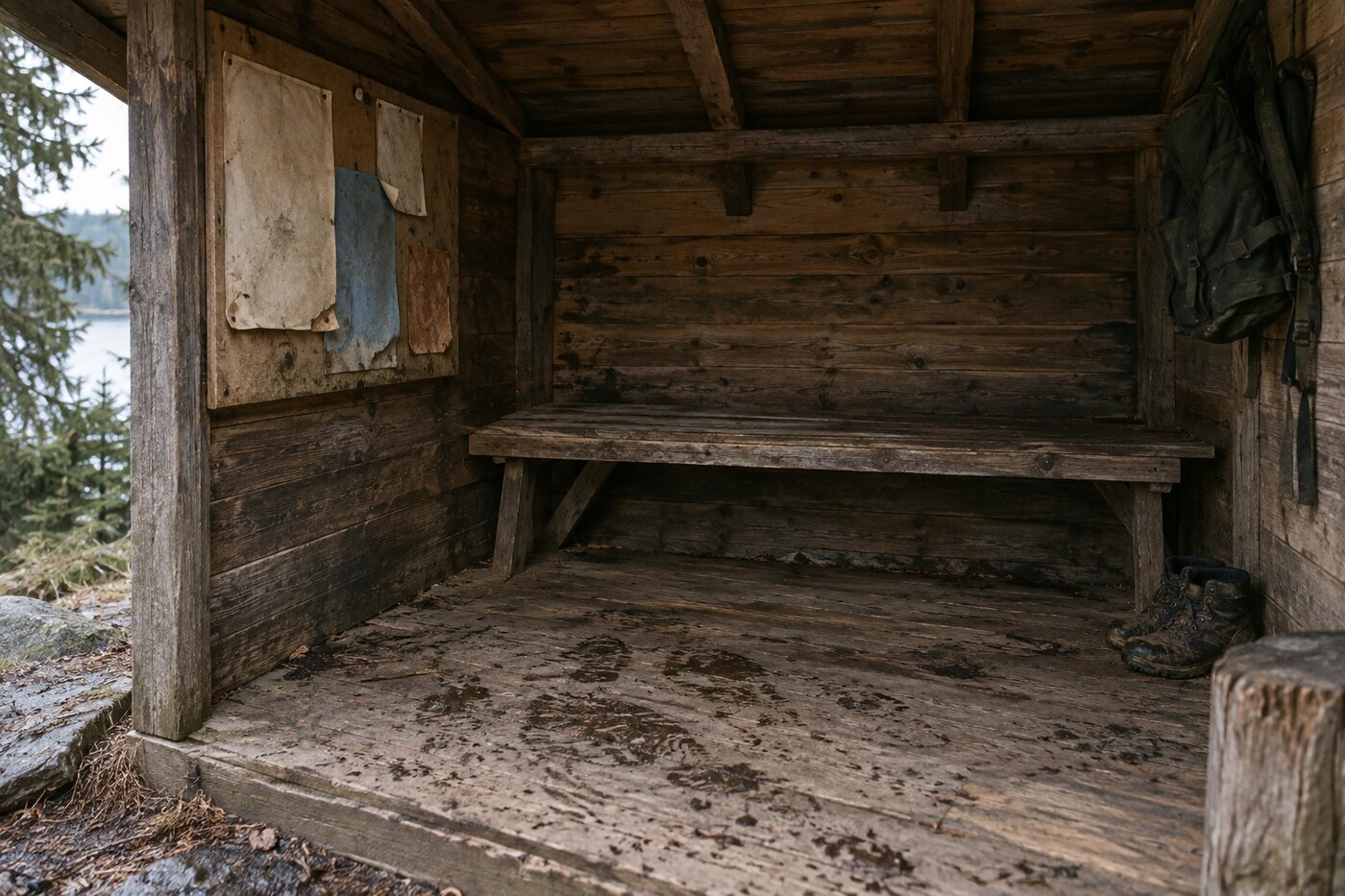
The shelter had three walls and the fourth side open to the trail, which is the whole idea. A building with a mouth. The open side faced away from the parking, toward the treeline, so the wind that came down the path had to turn a corner to get in, and mostly it didn’t bother. Mostly it went past the opening and let the inside stay still. That was the entire design argument: put the wall where the weather comes from, and leave a door where it doesn’t.
The floor was plank, and the planks near the opening were dark with dried mud, tracked in boot by boot and never swept, because who sweeps a trailhead. The mud made a map. It thinned as it went deeper, so you could see how far in people actually stepped before they stopped — about four feet, to the bench, and no farther. The back two feet of the floor were clean pale wood that no boot had reached. Nobody needed the back of the shelter. They needed the part just inside the mouth.
The bench was a single timber, worn to a shine in two places where bodies sat and a dull stretch between where they didn’t. The board above it held notices, thumbtacked, curling. A trail closure from a season that had ended. A number to call, faded. A drawing of a bear, sun-bleached to a suggestion. The tacks had rusted and bled small orange halos into the paper. Newer notices had been tacked over the corners of older ones, so the board had a thickness to it, a sediment, the current year sitting on the ones before.
I stood in the mouth of it while a squall went over. The wind cut, and the shelter took the edge off the cut, and that was all it promised and all it did. Not warm. Just less.
A single thumbtack, no paper on it, held a torn corner where a notice had been pulled away, and the corner still curled toward the wall.