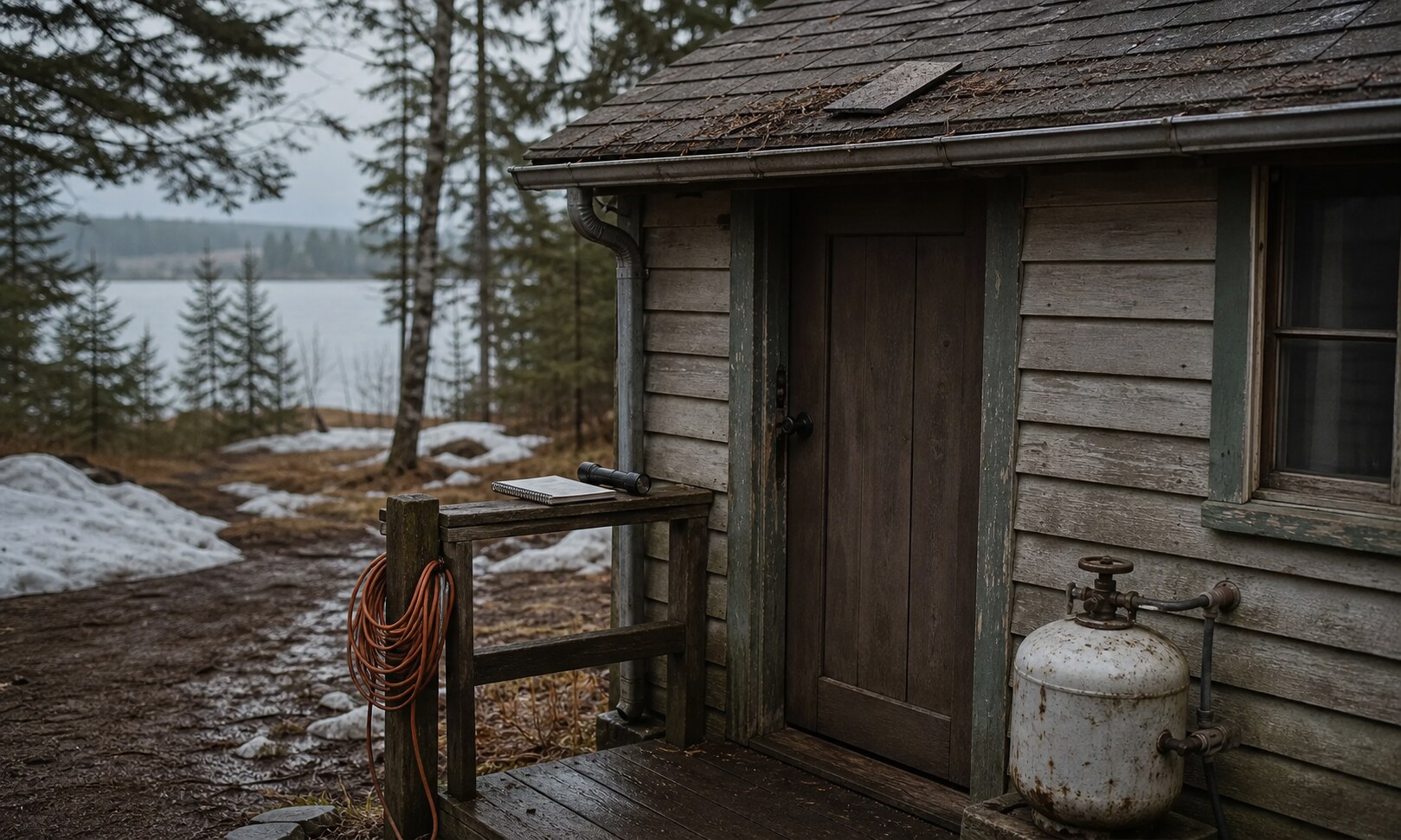
The shed stood at the land end of the dock, half on the bank and half on posts driven into the water, so it lived in two states at once — dry-footed at the back, wet-footed at the front. It was built to hold the gear a dock needs, and it did that better than it kept the weather off.
Inside it was gear and dark. Oars leaned in the corner, blades pale and dry at the top, stained at the tips where they had stood in the puddle the floor kept. Life jackets hung on pegs, the orange gone chalky on the shoulders that faced the window, bright still on the backs to the wall. A coil of rope on a spike, stiff with old wet, keeping its round shape even where it hung slack.
The floor was boards with gaps, and under the gaps was the water. You heard it before you saw it — a slap and suck against the posts below, right under your boots, the lake reaching up between the boards. Cold came up through the gaps with the sound. The shed did not have a floor so much as a lid over the water.
The damp had gotten into everything. The plywood walls were soft at the bottom foot, dark and spongy, wicking the lake out of the air. A green bloom crept up the inside of the north wall. Everything metal wore a fur of orange. The shed kept the rain off the top of the gear and let the wet come up through the bottom, so nothing in it was ever quite dry.
The padlock on the hasp had gone fully orange, rust down to the keyhole, the shackle frozen part-open where someone had left it. It would not lock now and could not, seized by its own rust, guarding the door out of habit alone.
I pulled the door to behind me. Under the floorboards the water slapped against a post and drew back, and came again, patient, working at the wood the way it had since the posts went in.