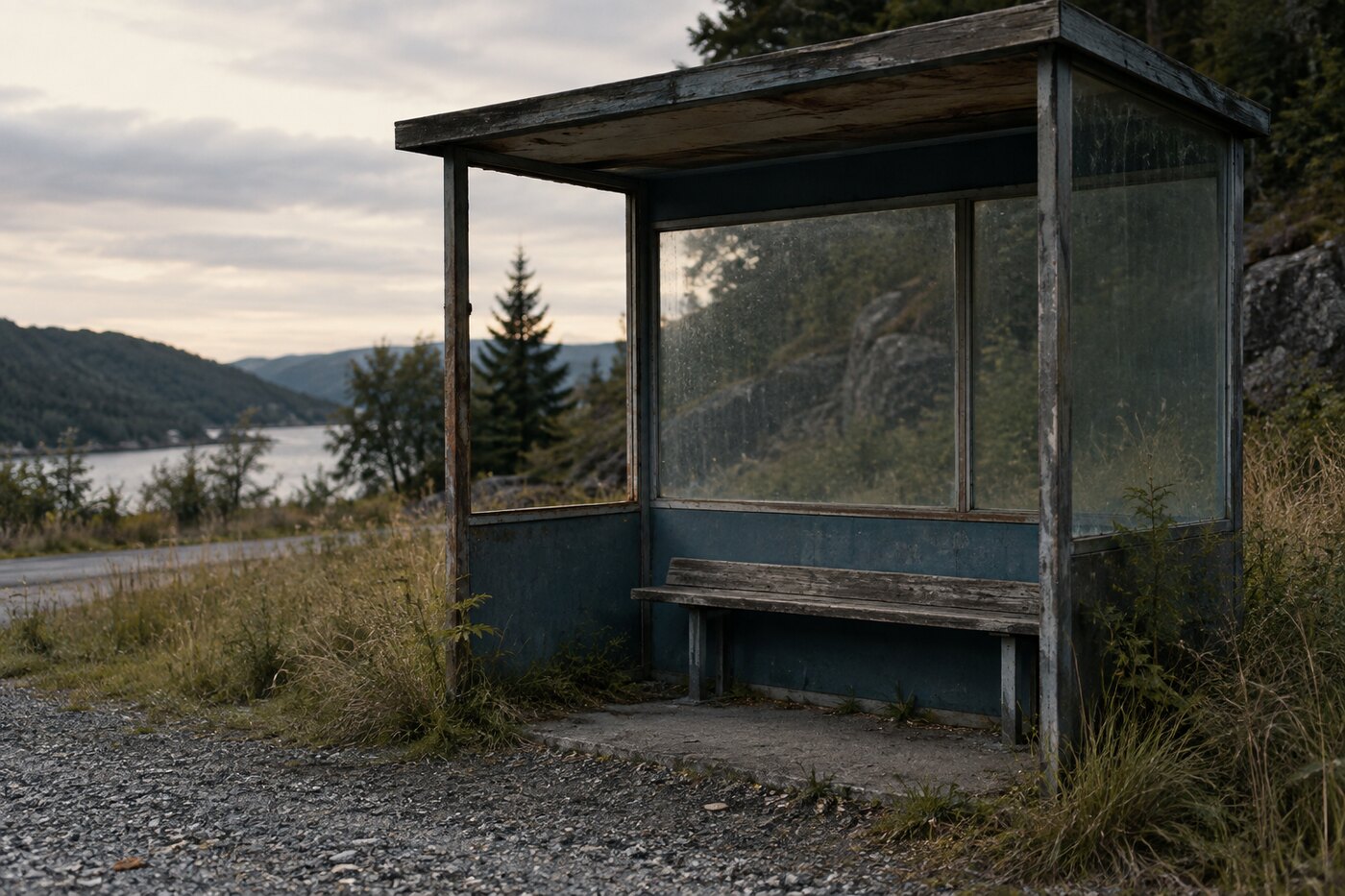
The shelter sat where the gravel shoulder widened, a roofed box the size of a closet, three sides and an open front turned from the wind. Somebody had built it square and level once. It was still square. Level it had let go of, one corner settling into the ground a degree at a time.
The bench inside was a single plank on two blocks, worn in the middle where bodies had sat and pale at the ends where they hadn’t. Not worn much. This was not a busy stop. The wear was thin, the record of one or two people over years, not the polish of a crowd.
One pane of glass was gone from the side wall, not broken in place — gone, the frame empty, the putty still holding the shape of it in weathered wood. Through the gap the weather had made itself at home. Leaves in the corner. A drift of grit along the base. The bench under the missing pane was grayer than the rest, rained on from the side for however many seasons since the glass left.
The schedule was screwed to the back wall behind a scratched plastic cover, and the sun had taken it. It had gone the pale amber of old paper, the columns still faintly there as ghosts, the times themselves faded past reading. You could see that it had once said when the bus came. You could not see when. Whether the bus still came at those times, or came at all, the sign no longer knew and could not say.
Gravel underfoot, packed hard in a small apron in front of the bench where feet had stood, and past that the long grass had moved in close, leaning against the open front, the ground slowly taking the shelter back into the field.
The wind came around the open side and through the empty pane and out again, and the shelter stood in it, roofed and waiting, holding a bench and a faded time for a route that may not run much anymore.