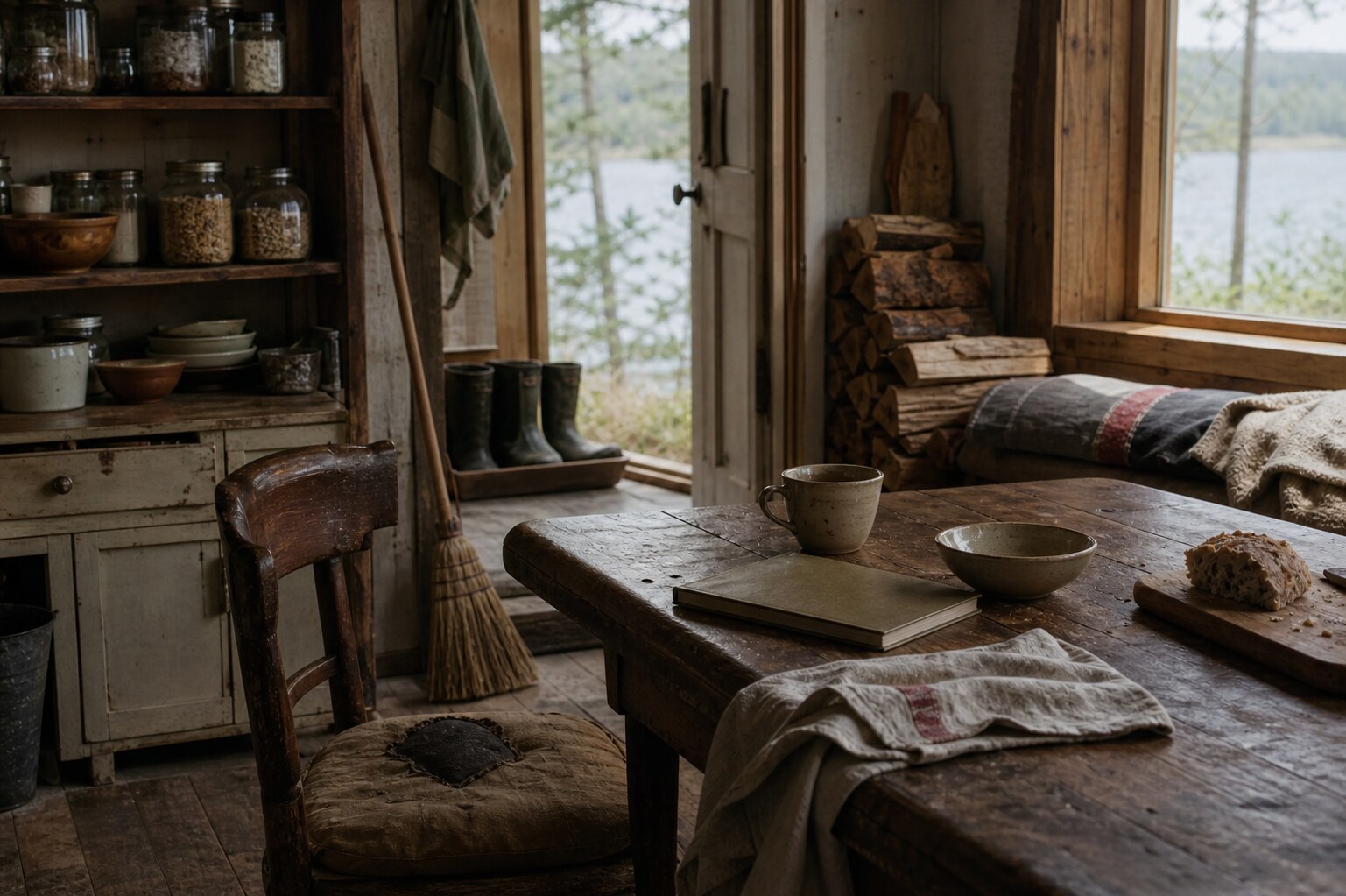
The bench was against the wall between the outside door and the inside one, in the six feet of room that a house keeps for changing states of being — from outdoor to indoor, from wet to dry, from booted to socked. It was a plain bench, a slab of fir on four legs, and it had stopped being furniture a long time ago. It was infrastructure now. It did the load-bearing work of the whole threshold, and in spring, when everything is thawing and everything is wet, it did too much of it.
Under the bench sat the boot tray, a black plastic pan with a lip, and in spring the lip earned its keep. There was a quarter inch of water in it, gray, with a skin of grit at the bottom — the melt off four pairs of boots, the ice that had ridden home in the treads now let go and pooled. The water had the smell of it: cold mineral, road salt, the particular gray smell of snow that has been down a while and picked up the winter’s traffic. A single boot leaned in the tray and a second lay on its side where it had been kicked off without a hand, and the print of the sole had left its waffle in the grit at the bottom of the pan.
Thaw dirt was the season’s signature. It had come in on the boots that the tray was supposed to catch and had gotten past the tray anyway, tracked in a fan across the floorboards in front of the bench, drying now to a pale crust at the edges and still dark and damp in the middle where the traffic kept it wet. You could count the trips in it if you wanted. The floor in front of a mudroom bench in April is a ledger. Every entry is a boot, every boot is a return, somebody came back from somewhere and the somewhere is written on the floor in the dirt it was made of.
Above the bench the coats hung on their pegs, and in spring they hung heavy. A winter coat dries slow. There were three up there half-drying, the wet gone out of the shoulders where the air got at them but still held in the cuffs and the folds, so the coats hung with a damp weight, a little swollen, giving off the smell of wet wool and the inside of a car heater. The bench took the drip. Under each coat, on the seat, a dark oval where the water had come down out of the hem and soaked into the fir and not yet let go. The wood there was darker than the rest, permanently now, a set of shadows the shape of coats that had dripped on that spot for years of springs.
The bench was a shelf as much as a seat. Nobody sat on it, or nobody sat on more than a corner of it, because the rest of the surface was staging. A grocery bag set down and half-unloaded and abandoned. A flashlight. A single work glove, the right hand, leather gone stiff and curled into the shape of the last thing it gripped, its partner nowhere — the left glove was the missing one, the way it is always one glove, never a pair, the mudroom eating them one at a time so that the bench slowly accumulates widowed halves. A ball of twine. A hat that belonged to nobody currently in the house.
Everything that came through the door and didn’t have a place yet stopped on the bench to think about it, and most of it never finished thinking. That is what a threshold surface is. It is where things wait to be sorted, and the sorting is the chore nobody does, so the bench carries a slowly settling drift of items in transit, a tide line of the household’s undecided business.
The legs told the wet story from the bottom up. The two front legs, the ones nearest the tray and the traffic, had gone dark at their feet and a little soft, the fir drinking up the floor water it stood in every spring, wicking it up an inch and holding it. The back legs were dry and pale and fine. The bench was rotting from the front, slowly, from the weather end, the way a thing rots from the side that faces the work. In ten springs the front legs would be spongy and someone would flip the bench end for end to buy another decade, and the dry legs would take their turn in the wet.
There was a hook screwed into the end of the bench, low, near the floor, at a height that made sense only if you were a child or bending, and it held a dog leash and the small dried crust of mud that comes off a leash clip. Below it a second boot tray, smaller, for the smaller boots, empty now because the small boots were grown and gone, but the tray stayed, keeping its spot the way the house keeps everything until there is a reason.
I came in wet myself, off the thaw, and did what the room is for. Boots in the tray, the melt already starting to run off them. Coat on the peg over the dark oval it had made a hundred times. I sat on the one dry corner of the bench to pull my socks straight, and under me the fir was cold, and beside me the widowed glove held its grip on nothing, and on the floor at my feet a new dark fan of thaw dirt was already spreading out from my boots toward the crust of all the fans before it.