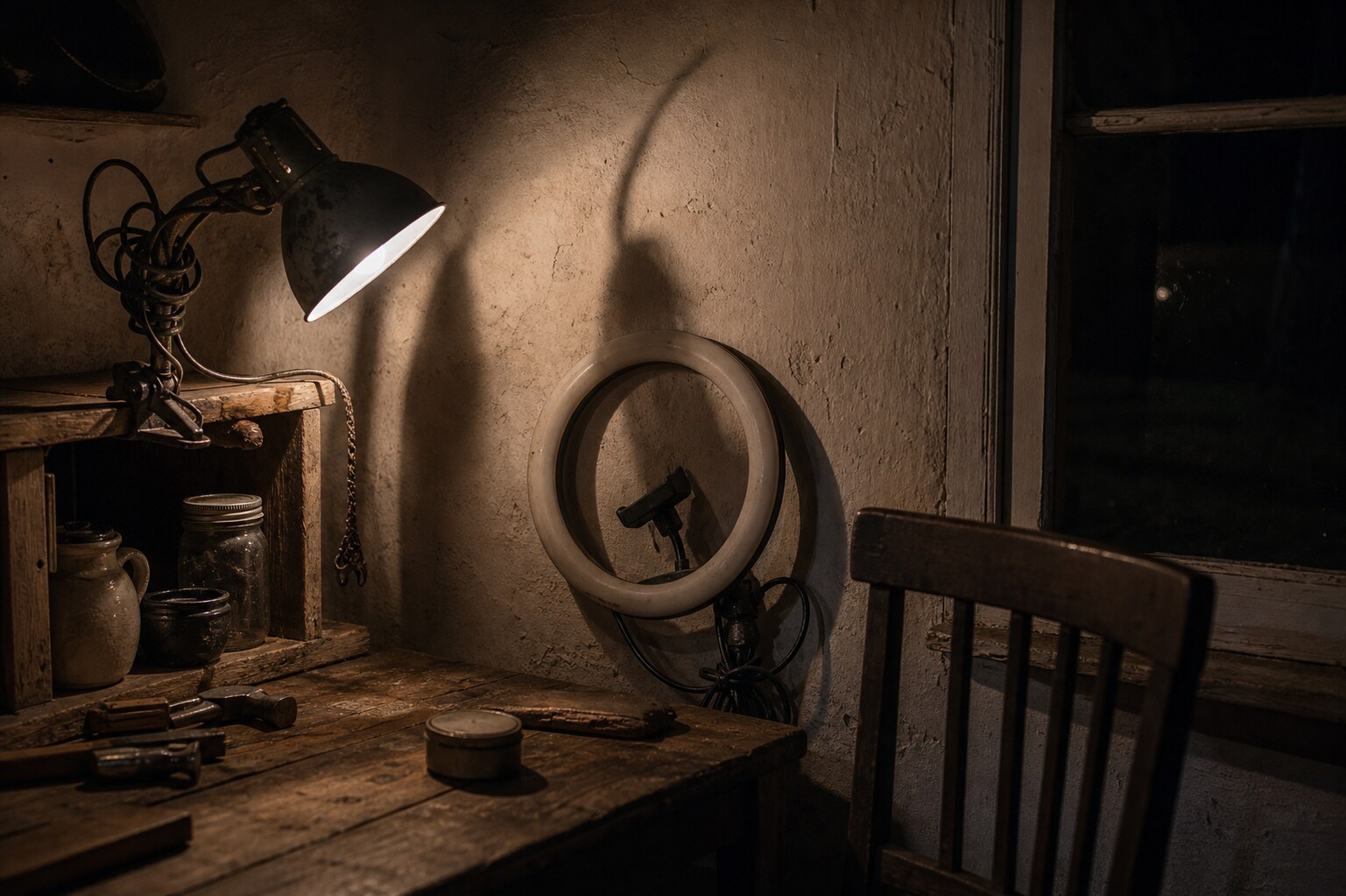
The shed is gasoline. That’s the whole entry — you open the door and the gas is there before the light, a blue sharp smell with hot oil under it and cut grass under that, laid down by a mower over years and gone permanent in the wood. I could be walked into that shed blindfolded and name it before my hand found the wall. The eye would need a second to sort the dark. The nose needs nothing. It has the place already.
I remember a lot of buildings this way, by their dominant smell, and the smell is a better record than a photograph because it’s made of the place itself — of what the place held and what the weather did to it — instead of made of light bounced off a surface. A photo of the shed shows a mower and a wall. The smell of the shed is the mower and the wall and every summer the mower ran.
The fruit stand is apples in the fall. A whole cool sweetness of them, cider going faintly sharp at the edge where the seconds sit soft in a low crate, and under that the cardboard of the boxes and the raw wood of the counter. In August the same stand is a different smell entirely — warm tomato and dust and the green break of a stem. The building keeps whatever’s moving through it. Its smell runs on the season.
The covered bridge is damp timber. Old wet wood that never dries, cellar-cold, with the river’s mineral edge coming up through the deck. The market stall gone empty between market days is hot dust — sun on old boards and the ghost of everything that was ever sold there, a dry attic smell with a thread of onion or fish or flowers in it depending on what the stall does. The boathouse is rope and lake water, manila and algae and fuel stacked in the dark. The outbuilding nobody’s opened in a while is mouse — that particular ammonia-and-nest smell, nutshells and shredded paper and the small animal fact of it, and you know before you see the chewed corner of the feed bag that something has been living in there.
The farm kiosk at the co-op is fertilizer, a heavy mineral reek that gets in your clothes, mixed with twine and diesel and the green of stacked flats. Every one of these is a real smell of a real function. None of them is a scent anyone chose. That’s the difference between a place that’s lived in and a place that’s been made to look lived in — the arranged place smells of nothing, or of cleaner, or of a candle pretending to be cedar, and the working place smells of its work, because the work got into the wood and stayed.
There’s a whole vocabulary of these building smells and most of it is materials plus time plus weather. Cedar, which sweetens as it ages and then, damp, turns to a soft rot smell that’s almost the same sweetness gone wrong. Oil, which soaks into a floor and darkens it and comes up warm on a hot day. Mildew, the smell of a corner that never gets air, the underside of a tarp, a stack of magazines in a cellar. Old cardboard, which is its own smell, dusty and sweetish, the smell of storage itself. You can walk through a set of outbuildings on a single property and each one will have its own note, and the notes are the truest inventory of the place — this one held the mower, this one held apples, this one held nothing but got damp, this one had mice.
The eye gets fooled by a fresh coat of paint. The nose doesn’t. You can paint a shed and photograph it looking new and the photo will lie a little, will make it look like a clean bright box, and then you open the door and the gasoline is still there, decades deep, telling the truth the paint tried to cover. The smell is what’s underneath the looking. It’s the building’s actual biography, held in the grain, and it doesn’t repaint.
I stood in the mouse-smelling outbuilding a while, letting my eyes catch up to what my nose already knew. There was a feed bag in the corner with the bottom chewed out and the contents run out across the floor in a fan, and in the fan were the small dark seeds and the smaller dark droppings and a nest worked up out of shredded twine and a scrap of pink insulation. It was still warm-smelling, still lived-in, and I backed out and left the door open behind me to let some weather at it, and did not go get the broom.