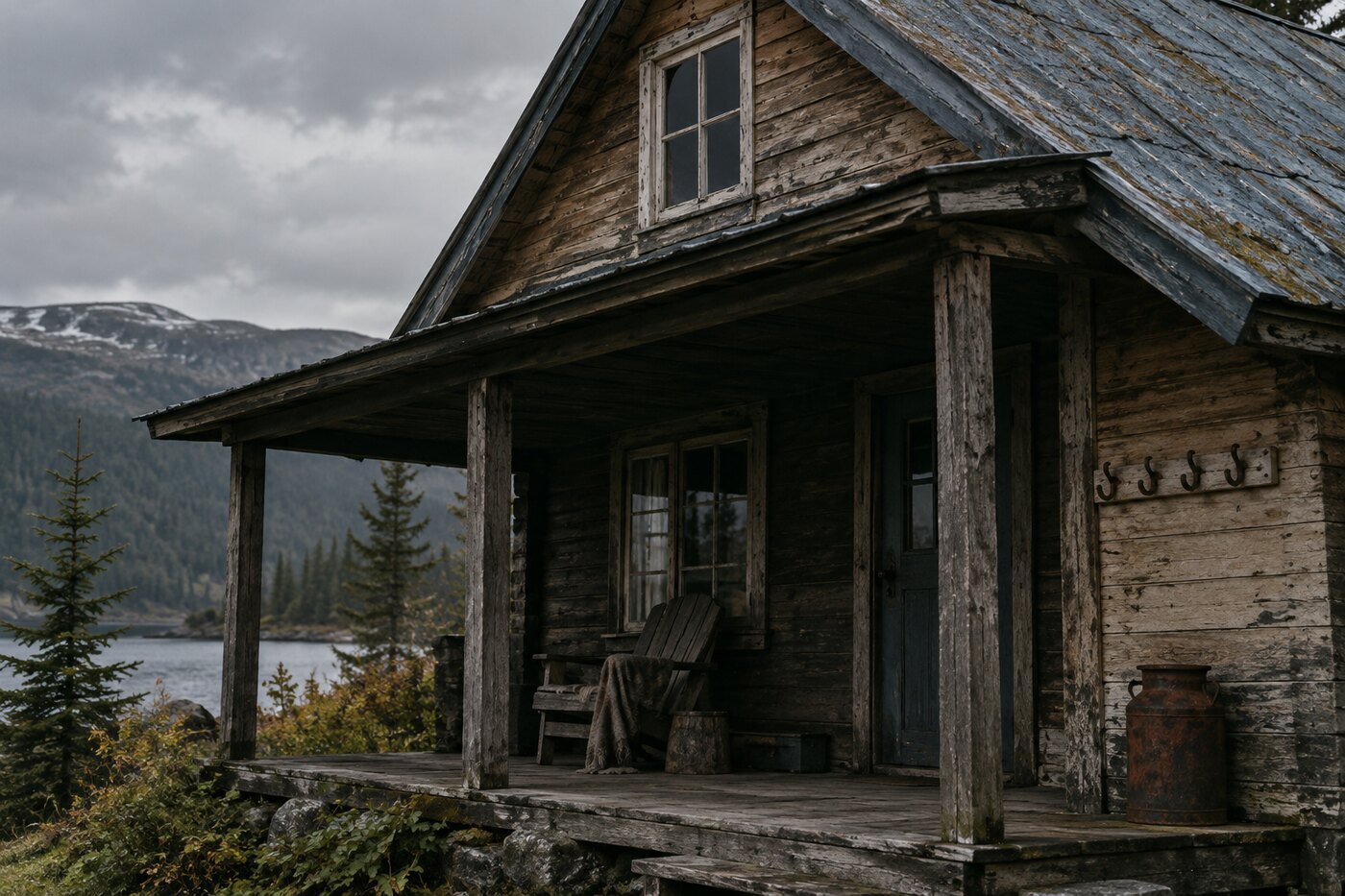
Look at the pitch of the roof first. Steep ones mean snow. A steep roof is a building that expects a load it can’t hold and has decided to shed it instead — to let the snow slide before the weight can find the weak rafter. Down where the snow is wet and rare the roofs go flat and lazy. Up where it comes dry and stays for months the roofs stand up sharp, and under the eave there’s a berm all winter where the shed snow piles, and a path worn around it because everyone knows to give that edge room when the thaw lets go.
The porch is the next thing. A deep porch is not a decoration; it is a calculation about the sun. Somebody worked out how low the winter sun gets and how high the summer sun climbs, and set the overhang so the low light reaches in and warms the boards in January and the high light stops at the drip line in July. A porch like that is cool in the heat and bright in the cold without anyone touching it. The bench on it will have migrated to wherever the sun actually lands, and the wear on the seat will mark that spot better than any measurement.
Woodsheds tell you the wind. A good one is open on a single side, and that side is not chosen for the view. It faces the way that keeps the rain off the split wood and lets the air still move through to dry it. Stand at the open side and you’re standing where the weather doesn’t come, and the wood inside is gray and dry and light in the hand, and the wood stacked outside the shelter is dark and heavy and you can feel the difference the moment you pick it up.
Then the small answers, everywhere, once you start seeing them. Storm doors that hang on the weather side, an extra skin against the wind, banging in their frames all winter. A raised produce stand up on legs so the frost heave and the runoff pass underneath and the crates stay off the wet ground. A row of hooks just inside every working door, because in a real climate you come in wet and you need somewhere to hang the wet thing that isn’t the floor — and the hooks are always overloaded, three coats deep, a hat crushed under a raincoat, mittens clipped to a line strung between two nails so they’ll drip into the same spot and dry by morning.
The side door is my favorite argument. On most working houses the front door is dead. It faces the road and the weather and it swelled shut years ago and nobody minds. The real door is on the side or the back, in the lee, where the driveway comes up and the wind doesn’t. That’s the door with the boot scraper cut from an old file, the door with the mat worn through, the door whose threshold is dished from feet. The house voted with its feet, over years, for the entrance that made sense against the conditions, and abandoned the one the plans called grand.
None of this gets designed in the way people mean when they say designed. It gets negotiated. The building goes up and the first winter argues with it and the next spring somebody adds a foot of overhang, moves the woodpile, cuts a scraper into the sill, gives up on the front door. The weather brings a case every season and the building answers, and after enough seasons the answers have accumulated into the whole shape of the place, and the shape is exactly the shape of the local weather turned into wood and tin. You can walk up to a building you’ve never seen, in a country you don’t know, and read off the winter from the pitch and the summer from the porch and the wind from the open side of the shed, before anyone comes out to tell you a thing about how it gets up here.
I stood once under the eave of a steep old roof in a spring thaw, in the worn path that everyone leaves around the drip line. The snow was letting go off the pitch in slabs, sliding and dropping and thumping into the berm. There was a fresh dent in the ground below the eave where a slab had come down that morning, packed and gray and pocked, and it hadn’t melted yet, and I stepped around it the way the path told me to.