
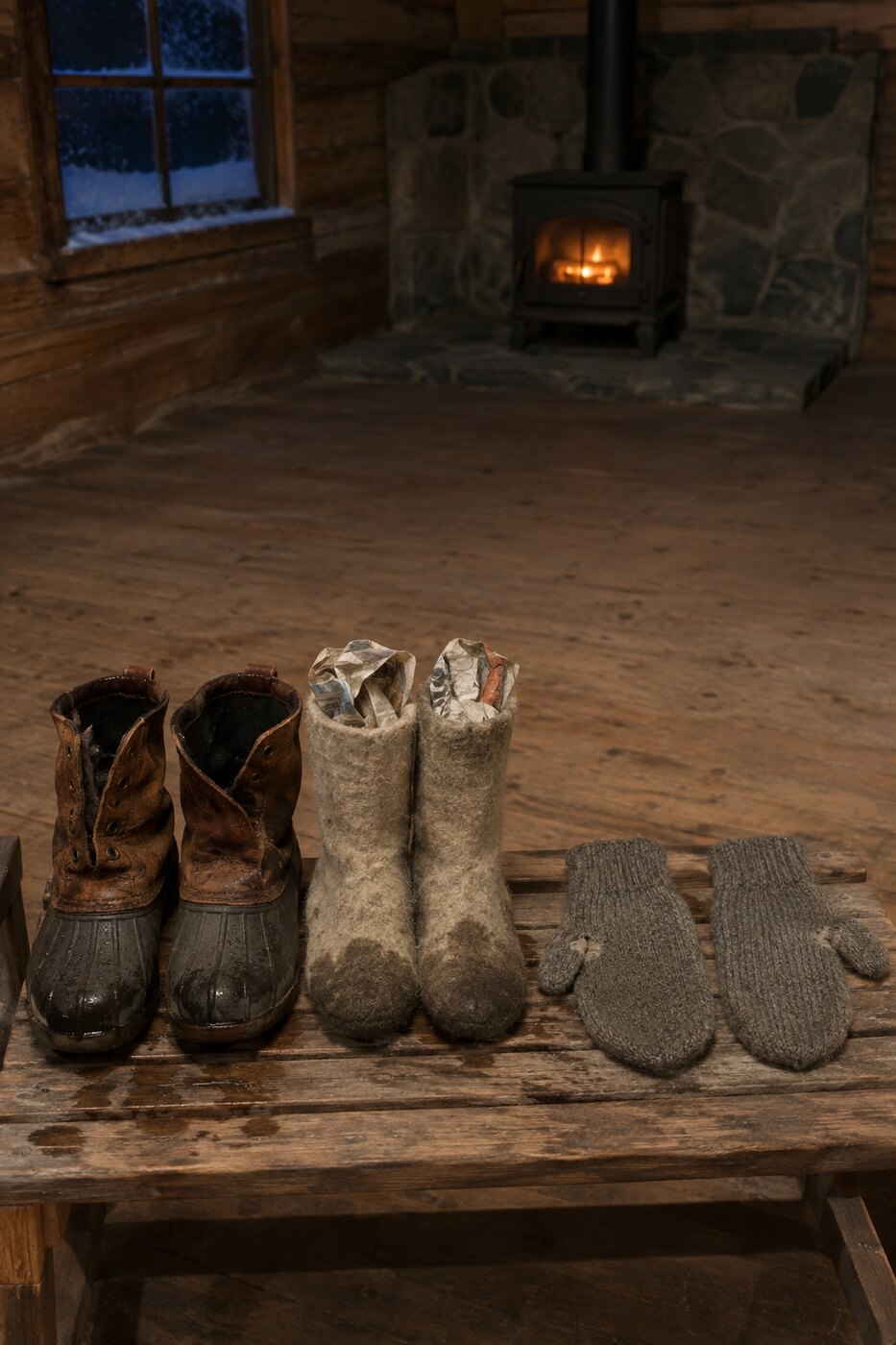
Winter boots come in wet every day. Some of it is snow packed into the cuff, some is your own feet, and on a bad day it’s a creek. Felt or synthetic liners, rubber or leather shells, wool mitts gone heavy at the thumb: all of it has to be dry by morning, because at -30 °C a damp liner is a cold foot.
The stove is right there, and that’s the trouble. Every boot maker and glove maker whose care instructions I’ve read says the same thing in different words: dry at room temperature, away from heaters, stoves and fires. Not near the stove, not on the warming shelf, not on the hearth. A leather mitten dried too close to the stove comes back smaller and stiff, and the boot beside it may have started to let go where it was glued.
What works is air, distance and time. Take the boot apart so the air can reach the wet parts, give the water somewhere to go, and let the room do it.
You need
- Newspaper, a few sheets per boot
- Paper towel, for leather boots with a waterproof membrane
- A rack, a chair back or a row of hooks at least 1 m from the stove
- A towel, for wool mitts
How
-
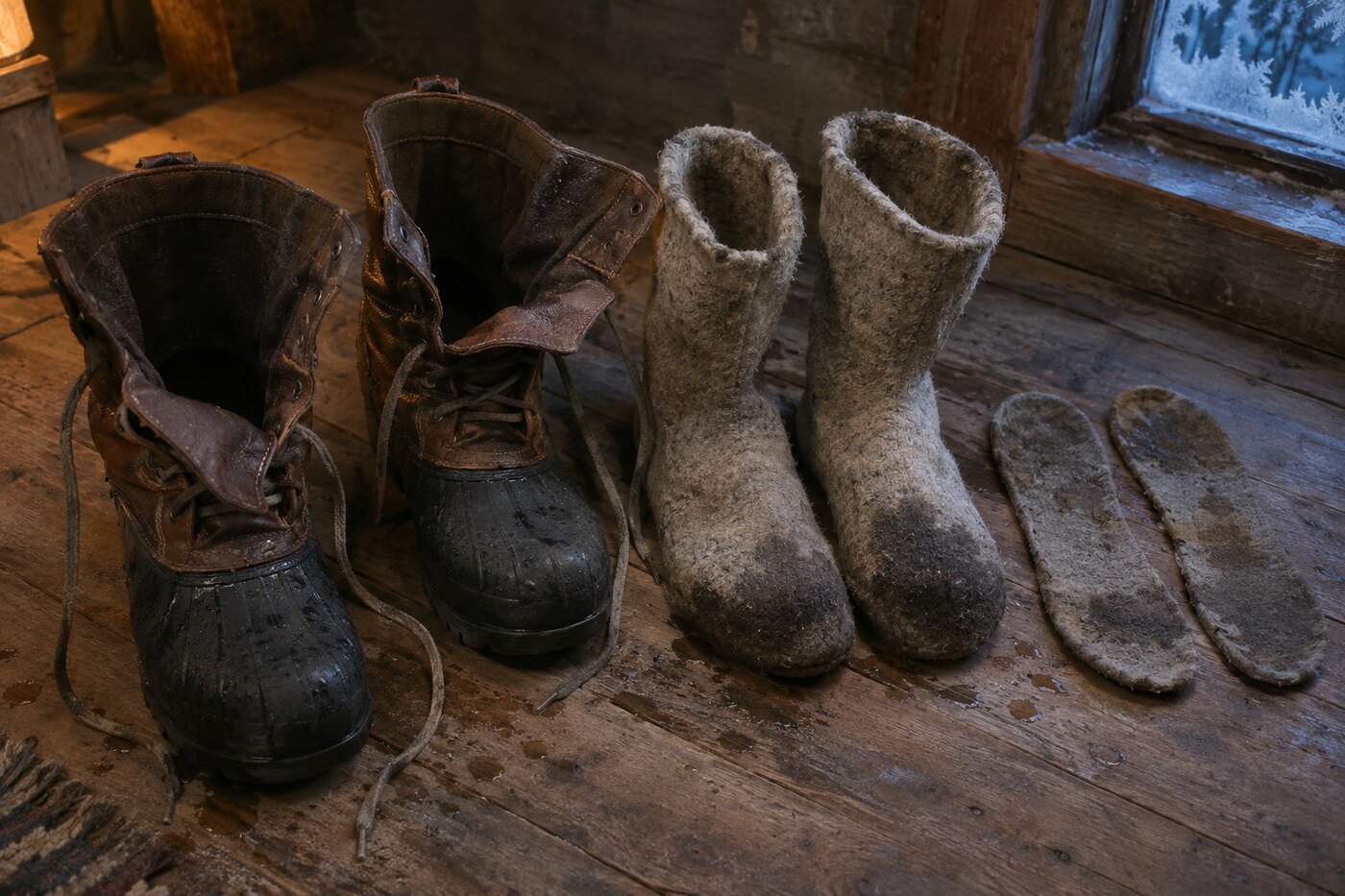
Knock the snow off outside, before it melts into the cuff. Open the laces all the way and pull out the insoles; water collects underneath them.
-
Pull the liners out of the shells. Left in the shell, a liner can only dry through its open top, and the shell never airs out at the toe.
-
Crumple newspaper loosely into the liners and the shells, right down to the toe. For leather boots with a Gore-Tex or similar membrane, use paper towel instead: Hanwag warns that newsprint can damage the membrane.
-
Set everything at least a metre from the stove, standing open end up or hung so air can get into the top and around the sides. Not touching each other, not stacked, not on the floor against a cold outside wall.
-
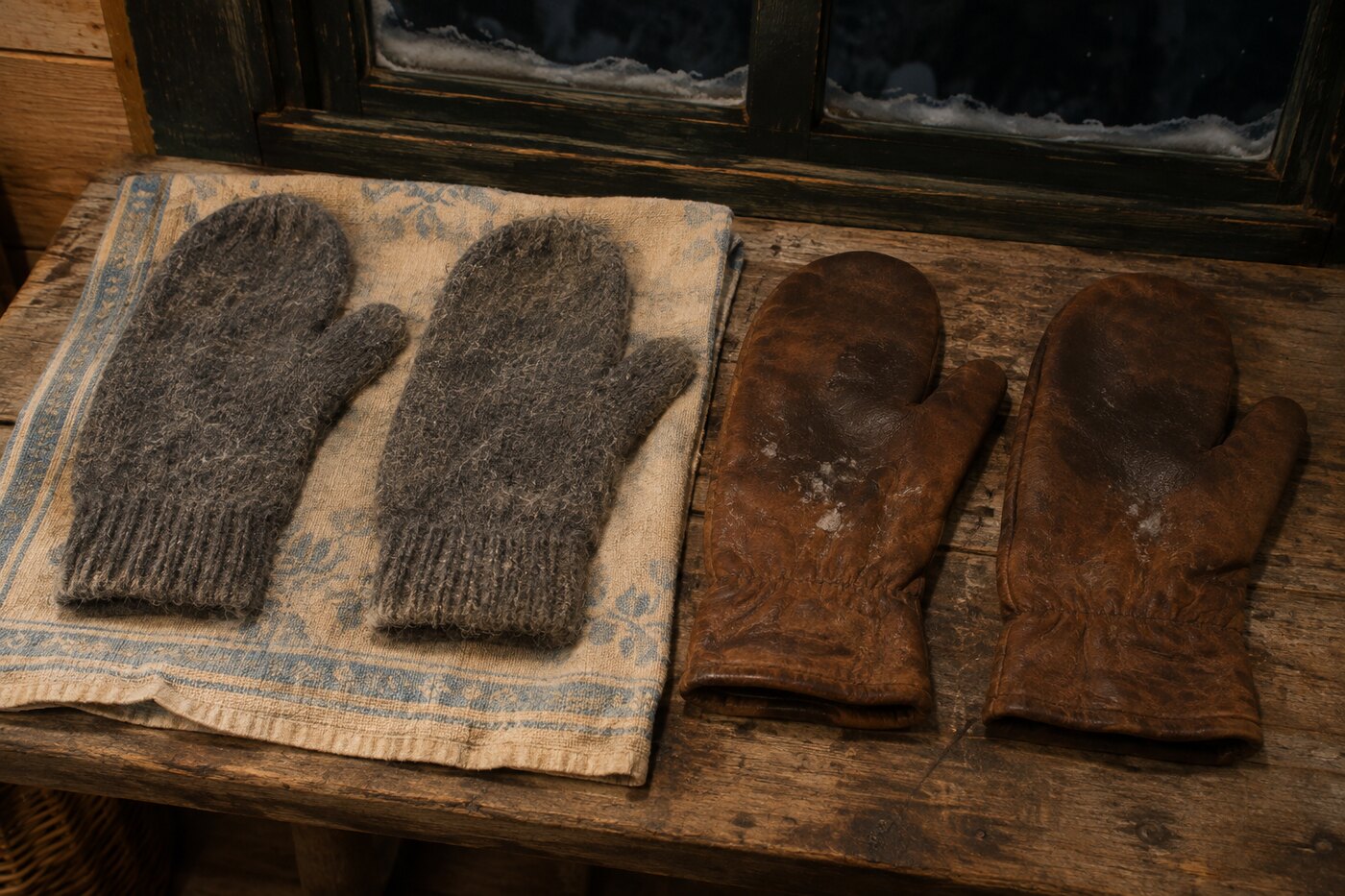
Lay wool mitts flat on a towel and press them back into shape. Lay leather mitts flat too, and flex them a little as they stiffen; Hestra says to shape them while drying and put them on a few times to bring the fit back.
-
Before bed, swap the wet paper for dry. The paper does the work only while it can still take water. In the morning, reach into the toe of a liner: if it feels cool and clammy rather than just cool, it isn’t dry. Fresh paper, and wear the other pair.
What goes wrong
Leather near the stove shrinks, stiffens and cracks. Hanwag puts it plainly: heat makes leather brittle, can affect the bonding, and shrinks it. LOWA and Red Wing say the same about cracking, and Red Wing adds that heat strips the leather’s natural oils. Once the leather has dried right through, wax or condition it. Hestra says the same for leather mitts.
Glued soles let go. Hanwag says heat can affect the bonding. On a boot whose sole is glued rather than stitched, that bond is what holds the boot together.
Rubber shells crack. Muck’s care guide says artificial heat can cause cracks and crazing that compromise the waterproofing. A rubber shell that cracks at the flex point lets in the creek next time.
Synthetic liners and foam warp. Acton’s care page says never to put footwear, insoles or liners too close to heaters or stoves, because they warp. It calls EVA heat-sensitive enough that it warns against drying it in sun through a window.
Wool takes damage where it’s hottest. The Woolmark Company says to dry wool flat, away from direct heat, and not draped over a radiator: the part on top dries first and that’s where the damage happens. A wool mitt on the stove’s edge is a sweater on a radiator.
Things dried crooked stay crooked. A boot left to dry slumped over keeps the slump, the way the pair in The Boots Kept the Walk kept the creek crossing. Stand them up, stuff them out to their shape, and lay mitts flat.
When the conditions change
When the cabin goes cold overnight. When the stove dies back toward morning, the room cools and drying slows. Do the paper swap later, just before you bank the fire, and accept that a soaked liner needs a second night. A second pair of liners is the real answer to a wet day, not a hotter fire.
When the leather went through water. Hanwag says a proper dry can take up to two days and the paper should be changed several times a day. Don’t wear soaked leather boots the next morning just because they feel dry on the outside.
When it’s well below freezing outside. Don’t leave rubber shells in an unheated porch overnight to “air out”. Muck says sub-zero temperatures make the rubber brittle, and a wet liner left in a cold porch is frozen by morning, not dry. Bring everything into the heated room.
When you’re checking a closed cottage. If the stove isn’t lit, nothing dries there. Put the wet boots and mitts in a bag and take them home; a day in a cold, closed building just lets the damp settle in.
Sources
- Hanwag, How to clean hiking boots: no drying by fire or heater; heat makes leather brittle, affects bonding, shrinks leather; up to two days; change paper several times a day; no newspaper with Gore-Tex membranes
- LOWA, Boot care: remove insoles and laces; no direct heat, which can shrink or crack leather
- Red Wing Shoes, Boot care FAQ: no radiator, heater or sun; heat cracks and stiffens leather and strips its oils
- Acton, Footwear care: take out liners and insoles and air-dry separately; never too close to heaters or stoves, to avoid warping; EVA is heat-sensitive
- The Original Muck Boot Company, Care guide: dry away from artificial heat, which can cause cracks and crazing; sub-zero storage makes rubber brittle
- Hestra, Glove care: leather gloves flat at room temperature, away from all heat; shape while drying; recondition once dry
- The Woolmark Company, How to dry wool: dry flat, away from direct heat; the part over a radiator dries first and is damaged
- Government of British Columbia, Heating fire safety toolkit: anything that can burn at least 1 metre from wood stoves and other heat sources
- Canada Safety Council, Woodstove and wood-burning fireplace safety: a clear area of at least one metre around the stove
- Pacific Energy, New Vista owner’s manual: keep clothing away from the stove; keep loose combustibles out of the installation clearances