The First Layer Doesn’t Stay Quiet
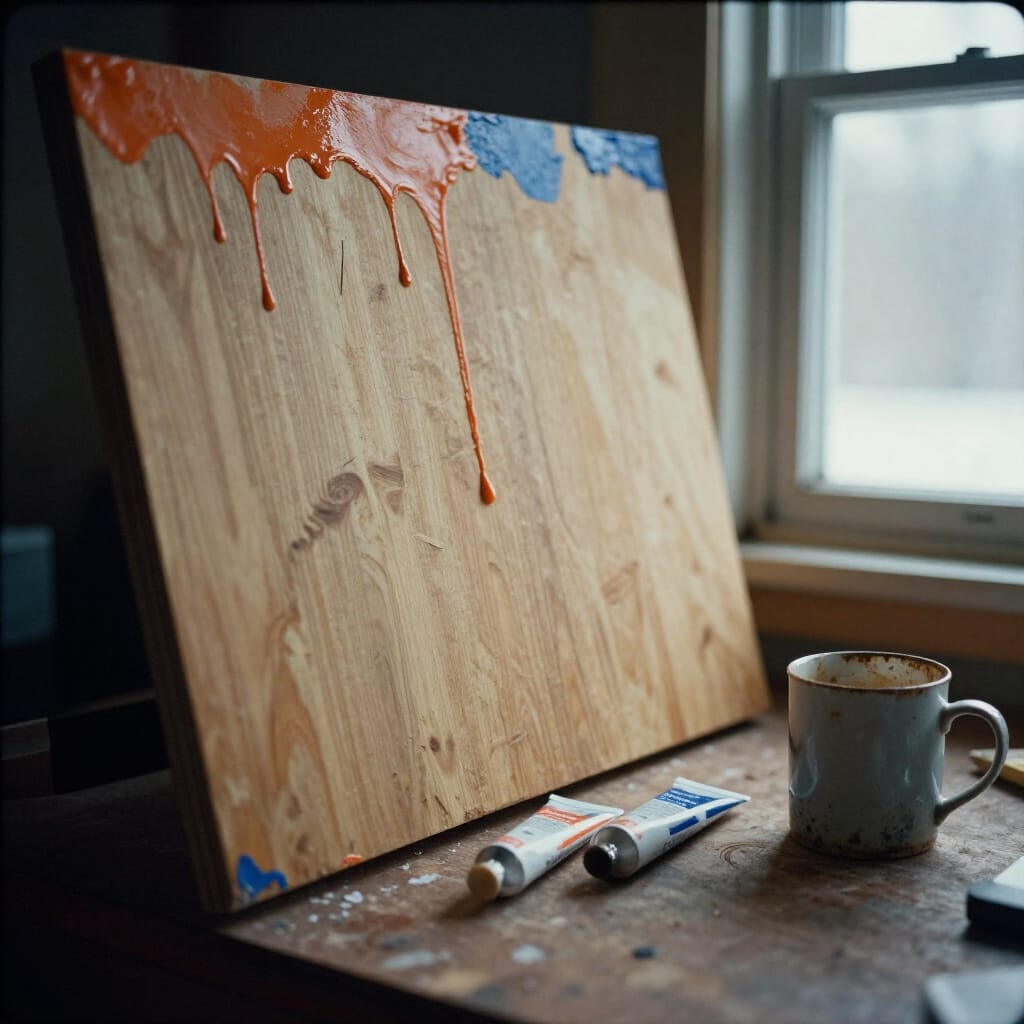
The board came from the hardware store. Quarter-inch plywood. A price sticker on the back that wouldn’t peel clean. It sat on my bench long enough to pick up a coffee ring in the corner.
Plywood has grain. Canvas pretends it doesn’t. The grain runs one way and keeps running that way. You can sand it and still catch a splinter with your thumb. You can paint it and the wood will drink what it wants.
I didn’t prime it at first. I was impatient. I squeezed out burnt sienna and cadmium orange, whatever tubes were closest. The brush I grabbed was still stiff at the heel. I’d used it to scrub something last week. It might have been toothpaste. The bristles never really forgive you.
The first layer went on heavy. Drips formed at the bottom edge and took their time. One stopped two inches from the corner and stayed there. A little frozen tongue.
Nobody was going to see this layer. That was the deal I made with myself. So I didn’t fix the drip. I didn’t fix the place where the brush skipped and the wood showed through like a dry patch of skin. I painted a circle that turned into an egg and then into something else.
Acrylic dries fast. It also dries like plastic. It can crack later, the way old nail polish does. Oil stays tacky and smells like a garage. House paint behaves like it’s on a deadline. I used acrylic because it was already open.
The next day I put on gesso. Cheap white gesso from the art store. Too watery. It soaked into the plywood and raised the grain. The panel bowed a little in the middle. I didn’t notice until I set it on the floor and it rocked.
Primer has opinions. Gesso makes a surface that wants paint. House primer makes a surface that wants to be a wall. I used both, because there was half a can of house primer left from the bathroom. You can see where each one is if the light hits right.
The second layer was blue. Prussian blue, which sounds like a decision made by someone in uniform. It went on thick and covered the orange completely. From across the room it looked calm. Like a chalkboard.
Then I left it alone for three days.
When I picked it up again the board felt heavier. Not much. Just enough. Two layers of paint weigh something. Even when they’re dry.
I held it under the kitchen lamp and tilted it back and forth. The lamp caught the ridge where that drip had been. The drip wasn’t visible as a color anymore. It was visible as a bump. The orange underneath was gone until it wasn’t. It pushed through in a few places, not on top, just present. A stain. A bruise.
Plywood keeps records. It keeps the first mistake. It keeps the moment you pressed too hard. It keeps the corner where you ran out of paint and tried to stretch it. Later layers sit on top like a tablecloth over a lumpy table.
I put the panel in the window for a while. Side light shows you everything. The ridges. The missed spots. The places where the gesso sank in and the blue went dull.
The first layer doesn’t stay quiet.