Bread Without Kneading
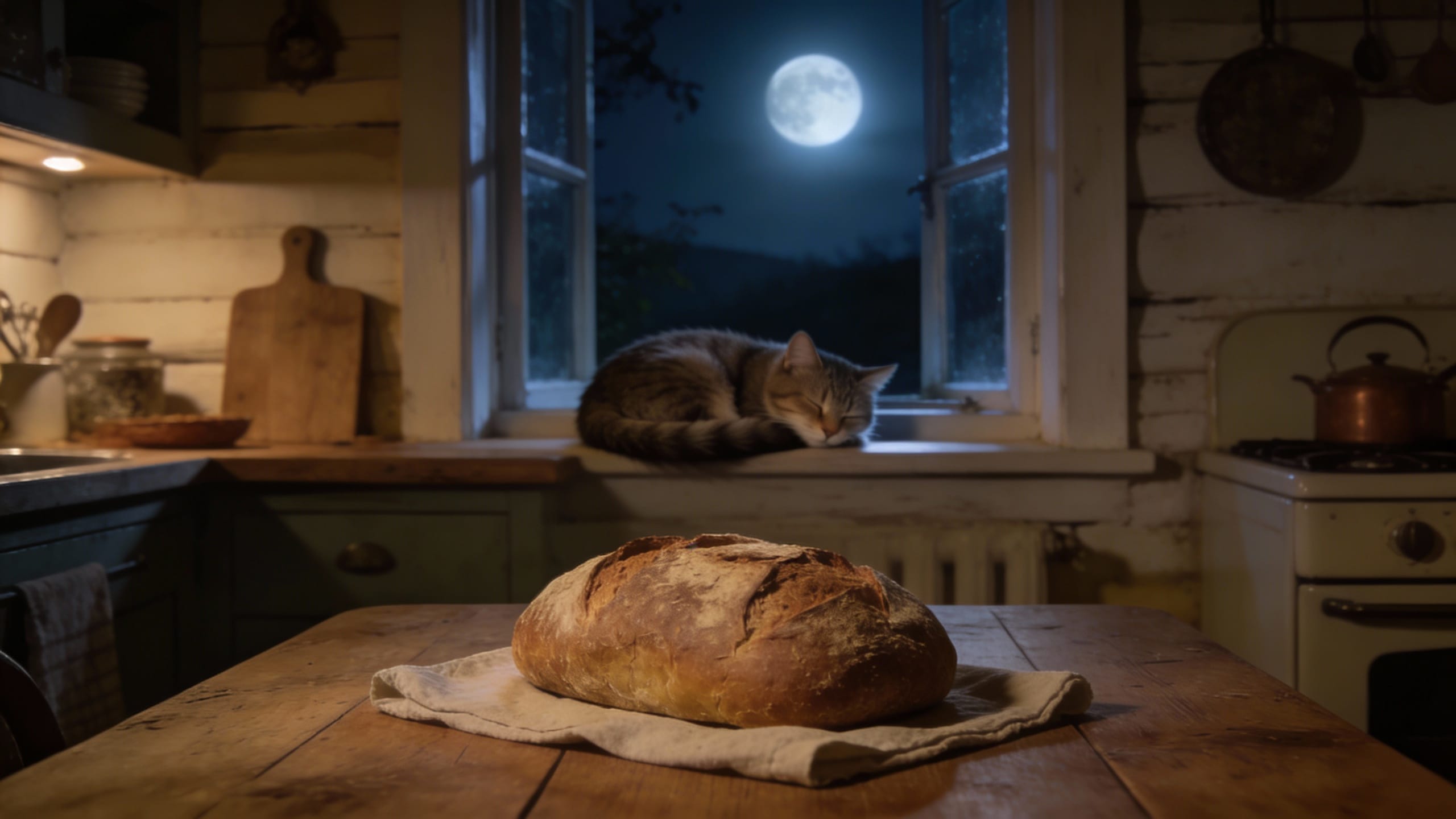
The bread books make this complicated. Hydration percentages, folding schedules, steam injection. You can ignore most of it.
Flour, water, yeast, salt, time. The waiting is the work.
Ingredients
- 3 cups all-purpose flour (400g)
- 1½ cups warm water (350ml)
- 1 teaspoon instant yeast
- 1½ teaspoons salt
The night before
Mix the flour, yeast, and salt in a large bowl. Add the water. Stir with a wooden spoon until you have a shaggy, sticky mess. No dry flour visible, but don't overwork it.
Cover with a towel or plastic wrap. Leave it on the counter overnight. Eight hours minimum, twelve is fine, eighteen still works.
The next day
The dough will have risen and the surface will be bubbly. This is right.
Flour your hands and the top of the dough. Pull it out onto a floured surface. Fold it over onto itself a few times—north to south, east to west. Shape it into a rough ball. It doesn't need to be pretty.
Let it rest on the counter, covered with the towel, for another 30 minutes.
Baking
While the dough rests, put a Dutch oven in the oven and preheat to 450°F. The pot needs to be screaming hot.
Carefully take the pot out. Drop the dough ball in. It will sizzle. Put the lid on.
Bake covered for 30 minutes. Remove the lid, bake another 15-20 until deep golden brown.
Take the bread out of the pot immediately. Let it cool on a rack for at least an hour before cutting. This is hard. Do it anyway.
Notes
The crust will crackle as it cools. This is the bread singing.
It won't last more than two days. It wasn't made to. Eat it fresh, then make another.
No Dutch oven? A heavy pot with a lid works. A covered baking dish works. The lid traps steam, which makes the crust.
The first loaf won't look like the pictures. Make it anyway. By the third or fourth, your hands will know what to do.