
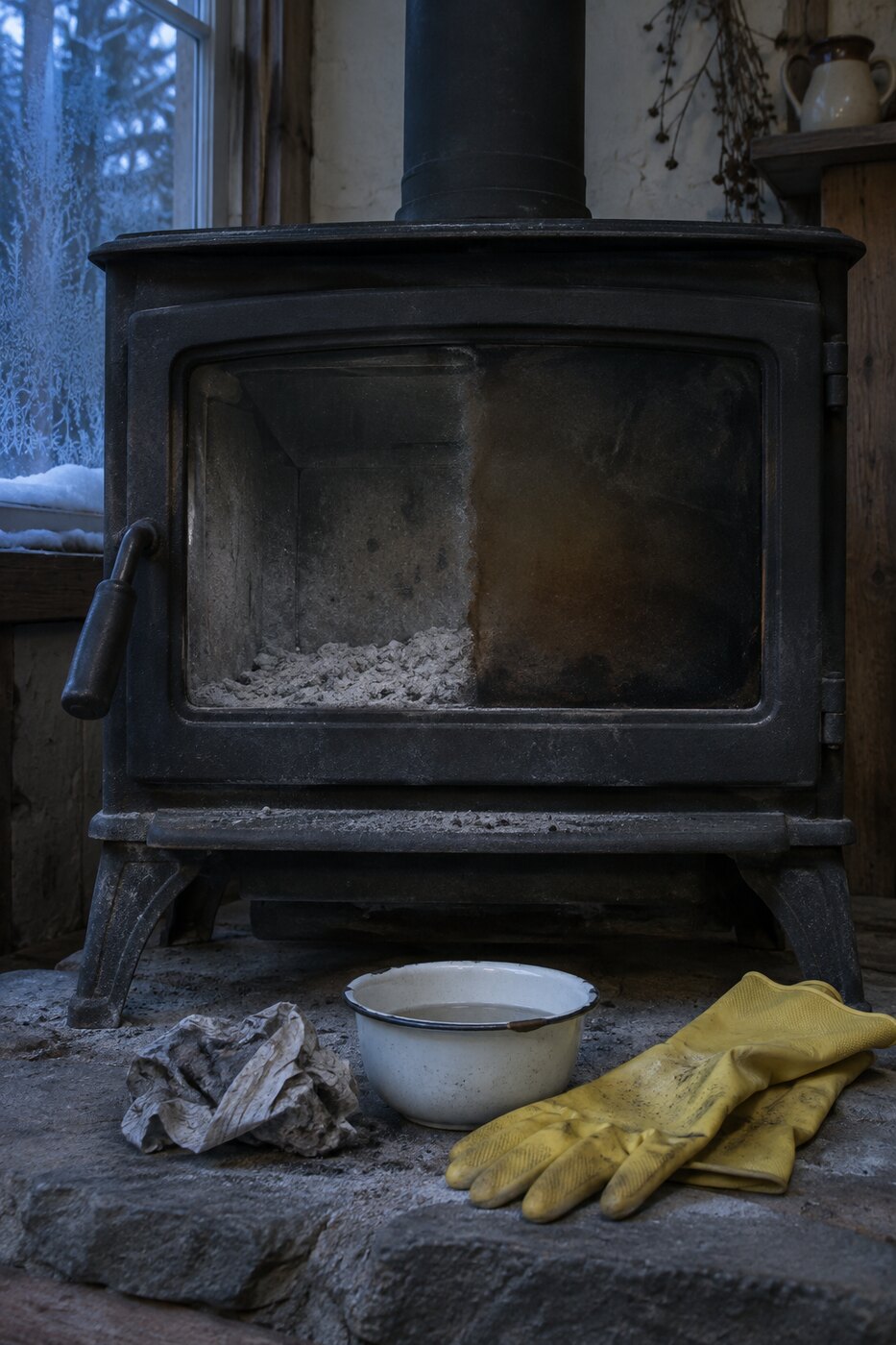
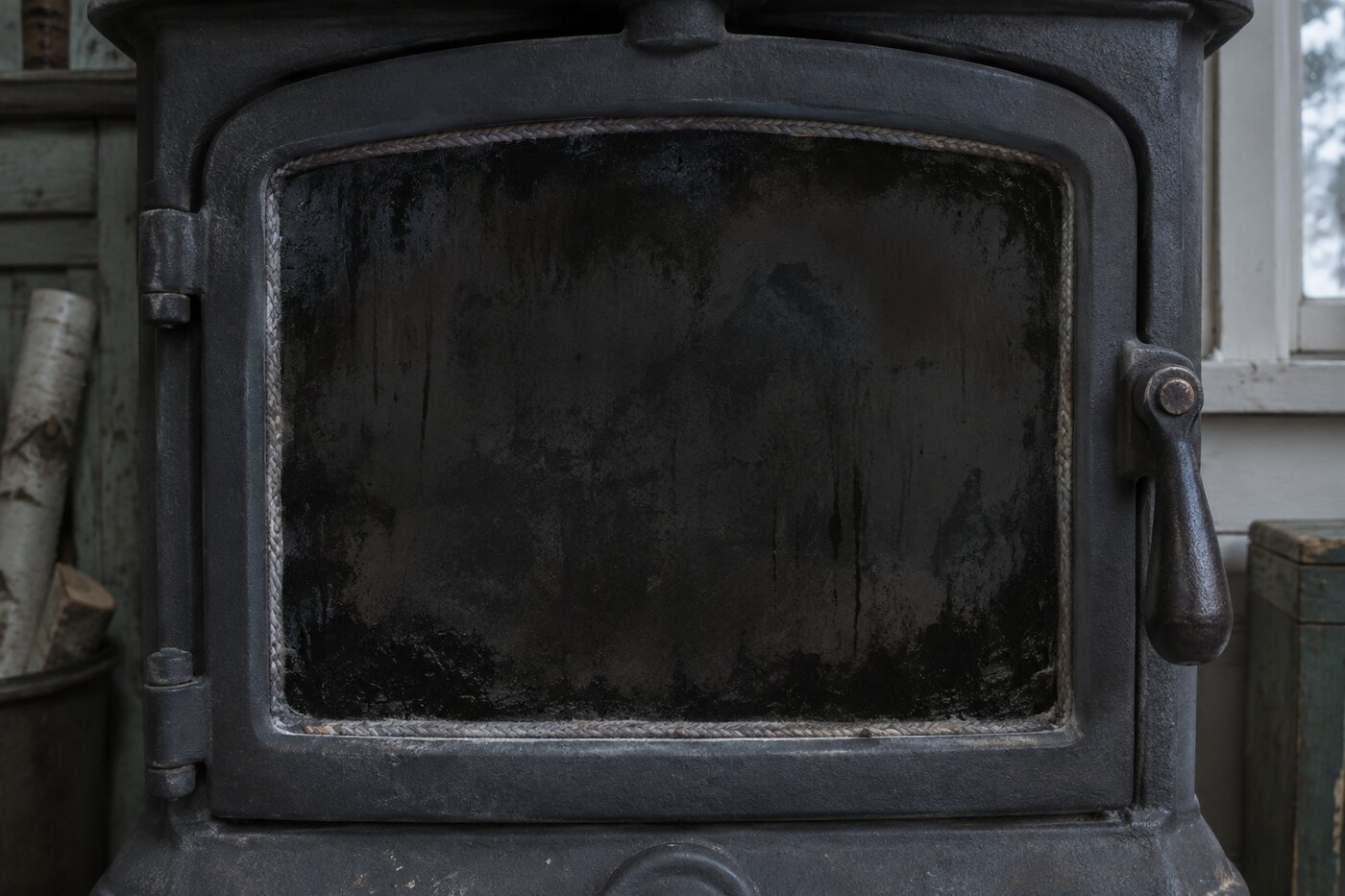
The glass on a wood stove door goes black for a reason, and the reason is up the chimney too. Pacific Energy’s manual is blunt about it: a light brown, dusty deposit that wipes off means good combustion and dry wood; a black, greasy deposit that’s hard to remove comes from wet or green wood and too slow a burn, and it’s building up in the chimney at least as fast.
In the Yukon that second kind is easy to get. A winter night means a full load turned down low so there’s still a fire at six, and wood that went into the shed late in the fall isn’t dry yet. Cleaning the glass takes a few minutes with newspaper and ash. Keeping it clean is about how you burn.
You need
- Rubber dish gloves
- Newspaper or paper towel
- A small bucket or bowl of water
- A little fine, cold wood ash from the stove
- A strip of paper about the size of a banknote, for the gasket
- Stove-glass cleaner and a soft cloth, only if ash won’t do it
How
-
Wait until the stove and glass are cold, not warm. Look at what’s on the glass before you touch it: a light brown, dusty film is an ordinary day; a black, greasy coat means wet wood or too slow a burn.
-
Check the door gasket while the door is open. Close the door on the strip of paper, half in and half out, and pull. If it tears, the seal is good. If it slides out, the door needs adjusting or the gasket needs replacing. Try a few spots around the door.
-
Put the gloves on. Crumple a sheet of newspaper, dip it in the water so it’s damp but not dripping, then press it into the fine ash. Rub the inside of the glass in small circles. Jøtul says to wear gloves for this: soot and water together make a kind of lye that’s hard on the hands.
-
Wipe off the grey paste with a fresh, dry piece of paper. Go over the heavy spots a second time. Drop the used paper in the bucket.
-
If a film is still there, use a cleaner made for stove glass, or a non-abrasive household cleaner, on a soft cloth. Then wipe the glass with plain water. Blaze King warns that cleaner left on the glass bakes on at the next fire and is hard to get off. Keep cleaner off the painted or plated parts of the door.
-
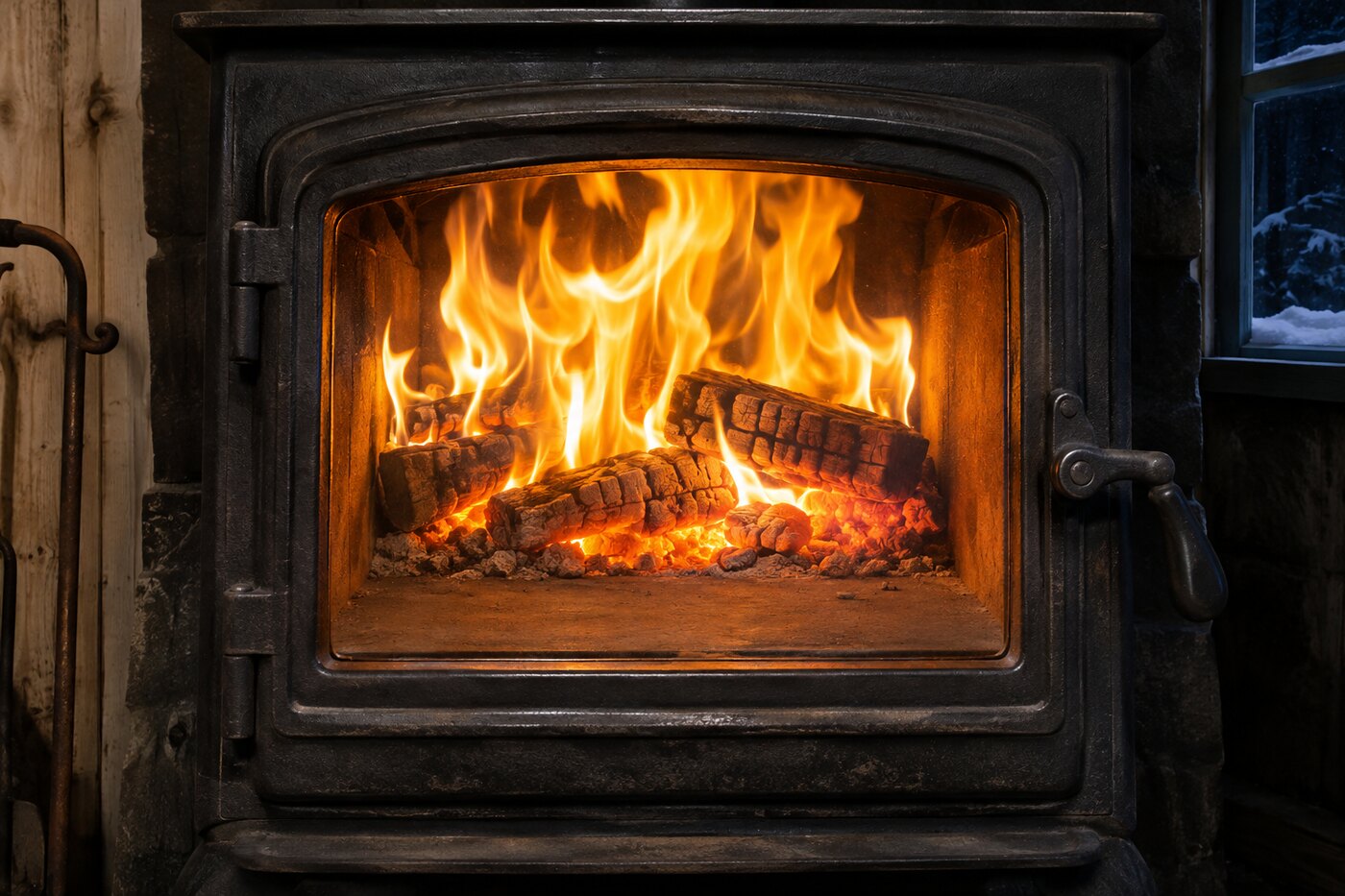
Light the next fire hot: full air until the load is burning well and the wood has charred, before you turn it down. A hot fire burns off the last haze, and the airwash keeps the glass clear while it burns.
What goes wrong
Scratches. Steel wool, scouring pads, a razor scraper used carelessly: Pacific Energy says never to scrape with anything that might scratch the glass and not to use abrasive cleaners on it. Jøtul says scratches trap dust and dirt and make the glass harder to keep clean, so a scratched pane soots up faster afterward.
Smoke pouring down the glass. Pacific Energy calls it the waterfall effect: smoke rolling down the inside of the glass means you turned the air down too soon or too low. Open it back up until the fire brightens, then turn it down in stages.
Logs against the glass. Drolet’s FAQ lists logs packed too close to the glass as a cause of soot, because they block the air that keeps it clean; it asks for at least 5 cm (2 in) of space. Pacific Energy also warns against closing the door on a log that sticks out far enough to hit the glass.
Wet wood. No cleaning keeps up with it. The water has to boil off before the wood burns properly, and Blaze King says much of the creosote on the inside of the glass comes from moisture driven off a fresh load. The split that sits at the back hissing, like the one in When the Fire Takes, is coating the glass the whole time.
The real fix is in the burning
Dry wood. The US EPA says wood burns best at under 20% moisture and to check it with a moisture meter before you burn it; season it at least six months, split, stacked off the ground with only the top covered. The City of Whitehorse goes further and aims for 15%.
A hot fire after every load. Blaze King’s advice is to run the stove on high for a while after each reload, 30 minutes to an hour before turning it down for the night, because that’s when the moisture is coming out of the new wood. Pacific Energy says the same in other words: char the load completely on full air before setting it for an overnight burn.
Let the airwash work. Many stoves have one (Jøtul builds it into all of theirs): air directed over the inside of the glass to keep it clear while the fire burns. Jøtul says a short, hot burn lets the heat and the airwash burn off soot. It needs a lively fire and logs set back from the glass.
When things are different
When the overnight burn coats it anyway. Even with dry wood a long low burn can film the glass, and Blaze King says so. A fast, hot fire in the morning usually burns it off. Clean by hand only what’s left.
When the stove is new to you. Read its manual for the air control settings before you blame the wood. Drolet notes that a weak draft gives dirty glass: a chimney that’s too cold, a house so tight the stove can’t get air. If the glass blackens within hours on dry wood and a hot fire, get a WETT-certified inspector to look at the installation.
When there’s no ash yet. The first fire of the season has nothing to clean with. Use the stove-glass cleaner on a soft cloth, then wipe with water, and keep a cup of cold ash in a metal tin with a lid for next time.
Sources
- Pacific Energy, New Vista owner’s manual: clean glass only when cold; no abrasive cleaners, never scrape; what light-brown versus black, greasy deposits mean; waterfall effect; char the load before an overnight burn; replace cracked glass with ceramic glass before use; WETT-certified installers
- Blaze King, Product care: don’t clean hot glass (burns, fumes, staining); non-abrasive cleaner and soft cloth, rinse with water so residue doesn’t bake on; paper test for the door gasket; high burn 30 minutes to an hour after reloading; long low burns and wet wood coat the glass; inspect the chimney at least every two months in the heating season
- Jøtul, Step-by-step guide to sparkling clean wood stove glass: damp newspaper dipped in ash; gloves, because soot and water make a kind of lye
- Jøtul, How to clean your fireplace: soot from damp wood and poor draft; airwash and a short hot burn; stove-glass cleaner kept off paint; scratches trap dirt
- Drolet, Wood stove FAQ: logs at least 2 inches from the glass; weak draft and wet wood cause dirty glass
- US EPA Burn Wise, Best wood-burning practices: under 20% moisture; moisture meter; season at least six months; smouldering fires are not safe or efficient
- City of Whitehorse, Burning with wood: season 3–12 months to about 15% moisture; smouldering raises creosote and chimney-fire risk